
 E-Paper



Fair polls hallmark of Indian democracy, says VS Sampath
He was addressing a large gathering of law college students on the topic “Transparency in Indian elections” at Kundanmal Firodia auditorium in Fergusson college


Despite shortcomings, the Election Commission of India (ECI) has conducted free, fair and transparent polls and helped strengthen the democratic ethos in the country,” said VS Sampath, former chief election commissioner.
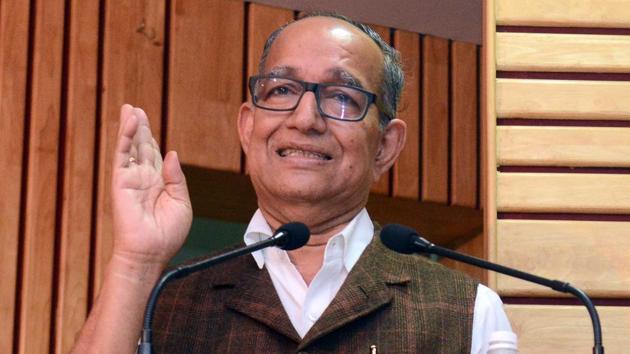
Addressing a large gathering of law college students on the topic “Transparency in Indian elections” at Kundanmal Firodia auditorium in Fergusson college as part of a talk organised by advocacy group Public Concern for Governance Trust (PCGT) and Firodia Law college, Sampath said, “Fair polls have been the hallmark of Indian Democracy.”
Sampath lauded the efforts of former chief election commissioner TN Seshan whom he described as a legendary personality for his far-reaching work done in the interests of reforming the election commission. Seshan carried out revolutionary work which led to the assertion of the independence of the election commission, he said.
The former bureaucrat said that there are four hallmarks of free and fair elections — universal suffrage, independent election commission, periodicity of conduct of elections and impartiality for conducting elections.
Referring to decriminalisation of Indian politics, Sampath said that candidates facing charges of rape, murder, dacoity and other serious crimes must be disqualified from contesting elections.
According to him, the election commission has for the past twenty years saying that people convicted under law are disqualified, but many are taking advantage of the loopholes in the system despite serious charges pending against them and getting elected.
“We said that at least people against whom first information report (FIR) has been filed and competent court has framed charges should be prevented from contesting elections. We submitted proposals before the court, but the judiciary is going up to the last mile but not going further in cases where politicians are involved. They take the stand that it falls under the domain of legislature. Recently, the Supreme Court shifted the onus to the political parties to declare in media the criminal record of candidates to bring about transparency in the election process,” he said.
On introduction of electronic voting machines (EVM) in India, he pointed out that candidates and parties when they win are all praise for EVM and when they lose they allege that EVM tampering is responsible for their defeat.
“The party which is in power today had brought out a book ‘Democracy At Risk! Can We Trust Our Electronic Voting Machines?’ and today they mock at the opposition for questioning the EVM machines. By now I am convinced that EVM controversy will not die down in the country,” he said.
Former IAS officer Mahesh Zagade , Dr Sharad Kunte, chairman, governing body and council, Navalmal Firodia Law College; SC Nagpal, acting chairman, Pune Chapter PCGT; and PCGT members Satish Khot and Satyavir Dhot were present. The opening remarks were delivered by Firodia Law college vice-principal Nalini Ambad and former judge PM Dhakephalkar.


