
 E-Paper



70% of Gurugram waste collected is not segregated: MCG
Officials said after a month-long survey by MCG teams, they identified Sector 9 A, Sector 11, Sector 5, Sector 14, Sector 10, Saraswati Enclave, 38, Sector 56, 57, 65 and Sector 12 as areas where hardly any segregation is happening


The Municipal Corporation of Gurugram (MCG) on Tuesday said 70% of waste collected every day from across the city is not segregated by residents. Officials said despite repeated attempts and directions, the concept remains a challenge for most people as they either don’t know about segregation or are reluctant to do it.
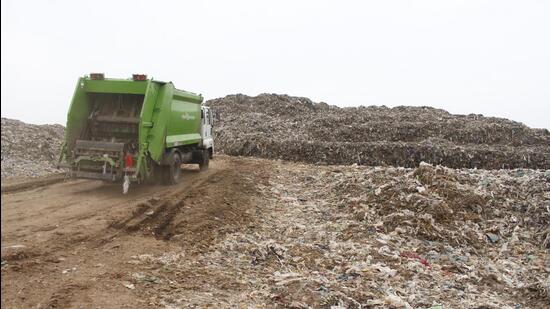
Officials said after a month-long survey by MCG teams, they identified Sector 9 A, Sector 11, Sector 5, Sector 14, Sector 10, Saraswati Enclave, 38, Sector 56, 57, 65 and Sector 12 as areas where hardly any segregation is happening.
The civic body has compiled data of 267 NGOs and over 100 resident welfare associations (RWAs) and have sought their support to educate people on segregation of waste.
Starting November 21, MCG will collect only segregated waste from households across the city. The corporation has also issued directions to its sanitation wing and door-to-door waste collection concessionaire Ecogreen to make citizens aware of the change over the next four days and sensitise them on the need to segregate waste at home.
The segregated waste will be collected from homes in vehicles having separate compartments for the three types of waste -- wet, dry and medical -- and would be taken to the four waste transfer stations for processing.
Since 2018, the MCG has announced more than six times that household waste has to be segregated, but compliance has remained lax, officials said. This time, however, they have decided to stop collecting mixed waste from November 21.
MCG joint commissioner Naresh Kumar said without public partnership, their goal of 100% segregation of waste would not be possible. “There are many areas from where private vendors collect garbage and they have not adapted to the concept of segregation. At least 70% of residents are still giving mixed waste. Many educated people are still throwing mixed garbage on the roadside or keeping outside their homes at night. Our teams are unable to meet working people in Sector 56, 57 and 65 areas during the daytime hours as they would be at work till evening. We have roped in RWAs and NGOs to organise camps in different residential areas to ensure that residents do not mix waste,” he said.
Kumar said there are over 500 private garbage collectors engaged by residents and unless they start collecting dry and wet waste separately, the situation is not going to change.
The MCG officials also said they were facing challenges in dealing with residents during weekends. “The teams that collect waste from door to door are being turned away or threatened to collect mixed waste as residents in many areas said they find the process of segregation a waste of time. If the teams insist on segregation, they start throwing it on the streets and many are ready to even pay a penalty but not segregate,” said Kumar.
Officials said as per the solid waste management rules 2016, it is the responsibility of every waste generator to segregate waste into degradable (wet) and non-degradable (dry) and household hazardous waste and hand over this segregated waste to the civic body or the agencies appointed by them.
Suvendu Samantaray, general manager, operations, Gurugram of Ecogreen Energy, said their drivers and waste collectors are passing on information about the source segregation deadline of November 20 to residents. “Despite our efforts, many areas are reluctant to follow the SWM 2016 guidelines. We are handling this resistance by creating awareness through Information, education and communication. We are distributing flyers, and training our drivers and waste collectors. We are also monitoring the progress by weighing the wet and dry waste separately at all our material recovery facilities (MRF),” he said.
Nilesh Tandon, RWA president of Fresco Apartments in Sector 50, said it took two years for segregation of waste to take root in their society. “Many times residents do not segregate following which our housekeeping staff does it. MCG should allow RWAs to start penalising residents who do not follow the directions,” he said.
Shubhra Puri, founder of Gurgaon First, a citizens’ initiative to promote sustainability, said, “We all know that 60-70% of residential waste is wet waste. If we segregate waste and compost the wet waste, we will only be sending 30-40% waste to the landfill. This will help in reducing the huge volume of mixed waste that reach and rot at the landfill in Bhandwari. It saves the environment fewer diesel-run trucks will be needed to transport waste.”
Ruchika Sethi Takkar, founder member of “Why Waste Your Waste”, a civil society movement in Gurgaon advocating for zero waste, said, “Segregation at source is key to scientific waste management. This alone enables the waste to be treated as a ”resource”, thereby ensuring its recovery and reusability.”

Stay updated with all the Breaking News and Latest News from Mumbai. Click here for comprehensive coverage of top Cities including Bengaluru, Delhi, Hyderabad, and more across India along with Stay informed on the latest happenings in World News.


