
Sign in

Supreme Court Aravalli mining ruling sparks alarm across Mewat, nearly 100 villages fear impact

Activists say hillocks below 100 metres in Haryana and Rajasthan face mining, threatening groundwater, forests and heritage sites.

Updated on: Dec 22, 2025, 03:54:53 IST
Share
Share via
  • facebook
  • twitter
  • linkedin
  • whatsapp
Copy link
  • copy link

A recent Supreme Court ruling permitting mining activity in Aravalli hill areas below 100 metres has triggered widespread concern across the Mewat region, with residents and activists warning that the decision could threaten the survival of more than 40 villages in Haryana’s Nuh district and dozens more in neighbouring Rajasthan.
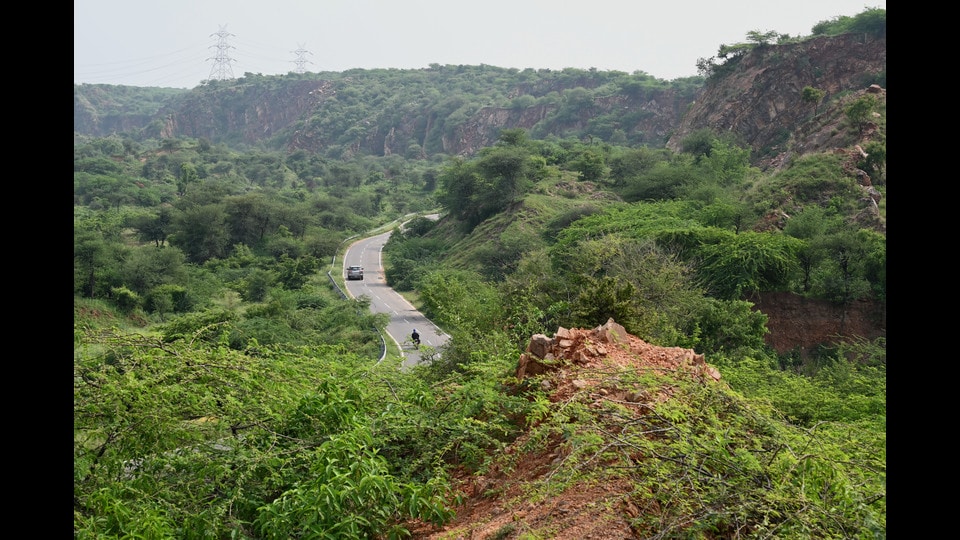
Memoranda seeking review were sent to the President, PM, governors and courts, warning of damage across six districts. (HT Archive)

Residents allege that the ruling opens up ecologically sensitive Aravalli tracts to mining and commercial exploitation, posing risks to forests, groundwater sources and human settlements. In response, the Mewat RTI Manch has submitted memoranda through the Naib Tehsildar of Nagina to the President of India, the Prime Minister of India, the Union home minister, state governors, the High Court and the Supreme Court, seeking an urgent review of the decision.

Activists said the impact of the ruling extends well beyond Nuh district. More than 40 villages in Haryana and nearly 60 villages in Rajasthan’s Tijara, Khairthal, Kishangarh Bas, Alwar, Jurehra, Nagar, Pahari, Gopalgarh and Kaman regions are likely to be affected. In total, residents estimate that close to 100 villages spread across six districts in the Mewat belt of Haryana and Rajasthan could face serious environmental and livelihood threats if mining operations begin.

Subodh Kumar Jain, president of the Mewat RTI Manch, said several villages in Nagina sub-tehsil have Aravalli hillocks measuring less than 100 metres in height, bringing them directly under the ambit of the ruling. These include Santhawadi, Nangal Mubarikpur, Jhimrawat, Bara, Bajidpur, Dhadoli Kalan, Dhadoli Khurd and Khanpur Ghati. “If mining is permitted here, not only will villages be endangered, but historic temples, mosques, dargahs and forts could also be destroyed,” Jain said.

Environmental expert Rajuddin Jang urged the Supreme Court to reconsider the decision, stressing that the Aravallis serve as a natural shield for North India. “Stretching nearly 800 km from Gujarat through Rajasthan, Haryana and Delhi, the Aravalli range blocks desert dust from reaching the NCR, recharges groundwater and helps regulate temperature. Weakening it will have irreversible consequences for future generations,” he said.

Jang also raised concerns that the ruling grants greater discretion to state governments and local administrations to determine land character, increasing the risk of misuse and unchecked exploitation.

Naseem, vice-president of the Mewat RTI Manch and sarpanch of Santhawadi village, said the ruling dilutes decades of legal protection afforded to the Aravallis. “If the Aravallis are compromised, groundwater levels will fall further, temperatures will rise and pollution will worsen. For the people of Mewat, this is not just a legal issue—it is a question of survival,” he said.

Locals also said the memoranda call for immediate intervention to protect the Aravallis, warning that environmental degradation would disproportionately impact districts already grappling with water scarcity, poverty and climate stress.

There has been no official response so far from the Union government or the state governments of Haryana and Rajasthan on the matter.

  • Leena Dhankhar
    ABOUT THE AUTHOR
    Leena Dhankhar

    Leena Dhankhar is Senior Editor and Bureau Chief, Gurugram, at Hindustan Times, where she has spent over 17 years chronicling the transformation of one of India's fastest-growing urban regions. From starting her career as a crime reporter to leading the Gurugram bureau, her journalism has been defined by investigative reporting, in-depth storytelling and an unwavering focus on public interest. Over nearly two decades, she has reported extensively across crime, politics, civic governance, elections, real estate, environment, courts, sports, education and entertainment, covering Gurugram, Faridabad, Nuh and Palwal. Her reporting has exposed several major scams and systemic failures, including insurance frauds, waste management irregularities, illegal arms manufacturing units in Nuh, illegal mining in the Aravallis, organised crime networks and governance lapses affecting millions of residents. Known for her investigative work and exclusive stories, Leena has reported on high-impact national issues, including the Nicaragua charter flight carrying Indian migrants that was turned back amid allegations of human trafficking, exposing the growing network of illegal immigration rackets. Her work has also focused on gang wars, prison administration, juvenile crime, women and child protection systems, the functioning of the Juvenile Justice Board and Child Welfare Committee, and environmental challenges such as pollution, waterlogging and deteriorating civic infrastructure. Beyond hard news, Leena has extensively documented Haryana's rich heritage, forests and wildlife, bringing attention to the state's historical landmarks, biodiversity, conservation efforts and ecological challenges through immersive reportage and feature writing. Her journalism has consistently gone beyond breaking news. She has documented Gurugram's rapid urbanisation through long-form narratives and enterprise reporting on issues ranging from pothole-ridden roads, flooding and waste management to the changing social fabric of India's Millennium City. She also writes widely read feature columns, including The Outsider, Changemaker, and Concern for Gurugram, profiling people, places and ideas shaping the city's identity. Leena is the author of Gurugram School Murder, published by Juggernaut Books, a deeply reported account of one of India's most high-profile school murder investigations. She is currently working on her second book, an investigative work exploring some of India's most significant scams and fraud investigations. Beyond print journalism, she has expanded her storytelling through public speaking and digital media. She is a TEDx speaker and has produced podcasts exploring Gurugram's transformation, civic challenges and untold stories. Her work reflects a commitment to narrative journalism that combines rigorous reporting with compelling storytelling. A law graduate with an MBA in Human Resources, Leena brings a multidisciplinary perspective to her reporting, particularly on governance, public policy and legal affairs. She has travelled extensively across India to pursue investigative assignments, often reporting from remote locations and conflict-prone areas in search of stories that matter.Read More

Catch every big hit, every wicket with Crickit, a one stop destination for Live Scores, Match Stats, Infographics & much more. Explore now!.

Stay updated with all the Breaking News and Latest News from Mumbai. Click here for comprehensive coverage of top Cities including Bengaluru, Delhi, Hyderabad, and more across India along with Stay informed on the latest happenings in World News.