
 E-Paper



GMDA identifies 53 sewage discharge points under Yamuna clean-up plan
Authorities aim to divert untreated domestic and industrial effluents into treatment systems, with most points targeted to be closed by June 2026.

 Prefer HTon Google


As part of the Yamuna Clean Action Plan, civic authorities have identified around 53 sewage discharge points in legs II and III of Gurugram’s stormwater drainage network, officials at the Gurugram Metropolitan Development Authority (GMDA) said on Tuesday.
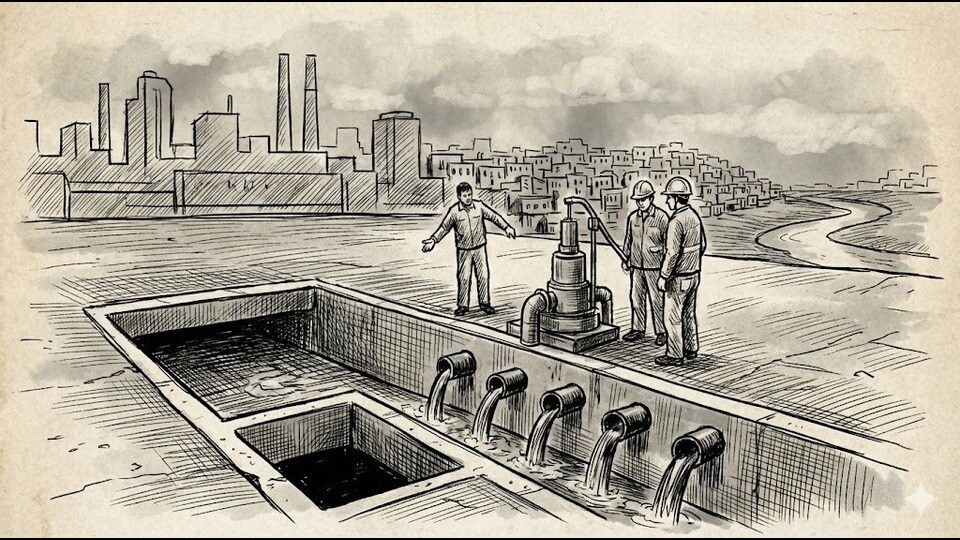
Officials said plans are underway to tap industrial and domestic sewage at these points and divert the effluents through gravity connections and pumping infrastructure. A senior GMDA official said 14 of the identified discharge points have already been “tapped”, while the remaining 39 are targeted to be closed by June 2026.To be sure, tapping in this context the unauthorised sewage connections intercepted have either been disconnected or they have been diverted to sewage treatment plants (SWP) via sewer lines and pumps to prevent direct pollution of the drains flowing to the Yamuna river.
“Our inspection teams are monitoring the sewage network, and flow-monitoring inputs are helping identify additional unauthorised discharge points for further corrective action,” the official said, requesting anonymity.
According to GMDA officials, the highest concentration of discharge points has been found in Sheetla Colony, Rajeev Nagar East and West near CRPF Camp Chowk, Jahajgarh, Dharampur, Khandsa and Kherki Dhaula. Gurugram’s stormwater drain leg II, which is about 16.5 km long, originates from Sector 42 and culminates in Sector 107 via Huda City Centre. Leg III, known as the Badshahpur drain, spans nearly 26 km from Ghata village via Vatika Chowk and Hero Honda Chowk towards Sector 99, before both drains merge into the Najafgarh drain or Sahibi river in Delhi.
“Nine out of 37 discharge points identified in leg III have already been tapped, and an internal sewage line has been laid along the Dwarka Expressway to tap one at Kherki Dhaula. It will be made functional after the master sewer line is laid in the area,” the GMDA official said, adding that five of the sixteen discharge points in leg II have also been closed.
Earlier in January, two high-level meetings were held to discuss measures to tap 52 million litres per day (MLD) of untreated effluent in leg II and 56.2 MLD in leg III. A senior official of the Haryana State Pollution Control Board said the newly identified points would allow intensified sampling to ensure biological oxygen demand remains below 10 mg/L.
Officials said effluents from around 274 industries, amounting to nearly 11.7 MLD, are discharged into leg III after treatment at the common effluent treatment plant (CETP). However, several small manufacturing units continue to burden the existing 55-MLD CETP at IMT Manesar. “The COVID-19 lockdown showed how river water quality improved when industrial discharges were minimal, underlining the need for sustained regulatory control,” a senior GMDA official said.
Stay updated with all the Breaking News and Latest News from Mumbai. Click here for comprehensive coverage of top Cities including Bengaluru, Delhi, Hyderabad, and more across India along with Stay informed on the latest happenings in World News.


