
 E-Paper



Gurugram sinks in garbage as sanitation workers flee
The sense of panic is real. Residents and activists say the mass departure stems from a series of detentions targeting Bengali-speaking informal workers. Between July 13 and 21, at least 100 individuals—many employed as house helps or garbage collectors—were allegedly picked up by police

 Prefer HTon Google


Gurugram’s gated luxury and glassy towers now stand amid rotting garbage. A quiet exodus is unfolding beneath the city’s gleaming skyline, one that threatens to paralyse its already fragile waste management system.
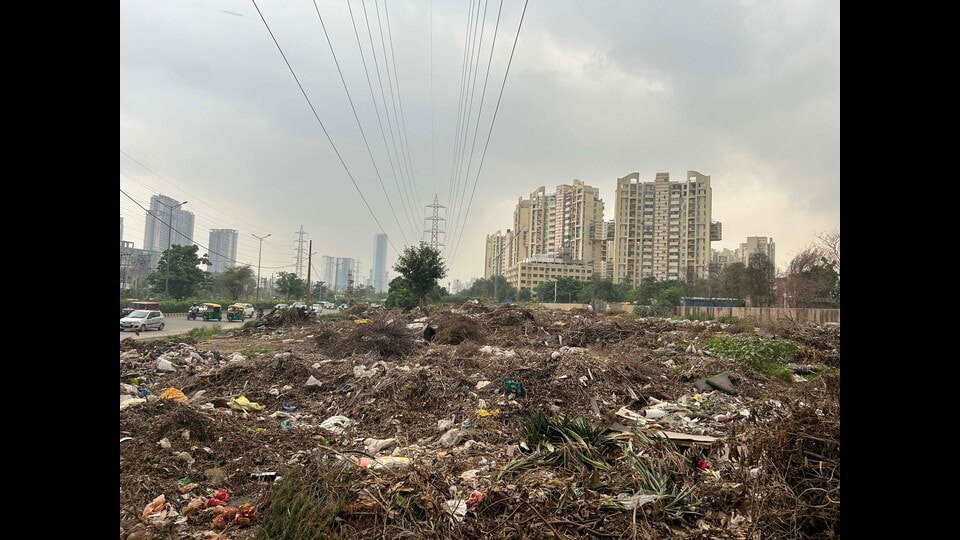
Hundreds of domestic workers and sanitation staff—many of them Bengali-speaking migrants—have fled the city in recent days, gripped by fear amid a police verification and detention drive. The fallout is swift and visible -- garbage piling up in residential sectors, door-to-door collection systems collapsing, and residents scrambling to manage waste on their own.
From Sector 103 to Palam Vihar, Sectors 56, 57, Golf Course Extension Road, Gurugram-Faridabad Road, Sector 29 and new developing sectors, streets are lined with garbage bags.
Housing societies are hiring tractor-trolleys to transport waste to dumping points, often without trained staff or segregation systems—resulting in indiscriminate dumping that threatens to tip Gurugram into a full-blown health emergency.
“They didn’t even inform us. Many just vanished overnight out of fear,” said Richa Vohra, a waste volunteer in Sector 57.
The sense of panic is real. Residents and activists say the mass departure stems from a series of detentions targeting Bengali-speaking informal workers. Between July 13 and 21, at least 100 individuals—many employed as house helps or garbage collectors—were allegedly picked up by police.
Five were later released, reportedly after being instructed to board trains to Assam. The status of the others remains unclear.
“They were not even allowed to go home and fetch their Aadhaar cards. The police just dragged them into vans,” said a relative of 45-year-old garbage collector Anwar Hussain, whose family members were among those detained.
According to residents, the detainees are Indian citizens—some of whom have lived in Gurugram for more than five years. Their only apparent offence: the language they speak and the region they come from.
The immediate fallout has been devastating. Gurugram’s door-to-door garbage collection, largely run by informal workers subcontracted by the Municipal Corporation of Gurugram (MCG), has collapsed across multiple neighbourhoods.
“Gurgaon’s waste services have catastrophically failed,” said Ruchika Sethi Takkar, founder of Citizens for Clean Air. “MCG’s disregard for SWM Rules 2016 and failure to institutionalise waste workers has brought the system to its knees. Indiscriminate dumping and burning are on the rise.”
Takkar said that citizen groups have submitted a representation to the MCG and deputy commissioner, demanding an emergency contingency plan. Key asks include temporary dry waste depots, immediate public communication, and stopgap arrangements for daily waste collection.
Residents say that without a trained workforce, housing societies are forced to dump unsegregated waste—raising alarms over long-term damage to air, soil, and water.
“This is not a sudden crisis,” said Kusum Sharma, a waste management expert. “This is a collapse years in the making. Had MCG followed SWM norms—created dry waste centres, enforced source segregation, and integrated informal workers—this situation could have been averted.”
She added: “Now, the city is entirely dependent on a workforce that is being criminalised.”
With official systems in paralysis, residents’ associations are stepping into the administrative void. Why Waste Your Waste and Citizens for Clean Air submitted a detailed memorandum to MCG commissioner Pradeep Dahiya on Monday, warning of a potential public health disaster.
“MCG has no tracking of who handles what waste. Had these workers been integrated, this collapse could have been prevented,” the letter states. It calls for ward-level composting, private tie-ups for wet waste, and clear public messaging.
Parimal Bardhan, a DLF Phase 1 resident and social sector expert, said: “Door-to-door collection is a legal responsibility under the SWM Rules. Abandoning it is both illegal and dangerous.”
After days of silence, the MCG finally responded.
“Most of the drivers and waste collectors are migratory workers, and their going away will affect our operations,” said commissioner Dahiya. “We’re working with senior officials and the chief minister to find alternatives and minimise disruption.”
But beyond civic collapse lies a deeper humanitarian crisis. Entire livelihoods—of cooks, drivers, cleaners—are disappearing.
“This isn’t just about garbage,” said Takkar. “It’s about the collapse of the invisible economy that keeps the city running. Without a humanitarian plan, the infrastructure will collapse.”
In Palam Vihar, residents say several migrants have approached them for help. “They’re being targeted for their identity,” said one resident. “Even those with ration cards and Aadhaar are being treated like criminals. This is inhuman.”
Rahul Khera, a resident of Sector 54, warned that Gurugram is already mid-transition, with four new private agencies recently hired by the MCG. But the ground reality hasn’t changed.
“Regardless of who’s collecting the waste, it’s migrant labour doing the job. They make up 100% of the city’s frontline waste workforce,” he said. “If they leave, this city will shut down.”
He acknowledged the need to address illegal immigration but criticised the execution. “Even immigrants with valid documentation are afraid. This isn’t governance—it’s fear mongering.”
Dr Arpit Jain, deputy commissioner of police (headquarters), said the verification drive was being conducted in strict adherence to the ministry of home affairs (MHA) guidelines, with a focus on suspected illegal immigrants, particularly from Bangladesh.
“Details of any suspect are sent to the home secretary, district magistrate, or deputy commissioner of the concerned state for verification. If the report is negative, we initiate deportation proceedings with help from the central government, after placing the individual in a holding area. If the report confirms Indian citizenship, the person is released,” Jain said.
He admitted that even those with Aadhaar and other government-issued documents are being held in temporary detention centres until their credentials are verified by the state.
“We are ensuring that no genuine citizen faces unnecessary harassment,” he said.
The police refused to disclose the locations of the four holding centres set up across Gurugram, citing security concerns. They also declined to share the number of individuals currently detained or deported.
The crisis has exposed the structural fault lines beneath Gurugram’s glass-and-concrete image. While the city advertises itself as a smart urban hub and an investment magnet, its daily functioning hinges on the labour of people it has never formally acknowledged or protected.
Unless urgent humanitarian and systemic reforms are undertaken, Gurugram risks not just a sanitation disaster—but a moral reckoning with the unsustainable foundations of its urban promise.


Stay updated with all the Breaking News and Latest News from Mumbai. Click here for comprehensive coverage of top Cities including Bengaluru, Delhi, Hyderabad, and more across India along with Stay informed on the latest happenings in World News.


