
 E-Paper



Haryana mandates EV charging infrastructure in new buildings
The revised code prescribes minimum charging provisions in housing societies, malls, hotels and office complexes.

 Prefer HTon Google


In a push for electric mobility, the Haryana Town and Country Planning Department has amended the Haryana Building Code (HBC)-2017, making electric vehicle (EV) charging infrastructure mandatory in residential and non-residential buildings across the state.
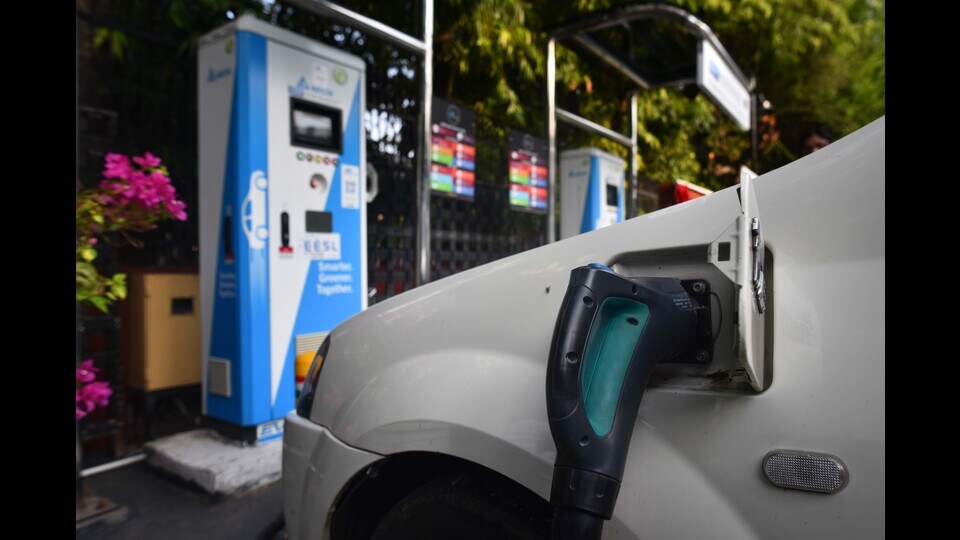
The amendment follows a public notice issued by the Department of Town and Country Planning on April 27, 2026, inviting objections and suggestions from stakeholders and residents. Under the revised norms, group housing societies, cooperative housing projects and residential complexes managed by Resident Welfare Associations (RWAs) must provide one EV charging spot for every five parking spaces where parking is available for at least 10 cars. The rules also require all parking spaces to be equipped with EV charging points.
For non-residential buildings, including shopping complexes, malls, hotels and office spaces with parking for at least 10 cars, developers must provide one EV charging station for every three parking spaces. Additionally, all parking slots must be made fully EV-ready with the required conduits and electrical infrastructure.
The amended rules also exempt EV charging infrastructure from Floor Area Ratio (FAR) calculations, allowing developers to install charging facilities without affecting permissible built-up area. The notification permits EV charging stations in basement and stilt parking areas, subject to compliance with fire and electrical safety norms. Fire Department certification will be mandatory before such facilities can be operationalised.
“The Electric Charging Spots may be provided in basement and/or stilt floors subject to adherence to suitable fire safety and electrical safety norms, to be certified by Fire Department,” states the amendment notice issued by Anurag Agarwal, additional chief secretary, town and country planning department.
The revised code further mandates disclosure of EV charging infrastructure while applying for occupancy certificates (OC). For existing buildings, individual apartment owners or allottees will be allowed to install EV charging facilities in their designated parking spaces (both outdoor and basement-based) after obtaining necessary electrical and fire safety clearances from the Fire Department and the concerned power distribution company.
A senior DTCP official said the move was necessary in view of the growing adoption of electric vehicles. “There was urgent need for EV charging stations in residential and commercial areas. This decision would boost EV ownership in cities which is the need of the hour,” the official said.
To be sure, this amendment comes a month after a controversy over private EV chargers in Gurugram’s high-rise societies, where the Haryana Fire Department flagged basement charging points as “not permissible” and linked their removal to Fire NOC renewals. The move led several RWAs to ask residents to dismantle chargers over fire safety concerns, with reports suggesting more than 600 societies faced delays in NOC renewals. Although the department later clarified that no Fire NOC would be denied solely due to EV chargers and that fresh guidelines were being drafted, many societies continued removing chargers to avoid compliance issues, residents said on social media.
Meanwhile, RWAs seemingly welcomed the amendment. Sunil Sareen, vice president of Imperial Garden RWA in Sector 102, welcomed the policy and said government agencies should support existing RWAs in implementing it. “We have already equipped 125 parking spaces with EV charging infrastructure and spent around ₹10 lakh on the project. An individual has to pay ₹10,000 to get a connection. Ownership of electric vehicles is rising and our members are happy with it,” he said.
Rahul Kumar, a resident of an affordable housing society on Pataudi Road, said the policy’s benefits should extend to affordable housing projects as well. “There is an urgent need to ensure that this policy also covers affordable societies where parking is available,” he said.

Stay updated with all the Breaking News and Latest News from Mumbai. Click here for comprehensive coverage of top Cities including Bengaluru, Delhi, Hyderabad, and more across India along with Stay informed on the latest happenings in World News.


