
 E-Paper



MCG turns to sensors, data centre to fix Gurugram water woes
The proposed system will map pipelines, links and supply volumes down to lane level for monitoring and faster response.

 Prefer HTon Google


The Municipal Corporation of Gurugram is working on a technology-driven plan to modernise Gurugram’s water supply network by setting up its first micro data centre to tackle water shortage and irregular distribution across the city, officials said.
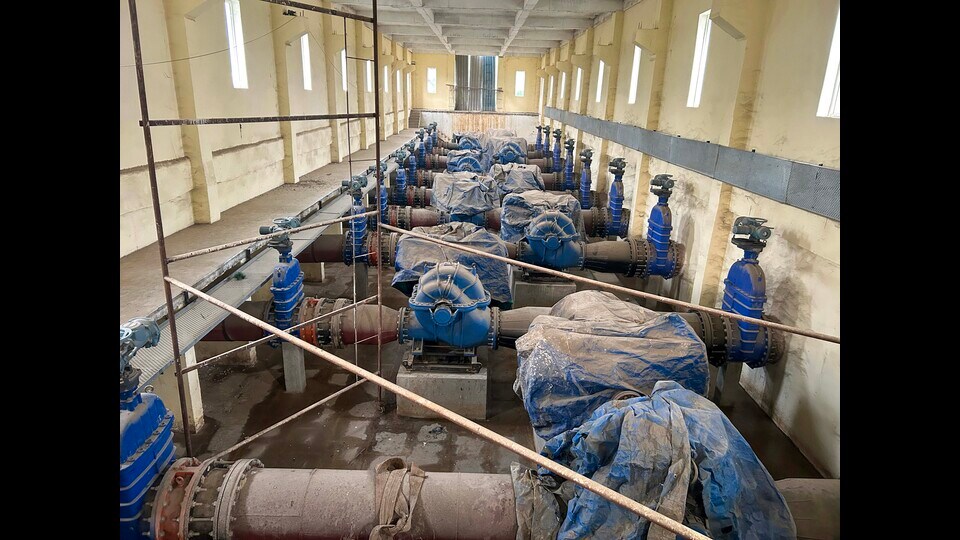
The initiative, inspired by water management models in Israel and Puri in Odisha, aims to make the city’s water distribution system fully digital, sensor-based and centrally monitored. Civic officials said the proposed micro data centre will function as the central control system for Gurugram’s water network.
Once operational, the facility will maintain a comprehensive digital record of every colony, sector, pocket and lane in the city, mapping the entire distribution infrastructure, including pipelines, authorised connections and water supply volumes. Officials said the system will store data on the thickness of pipelines in each area, the number of connections and the daily quantity of water supplied.
The civic body has begun collecting raw data from the Gurugram Metropolitan Development Authority and the irrigation department to track water movement from main sources to end consumers.
“To strengthen monitoring, MCG has assigned a unique identification (ID) to all boosting stations and tubewells in the city. Through these IDs and the sensors in its network, officials will have a real-time record of how many motors are installed at each station and their capacities. Sensors are being installed on the motors to detect faults and disruptions,” said Ravinder Yadav, additional commissioner at MCG.
“If a motor breaks down or a power supply is interrupted at any station, an alert will be generated immediately at the micro data centre. This will allow officials to respond faster, even before field staff report the issue,” Yadav said.
Sensors are also being installed in water tanks across the city. Officials said alerts will be triggered when water levels fall below a fixed threshold or when tanks run empty at both boosting stations and at societal water towers, allowing authorities to manage supply proactively.
To reduce wastage and improve pressure management, flow meters will be installed at all boosting stations and tubewells, officials said. The entire network will be integrated with a Supervisory Control and Data Acquisition (SCADA) system to enable centralised monitoring and control of valves and pressure across pipelines.
Officials said the system will help resolve long-standing complaints of uneven water pressure and overflow in certain areas. It will also monitor water quality and purity, supporting Gurugram’s long-term goal of providing “drink from tap” water.
Gurugram’s proposed hi-tech micro data centre for water supply is not entirely new. The city had earlier implemented a Centralised Integrated Water Management System (CIWMS) as a pilot under the Smart City framework in 2021–22 to monitor water flow in key pipelines and underground tanks using sensors and centralised controls. Officials said the new plan will build on this foundation by extending monitoring across a much larger section of the distribution network through detailed digital mapping, SCADA integration and real-time alerts. The objective is to plug leakages, reduce wastage and ensure more equitable water supply across sectors.
MCG officials recently visited Odisha, where 11 cities operate 24/7 water supply systems using similar micro data centres. Officials said the success of Puri’s Sujal Mission has influenced Gurugram’s plan, which seeks to combine Israel’s water conservation practices with Odisha’s management framework.
Civic officials added that the project will help identify black points in the network where leakage, theft and wastage are highest, particularly in areas with ageing pipelines. Once implemented, the system could make Gurugram one of the first cities in north India to adopt a largely automated, data-backed water distribution mechanism.

Stay updated with all the Breaking News and Latest News from Mumbai. Click here for comprehensive coverage of top Cities including Bengaluru, Delhi, Hyderabad, and more across India along with Stay informed on the latest happenings in World News.


