
 E-Paper



Haryana govt imposes blanket ban on firecrackers in 14 NCR districts
The Haryana government on Sunday imposed a blanket ban on the sale and use of firecrackers in 14 districts that fall under the National Capital Region (NCR), according to an order issued by the state disaster management authority


The Haryana government on Sunday imposed a blanket ban on the sale and use of firecrackers in 14 districts that fall under the National Capital Region (NCR), according to an order issued by the state disaster management authority.
The order, citing compliance with directions of the National Green Tribunal (NGT) and Supreme Court, stated, “There will be a total ban against sale or use of all kinds of firecrackers in all the 14 NCR districts namely Bhiwani, Charkhi Dadri, Faridabad, Gurugram, Jhajjar, Jind, Karnal, Mahendergarh, Nuh, Palwal, Panipat, Rewari, Rohtak and Sonipat.”
S Narayanan, the member-secretary of Haryana State Pollution Control Board (HSPCB), said, “When we go through the earlier orders of NGT and Supreme Court, it clearly says that considering the Covid-19 pandemic, there will be a complete ban on firecrackers in the entire NCR. With today’s (Sunday) state government’s orders, a blanket ban has been imposed on bursting of any kind of crackers in the 14 districts of NCR.”
The order states that besides the 14 NCR districts, the directions will also apply to all cities and towns where the average ambient air quality during November 2020 was in the ‘poor’ category or worse, as per the Central Pollution Control Board’s air quality index (AQI) classification.
“As far as non-NCR districts are concerned, as per the quality of air based on last year’s average, except Panchkula, all districts had air quality in poor or above category, so the order will apply to those districts also,” a senior official of the state government, who did not wish to be named, said.
The order states that in areas where ambient air quality is ‘moderate’ or better, only green crackers will be allowed for community bursting (by large groups in designated open spots). On the AQI scale of 0 to 500, a reading of 101 to 200 is classified as ‘moderate’, while an AQI of 201-300 is rated as ‘poor’, while that of 300-400 is classified as ‘very poor’.
“In the areas where use and bursting of crackers is allowed, community fire cracking shall be promoted. Particular area/fields would be pre-identified and pre-designated by the concerned authorities immediately and the same shall be publicised for information of the public. Even for marriages and other occasions, only green crackers are permitted. The sale of crackers shall only be through licensed traders,” states the order.
The state pollution control board will also release a list of cities where the bursting of firecrackers will be allowed. As per the timings decided by the disaster management authority, firecrackers can be burst from 8pm to 10pm on Diwali and Gurupurab, 6am to 8am for Chathh puja, from 11.55pm to 12.30am on Christmas and New Year’s Eve.
Meanwhile, experts said that the bursting of firecrackers in areas with ‘moderate’ or better ambient air quality could lead to further deterioration of the air quality.
Sachin Panwar, a city-based independent air quality scientist, said, “Bursting of any kind of crackers, be it green crackers with reduced emissions or normal crackers, air, soil and noise pollution takes place. Allowing bursting of crackers in areas where air quality is moderate or below can, rather, trigger it to worsen and reach poor quality of air. As per predictions for the coming few days, a spell of rain is likely around Diwali, but if the intensity of that rain is low, then it will further aggravate the situation, as with moisture in the air, pollutants will not be able to disperse and will remain in our breathing zone.”
Manas Fuloria, a resident of South City-1, said, “Firstly, we need to keep the air clean for everyone as not all can afford air purifiers and second, when enforcement regarding bursting of fire crackers in the two-hour window itself is so tough, then how can one identify if crackers with reduced emissions are being burst? A layman is not always able to identify that the crackers they are buying are indeed the ones with reduced emissions.”
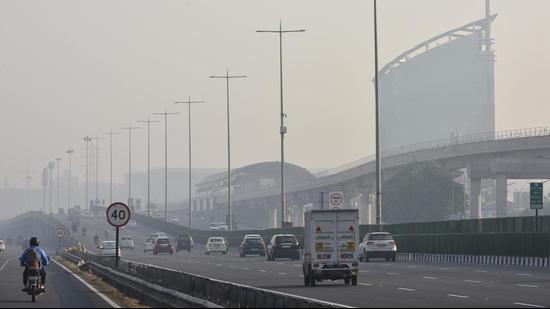
On Sunday, the city recorded ‘poor’ air quality for a third consecutive day, with an AQI reading of 262, with particulate matter, both PM2.5 and PM10, the prominent pollutant.
According to the weather bulletin issued by Air Quality Early Warning System for Delhi, the air quality over the national capital territory is likely to be in the lower end of the ‘very poor’ category till November 4 (Diwali) and deteriorate on November 5 and 6 significantly, due to an expected spike in PM2.5.
Stay updated with all the Breaking News and Latest News from Mumbai. Click here for comprehensive coverage of top Cities including Bengaluru, Delhi, Hyderabad, and more across India along with Stay informed on the latest happenings in World News.


