
 E-Paper



RWAs to submit objections on new draft policy for housing societies to DTCP
The new draft policy introduced by the department of town and country planning (DTCP) for the formation of residents’ welfare associations (RWA) and for smooth transfer of the maintenance of group housing societies to the residents’ bodies has not found favour with a section of residents, who are of the opinion that there are already enough rules and regulations to manage the affairs of group housing societies and floating one more policy will only add to confusion

 Prefer HTon Google


The new draft policy introduced by the department of town and country planning (DTCP) for the formation of residents’ welfare associations (RWA) and for smooth transfer of the maintenance of group housing societies to the residents’ bodies has not found favour with a section of residents, who are of the opinion that there are already enough rules and regulations to manage the affairs of group housing societies and floating one more policy will only add to confusion.
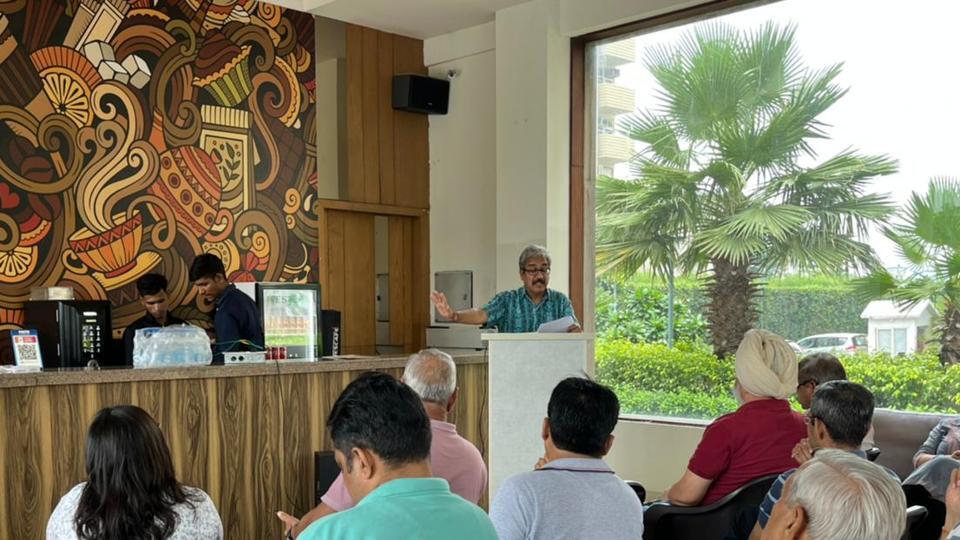
RWA members and representatives of around 20 housing societies held a meeting on Saturday to discuss the proposed draft policy and decided to submit detailed objections to the DTCP as there are many ambiguities in the draft document and this policy will dilute the Haryana Apartment Ownership Act 1983, which is an effective law for managing the group housing sector.
Sanjay Lal, former vice president, Ambience Lagoon RWA, said several issues pertaining to the formation of association of allottees (AOA) need clarity. “In a large number of projects, one third of the units are controlled by developers and investors themselves initially and in such a situation, they will hand over the maintenance to an RWA, where the allottees are of their choice. The draft policy will also dilute the Haryana Apartment Ownership Act, which has been quite effective in safeguarding the interests of home buyers,” he said.
In fact, Lal emphasised, handing over maintenance and ownership of common areas is a complicated issue as it involves filing the deed of declaration, and the matters needs to be addressed properly.
During the meeting, the RWA members also said there is no dispute resolution in the draft, which says disputes will be settled by an adjudicating officer.They also said transfer of common areas to the RWAs without a checklist given in the deed of declaration (DOD) was also contentious.
RWA members apprehend that the proposed draft policy will further create confusion as already there are already several acts--Haryana Urban Development and Management Act, Haryana Apartment Ownership Act, RERA Act, and Haryana Registration of Societies Act 2012---to manage the residential societies.
Navdeep Singh, executive member of ATS Triumph RWA, said instead of framing new policies, the authorities need to be proactive and vigilant to enforce the rules. “Why is Haryana government trying to dilute the Haryana Apartment Ownership Act? The loopholes in the Haryana Apartment Ownership Act need be addressed as it is an effective act in managing the condominiums,” said Singh.
“This is a specified act for apartments. Why create confusion for a common man who saves up all his life to have a home of his own one day? Why is the government not forcing the promoters to take completion certificate and simply hand over the maintenance of the group housing projects to the AOAs?” asked Lal.
Advocate Ritu Bhariok, who has been working on issues of allottees and RWAs said that there are enough laws to govern the group housing societies and the focus should be on enforcement. “The government should have one single law for managing the group housing societies. Multiple laws are already creating confusion and work at cross purposes,” she said.
DTCP officials said they will look into the suggestions and objections raised by the RWAs and home buyers, and take them into account while finalizing the policy. “The suggestions will be looked into in detail and all contentious issues will be addressed to ensure there is no confusion and conflict,” said Amit Madholia, district town planner, enforcement.


