
 E-Paper



Yamuna Action Plan review flags untreated sewage, waste lapses in NCR
Officials flagged high wastewater inflows from Gurugram and Jhajjar drains and pushed strict timelines for STPs, CETPs and drain-tapping works.

 Prefer HTon Google


Haryana State Pollution Control Board chairman Vinit Garg on Tuesday chaired a high-level review meeting in Gurugram to assess progress under the Yamuna Action Plan and compliance with directions of the National Green Tribunal on solid waste management, with a focus on drain-tapping, sewage treatment infrastructure and disposal of legacy waste at the Bandhwari landfill.
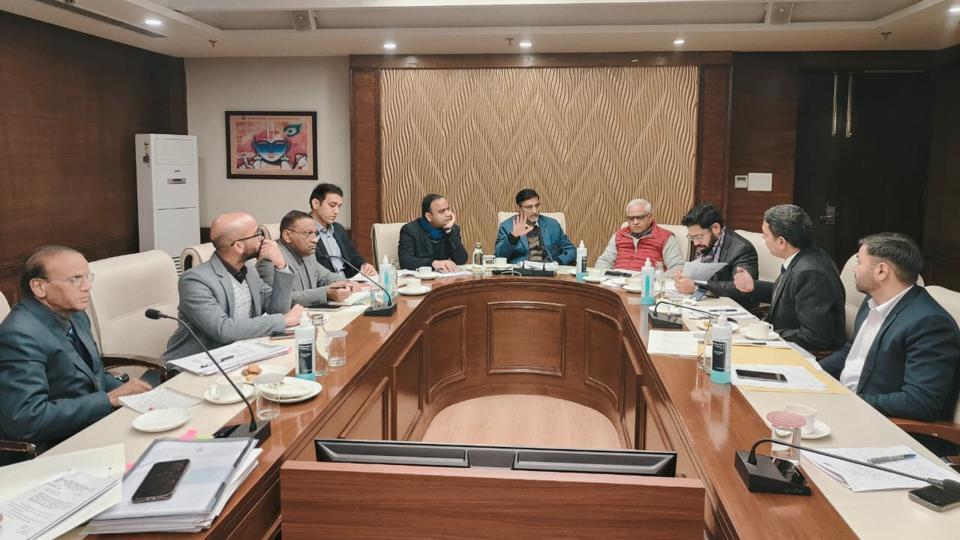
The meeting, held at the PWD rest house, reviewed measures to curb pollution in Badshahpur’s Leg-1, Leg-2 and Leg-3 drains in Gurugram, and Drain No. 8 and the Mungeshpur drain in Jhajjar district. Officials said these drains ultimately feed into the Najafgarh drain and flow into the Yamuna in Delhi, making local interventions critical for improving river water quality.
Garg directed departments to tighten monitoring of sewage and industrial effluents and ensure that projects related to tapping drains, setting up sewage treatment plants (STPs) and common effluent treatment plants (CETPs), and strengthening surveillance mechanisms are completed within stipulated timelines. Taking a tough stand on illegal dumping, he said tanker operators found discharging sewage in open areas or drains within municipal limits must face immediate challans and, in serious cases, FIRs. “There should be zero tolerance for activities that damage the environment and violate pollution control norms,” Garg said, directing police officials to intensify checks in vulnerable zones.
Officials said untreated wastewater inflows into key drains remain a major concern, including an estimated 153.7 million litres per day (MLD) entering Drain No. 8 from Bahadurgarh and Rohtak, 55.4 MLD in the Leg-1 drain and 78 MLD in the Leg-2 drain. Pollution sources such as outfall channels near Yakubpur village in Jhajjar, industrial wastewater from Udyog Vihar and inflows through box drains were also reviewed.
On Gurugram’s drain network, officials said proposals are under process to set up STPs at multiple locations along Leg-1. Leg-2 drain currently carries around 8 MLD of treated water, with a 20 MLD STP operational and a 100 MLD STP proposed at Dhanwapur. A total of 17 discharge points have been identified along Leg-2 for phased intervention.
Officials said Gurugram has 12 STPs with a combined capacity of 420 MLD, while two new STPs of 27 MLD are under construction, expected to be operational by end of February. Proposals include three new STPs of 240 MLD at Dhanwapur and rehabilitation of a 100 MLD STP. For industrial effluents, two CETPs of 55.2 MLD are operational, while three CETPs of 30.5 MLD have been proposed. A plan to tap 11 discharge points by 2026 was also reviewed.
On solid waste management, Garg reviewed compliance with NGT directions at Bandhwari, including legacy waste disposal, leachate treatment and door-to-door collection, and directed agencies to expedite tendering, set up a DTRO for leachate treatment and strengthen segregation at source.
Faridabad divisional commissioner Sanjay June, GMDA chief executive officer PC Meena, deputy commissioner Ajay Kumar, Manesar municipal commissioner Pradeep Singh, HSPCB member secretary Yogesh Kumar and additional deputy commissioner Sonu Bhatt were present.


Stay updated with all the Breaking News and Latest News from Mumbai. Click here for comprehensive coverage of top Cities including Bengaluru, Delhi, Hyderabad, and more across India along with Stay informed on the latest happenings in World News.


