E-Paper



Amid protests, UPPCL covers over 50% employee houses in meter installation
The latest official data shows 30,247 meters have been installed against 58,462 employee and pensioner connections, taking overall coverage to 51.74%, even as the utility has been forced to revise deadlines amid resistance on the ground.

 Prefer HTon Google


Despite intensifying protests by power employees over what unions describe as a dilution of long-standing service benefits, the Uttar Pradesh Power Corporation Limited (UPPCL) has crossed the halfway mark in installing prepaid smart meters at employees’ residences under the LMV-10 category.
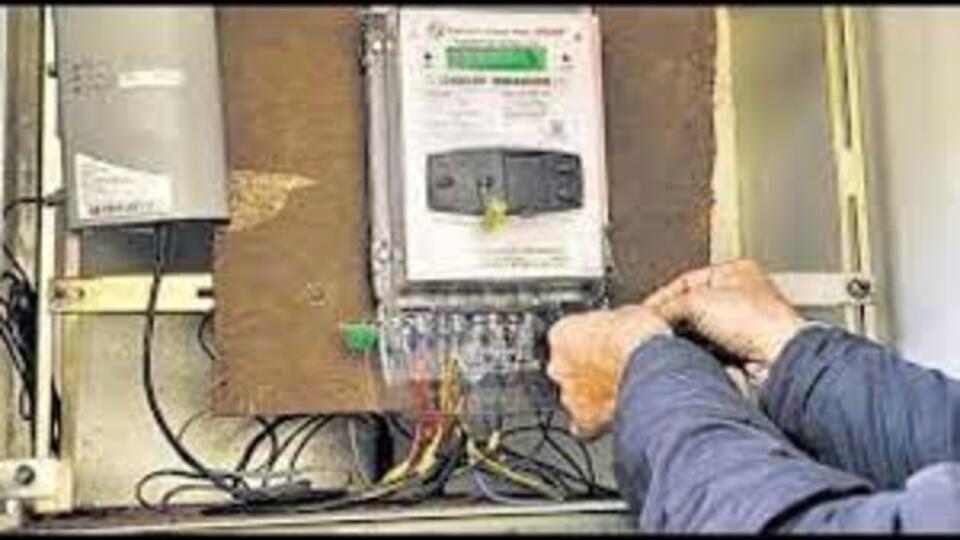
The latest official data shows 30,247 meters have been installed against 58,462 employee and pensioner connections, taking overall coverage to 51.74%, even as the utility has been forced to revise deadlines amid resistance on the ground.
Deadline shifted amid resistance
In July last year, UPPCL announced its decision to install meters on all power connections of its employees under the LMV-10 category. According to officials, the original deadline to cover all employees and pensioners was December 31, which has now been extended to February 28.
A senior official admitted installation teams were often unable to access premises. “In several cases, personnel lock their houses when they come to know a team is coming to install a meter. Progress is slow and we have been compelled to shift the deadline due to resistance from employees. For now, we are avoiding any conflict,” the official said.
Sharp regional disparities
The rollout shows wide regional variation. Pashchimanchal Vidyut Vitran Nigam Limited (PVVNL) in western UP leads with 71.94% coverage, with Noida (93.66%), Ghaziabad-2 (90.93%) and Meerut-2 (82.57%) nearing saturation.
Madhyanchal Vidyut Vitran Nigam Limited (MVVNL) has achieved 62.62% installations, driven by Bareilly-1 (89.83%) and Lucknow Central (78.56%), while Dakshinanchal Vidyut Vitran Nigam Limited (DVVNL) stands at 66.25%, led by Agra (93.14%) and Mathura (92.67%). In contrast, Purvanchal Vidyut Vitran Nigam Limited (PuVVNL) in eastern UP has managed only 26.61%, with Basti (11.06%), Prayagraj-2 (15.06%) and Varanasi-2 (20.94%) among the slowest zones. Kanpur Electricity Supply Company (Kanpur Nagar) remains a major outlier at 18.09%.
‘Metering for audit, not withdrawal of benefits’
Seeking to assuage employees’ concerns, Prashant Kumar Verma, director (commercial), UPPCL, said the objective of installing meters at employees’ residences was energy audit and proper accounting, not withdrawal of concessional power.
“There is no plan to curtail the concessional electricity employees receive. In fact, they will get more discounts on the charges they currently pay once meters are installed,” Verma said, citing a 2018 UPPCL office order.
What power staff pay at present
UPPCL revised electricity charges for departmental employees and pensioners under the LMV-10 category for FY 2017-18, with effect from December 9, 2017. Under the order, Class IV and operating staff pay a fixed monthly charge of ₹175 and an energy charge of ₹195, while Class III employees pay ₹205 and ₹245 respectively.
Junior engineers pay ₹280 (fixed) and ₹460 (energy); assistant engineers ₹305 and ₹605; and executive engineers ₹325 and ₹645. Superintending engineers, general managers and directors pay ₹595 and ₹760, while chairperson-level officers and above pay ₹650 and ₹880 per month. An additional ₹650 per air-conditioner per month applies from April to September.
“Metered LMV-10 consumers are entitled to a 20% rebate on rate charges and electricity duty, though a 5% rate charge applies to metered connections,” Verma added.
Legal backdrop
Uttar Pradesh is believed to be the only state where power utility employees still receive unmetered electricity supply, which contrasts with the Electricity Act, 2003 mandating metering of all connections.
Section 55(1) of the Act states: “No licensee shall supply electricity, after the expiry of two years from the appointed date, except through installation of a correct meter in accordance with regulations made by the Authority.”
Power sector officials say the LMV-10 metering drive is also aimed at aligning employee consumption with the statutory framework, even as unions insist service-related concessions should not be equated with consumer supply norms.
Unions remain firm
Power unions have termed the exercise a violation of assurances given during sector reforms, citing the January 25, 2000 agreement and provisions of the Transfer Scheme, 2000.
“The UP Power Reforms Act clearly states that after the unbundling of the UPSEB, employees’ service conditions and facilities will in no way be inferior to what they received earlier,” Vidyut Karamchari Sanyukt Sangharsh Samiti convenor Shailendra Dubey said. “Section 133(2) of the Electricity Act, 2003 also supports this position,” he added.
The state executive of the Samiti is scheduled to meet in Lucknow on February 26 to discuss, among other issues, what it calls attempts to withdraw the concessional electricity facility extended to employees and pensioners.