E-Paper



Behind JPNIC’s grand exterior, silent rot of Lko’s ₹864-cr dream
How ready is the facility? HT’s visit finds the project far from operational; defunct lifts, unfinished rooms expose years of neglect, revival may cost another ₹250 crore

 Prefer HTon Google


LUCKNOW Is the Jayaprakash Narayan International Centre (JPNIC) ready for use after the state government decided to hand over the nearly decade-old project to a private consortium? HT’s visit to the 17-storey complex on Wednesday found the answer inside the building: the project remains far from ready, with several works still incomplete.
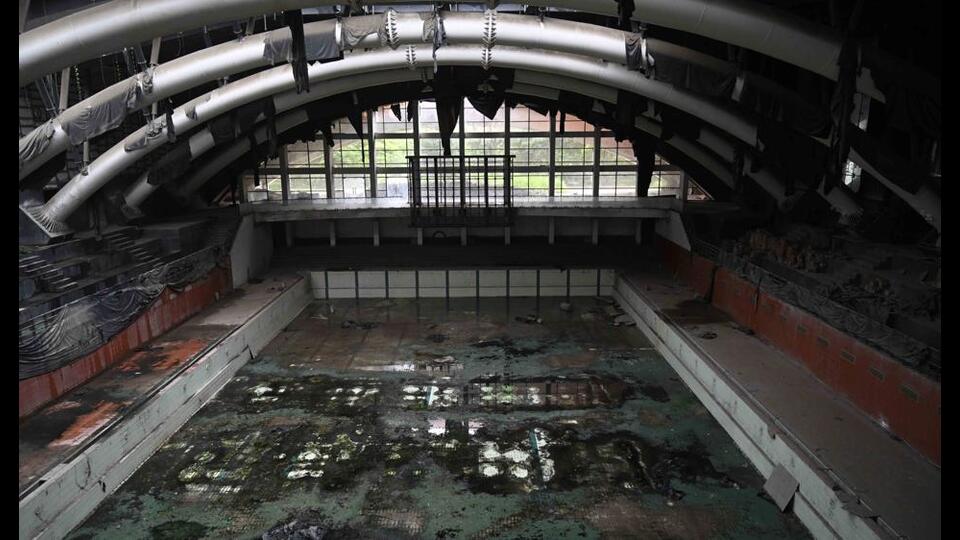
While the exterior of the ₹864-crore project gives an impression of a completed landmark, its interiors tell a different story. Non-functional lifts, incomplete electrical work, broken tiles, damaged wiring, water seepage, unfinished rooms, a neglected swimming pool and missing equipment have left several parts of the centre unusable.
Officials familiar with the project estimate that ₹200-250 crore may be required to complete the outstanding works and make JPNIC operational.
The UP cabinet approved on August 25 a proposal to lease the JPNIC to a private player for 35 years. A private consortium emerged as the successful bidder through an open bidding process to operate the centre.
On Wednesday, HT found that though the building had provisions for more than six lifts, none was operational during the visit. One of the lift shafts had been constructed, but the lift was missing.
The electrical system also showed signs of prolonged neglect. Cut wires hung from ceilings at several places, while staircases lacked lighting and switches. Rainwater had entered multiple portions of the building, adding to the deterioration.
A multipurpose court near the entrance was among the few facilities that appeared to be in comparatively better condition.
The swimming pool presented another picture of neglect. The area’s ceiling showed signs of leakage, while mud had accumulated over the pool tiles. A deeper section of the pool was filled with dirty and contaminated water. The glass ceiling above the pool had also deteriorated, with vegetation around it.
Another pool located on the 16th floor also had accumulated rainwater and mud, leaving it unfit for use.
HT found that halls on the upper floors were largely incomplete. Authorities had constructed walls to divide the spaces, but the halls had no chairs, equipment or other facilities required to make them functional.
The condition of rooms on the eighth floor and above was similar. Many of them lacked doors, air-conditioners, electrical switches and completed wiring. Some bathrooms had broken tiles, while the rooms had no furniture or other hospitality facilities.
The building’s electrical infrastructure was incomplete at several locations with broken wires hanging from ceilings. An escalator installed on the fifth floor also remained non-functional.
The helipad had been constructed on the 17th floor, but the mats laid along the approach were partly torn and deteriorated, making the passage difficult to use.
Broken glass and debris also lay across portions of the building. An official familiar with the project said the prolonged closure had affected several materials and facilities inside the building.
“Most of the materials have remained unused since the building shut around nine years ago. Several items have either deteriorated or will require replacement, while the building itself needs substantial maintenance,” the official added.
The LDA had sanctioned JPNIC at an estimated cost of ₹864 crore as a flagship destination for international conventions, sporting events, hospitality and recreational facilities. Construction began in 2014 but stopped in 2017.
Named after freedom fighter and socialist leader Jayaprakash Narayan, the centre was envisioned as one of Lucknow’s most ambitious public infrastructure projects.