
 E-Paper



BJP top brass leads last-mile push for MLC polls in UP
Chief minister Yogi Adityanath, deputy chief ministers Keshav Prasad Maurya and Brajesh Pathak, BJP state president Pankaj Chaudhary and Cabinet ministers have fanned out across regions, holding meetings with teachers and graduates to rally support for party candidates.

 Prefer HTon Google


With polling for 11 Uttar Pradesh legislative council seats — five graduates’ and six teachers’ constituencies — scheduled for October 23, the BJP has pressed its top leadership into last-mile campaigning to retain its dominance in the Upper House.
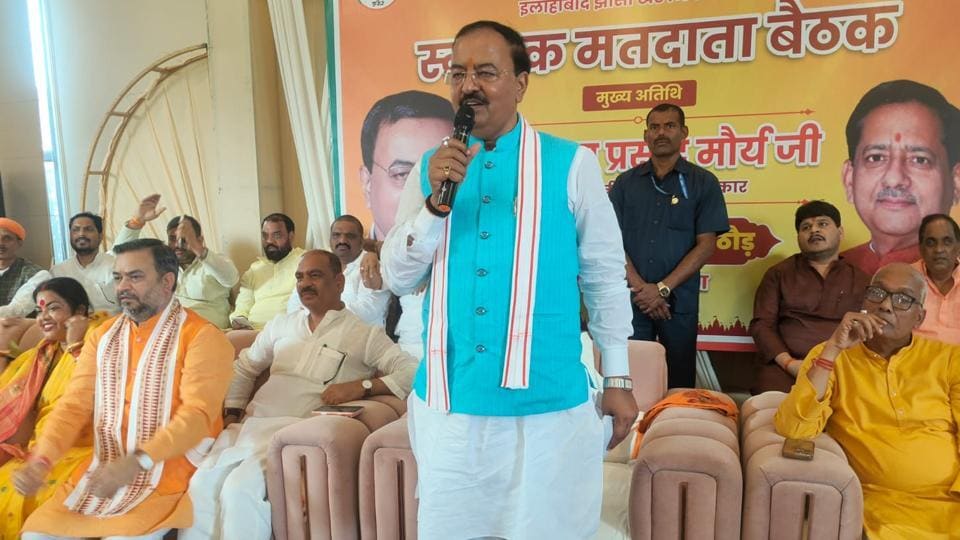
Chief minister Yogi Adityanath, deputy chief ministers Keshav Prasad Maurya and Brajesh Pathak, BJP state president Pankaj Chaudhary and Cabinet ministers have fanned out across regions, holding meetings with teachers and graduates to rally support for party candidates.
On Sunday, Maurya campaigned for the BJP candidate in Prayagraj for the Allahabad-Jhansi graduate constituency, while Chaudhary was in Maharajganj campaigning for the Gorakhpur-Faizabad constituency.
The MLC polls, though indirect and limited to graduates and teachers, are politically significant for the BJP ahead of the 2027 assembly elections. Of the 11 outgoing members whose terms end on December 6, six are from the BJP, three from the Samajwadi Party (SP) and two are independents. The BJP aims to retain its six seats and make inroads into SP and independent strongholds.
The graduates’ constituencies going to polls are Lucknow, Agra, Meerut, Varanasi and Bareilly-Moradabad, while the teachers’ constituencies are Lucknow, Agra, Meerut, Varanasi, Bareilly-Moradabad and the Gorakhpur-Jhansi-Prayagraj zone.
Earlier on Saturday, Adityanath addressed a meeting of voters in the Lucknow graduate’s and teachers’ constituencies and accused the previous SP and BSP governments of having “neither niti (policy) nor niyat (intention)” and of letting the mafia control organisations, including recruitment commissions. He called the SP the “declared enemy of education.”
Adityanath urged voters to “ensure outcome favours side of justice”.
The BJP has drawn up a cluster-wise campaign strategy involving teacher chaupals, graduate sammelans, alumni outreach and small-group meetings in degree colleges, aided schools and university departments. Ministers have been assigned responsibilities division-wise.
Maurya is focusing on the Prayagraj-Jhansi and Kanpur teachers’ belts, while Pathak is concentrating on graduates in Lucknow and central UP. The party is highlighting recruitment reforms, transparent teacher transfers, regularisation of ad hoc teachers and the restoration of teachers’ dignity under BJP rule.
The SP, on the other hand, is banking on anti-incumbency among shiksha mitras and teachers in unaided institutions. Independents traditionally have a strong presence in teachers’ constituencies, where personal networks can matter more than party symbols.
Polling will be held on October 23 from 8 am to 4 pm through ballot papers. Counting is scheduled for October 27, and the election process will be completed by October 31.
With campaigning set to end on the evening of October 21, a blitz of meetings is expected, with the BJP seeking to win over fence-sitters among the educated electorate.
What is at stake
BJP: Six seats to defend; aims to retain its core graduate base in Lucknow, Meerut and Bareilly-Moradabad.
SP: Three seats to defend, with an eye on retaining and expanding its support among teachers.
Independents: Two seats; traditionally influential in the Council.
Voter profile: Graduates and teachers, with personal outreach playing an important role in mobilising voters.


