
 E-Paper



BRICS statistical heads’ meet begins in Lucknow, focuses on quality data, digital dissemination
Heads of National Statistical Offices (NSO) from across the BRICS nations gathered in Lucknow on Monday for a two-day meeting aimed at reimagining how data is collected, shared and used

 Prefer HTon Google


Heads of National Statistical Offices (NSO) from across the BRICS nations gathered in Lucknow on Monday for a two-day meeting aimed at reimagining how data is collected, shared and used. The opening day of the meeting saw the release of the draft BRICS Joint Statistical Publication (JPS) 2026 and the Snapshot BRICS JSP 2026. Member countries will now send additional inputs before a final consensus version is adopted.
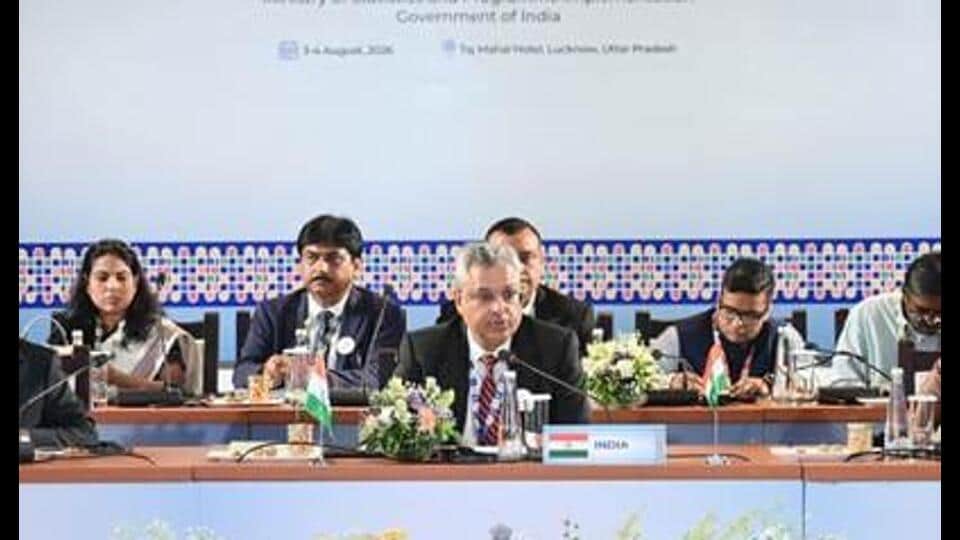
Inaugurated under India’s Chairship, the meeting brought more than 350 participants to the state capital — NSO chiefs, policymakers, academics, think-tanks, civil society members and technical experts from Brazil, Russia, India, China, South Africa, Egypt, Ethiopia, Indonesia, Iran and UAE.
While BRICS as a whole is working under the theme “Building for Resilience, Innovation, Cooperation and Sustainability”, India chose “Quality Statistics as Driver of Change” for the 2026 Statistics Track. Saurabh Garg, secretary, ministry of statistics and programme implementation (MoSPI) and Chair of BRICS 2026 Statistics Track, told delegates that the world now demands statistics that are faster, more granular and more trusted.
The priorities for this year, he said, are clear—modernise national statistical systems, tap administrative data and Digital Public Infrastructure and strengthen data governance and privacy. “Through technical exchanges and shared experiences, BRICS member nations aim to bridge data gaps, drive evidence-based decision-making, and build resilient statistical systems for the future,” Garg said.
Alok Kumar, principal secretary, planning and programme implementation, UP, underlined how states are now at the centre of India’s data revolution.
In their opening remarks, NSO heads from all 10 participating countries reaffirmed commitment to the BRICS Statistics Track. The message was consistent: more knowledge sharing, harmonised methodologies and innovation in how official statistics are produced.
In the technical session “From Digital Platforms to Execution-Level Experience”, India, Brazil, China, Egypt, Indonesia, Russia, South Africa and the UAE presented how they are using digital tools to make data more accessible to citizens, researchers and businesses.
Another session on “Transformational Reforms in Statistical System” featured India, Ethiopia, Russia, South Africa and the UAE sharing institutional reforms to cope with a rapidly changing data ecosystem.
Alongside, a side-event with CivicDataLab focused on ‘Unlocking the potential of Administrative Data’. Experts argued that data already collected by government departments — from health to transport — could become a strategic resource for timely, cost-effective statistics, if metadata is harmonised and systems made interoperable.


