
 E-Paper



Canine shelters across Lucknow battle the bitter cold
The population of stray dogs in Lucknow currently stands at well over a lakh, and dogs over 7 - 8 years of age are even more susceptible to hypothermia, say experts.


Reports of hypothermic stray dogs are pouring in from across the city, what with the dropping temperatures and sporadic spells of rain this past week. The population of stray dogs in Lucknow currently stands at well over a lakh, and dogs over 7 - 8 years of age are even more susceptible to hypothermia, say experts.
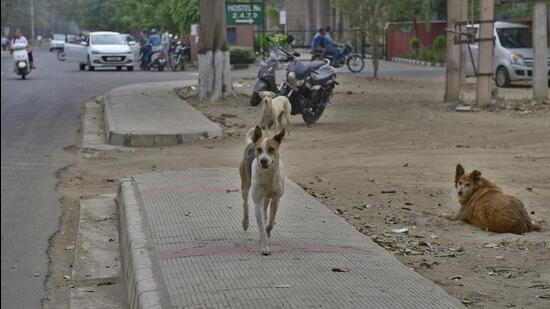
“On the day it rained, we had twenty reports and walk-ins at our shelter, all dogs suffering from hypothermia,” said Vishakha Shukla, founder of Nawabi Tails rescue shelter here. On Tuesday, Jan 9 alone, by afternoon, the shelter had received 13 reports and 8 walk-ins. “We have to check their kidney function and then either send them home with medication or keep them for further observation. Sometimes, when they get hypothermic, they cannot move to go in search of food, so they starve; in some cases, their kidneys fail,” she added.
Shukla said that the symptoms of hypothermia, apart from the obvious shivering, include dilated pupils, stiff muscles, pale eyes, a lack of appetite and energy. “And this is a very real risk for stray dogs,” she added. Through her shelter, she has set up around 16 temporary dog houses made out of discarded water tanks, around her shelter in Gomti Nagar, and 50 more across the city, so the strays have a warm place to take shelter during the night.
Supriya Srivastava, a resident of Indira Nagar and ardent dog lover, has taken all the strays in Indira Nagar under her wing. With around 60 - 70 dogs in her assumed care, she has set up 15 wooden as well as temporary dog houses across the area. “We have put out jute mattresses and also made some of the dog houses with plastic screens on one side, as some of the dogs tend to get claustrophobic in small spaces,” said Srivastava. She also added that these dog houses are erected on brick platforms so that any running water on the street does not trickle into the houses.
Humane Society India (Lucknow) is the NGO partner that handles sterilisation of stray dogs in the city and also runs a walk-in clinic for dogs in the city. They have also undertaken distributing dog clothes and setting up dog houses around Lucknow. “We have conducted awareness programs with our community volunteers and representatives, educating them about the kinds of food to feed stray dogs in winter and what to avoid, how to set up temporary dog houses in localities, distributed 60 dog clothes to different volunteers to motivate them, and more - these dog houses are especially needed for pregnant dogs and newborn litters,” said Divyanshi Pandey, of HSI Lucknow. Pandey estimates that through their outreach programs, almost 200 temporary dog shelters have been set up across the city.
Dr Piyush Patel, director, Companion Animals and Engagement, HSI India, said, “In winter, temperatures can drop to life-threatening levels for stray dogs. They are more susceptible to illnesses, hypothermia, and frostbite and are forced to scavenge for food and water amidst the scarcity of these resources. This also leads to malnutrition and dehydration, making them even more vulnerable to infections. Providing them a warm shelter or area with blankets, towels, or cardboard with water bowls and high-calorie food in winter would help save lives and make for a more compassionate society.”
Extreme conditions in different seasons pose different risks to stray dogs, and they must be managed as such. It falls upon rescue homes and community well-wishers to take these much-needed steps for the welfare of strays.
Dog clothes not feasible
Some animal welfare activists say that despite the cold, dog clothes are not a feasible option for strays. Srivastava explained, “Often dogs will go and lie down in the remains of a bonfire as the ashes are still warm. Any embers still burning in the ashes could light the material on fire, and dogs are obviously not capable of taking off the garment themselves as efficiently.” Shukla of Nawabi Tails agrees and cites a different reason. “Sometimes dog clothes can cause more harm than good - the dewdrops settle on their clothes overnight and make it wet, and laying in those garments would further lead to them getting hypothermic and sick,” she said.


