
 E-Paper



Covid-19 sero survey in Varanasi aims to test around 1400 samples in 3 days
The sero survey will give an indication of the spread of the disease within a community, which in turn will establish the level of herd immunity to the disease developed through antibodies.


A three-day long sero survey started in Varanasi on Wednesday to assess the prevalence of Sars-CoV-2-- the virus that causes coronavirus disease (Covid-19)-- by projecting the percentage of population likely to have been exposed to the infection in the district.
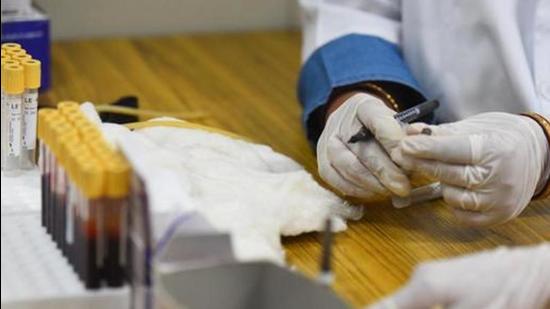
The survey comes close on the heels of the fourth round of the nationwide sero survey, announced by the Indian Council of Medical Research, beginning in 70 districts across the country. This survey will also include children aged 6 years and above.
In Varanasi, a total of 16 teams conducting the survey will collect 24 samples each from 31 identified rural and urban pockets, besides, 36 samples each from 18 slums in urban areas. These samples, including the 648 from the slums, will be sent to the microbiology department of the King George’s Medical University (KGMU) in Lucknow to arrive at the percentage of samples showing antibodies against the virus.
Blood samples in a sero survey are tested for the presence of IgG (Immunoglobulin G) antibodies that determine a past infection due to the virus. Sero surveys are also important to determine whether the disease has entered the community transmission stage or not.
Varanasi district surveillance officer Dr SS Kanaujia said each team engaged in the sero survey comprises a doctor, a lab technician, an Auxiliary nurse midwife (ANM) and an Asha worker. They collected 408 out of the total 1392 samples on the first day of the drive.
Chief medical officer Dr VB Singh said the health department divided the general population areas into 4 regions on the first day to ensure the samples were uniformly spread. Teams collected 6 samples from each identified region. They included two women and two men (adults) and two boys and girls in the age group of 5 to 17 years. Similarly, samples of 9 residents were taken from slum areas. These included 3 women and 3 men and 3 boys and girls in the age group of 5 to 17 years.
The sero survey will give an indication of the spread of the disease within a community, which in turn will establish the level of herd immunity to the disease developed through antibodies.


