
 E-Paper



Death due to wrong blood transfusion: Allahabad high court orders formation of committee
Allahabad high court orders submission of report to director general medical education within 5 weeks, says it is constitutional obligation of state, its functionaries to ensure right to life is not violated


The Allahabad high court has directed the state government to form a high-level committee in the matter of woman patient’s death at Swaroop Rani Nehru (SRN) Hospital in Prayagraj last year due to wrong transfusion of blood by the hospital. The high court passed the direction after the state government admitted the incident before it. The court also ordered that a comprehensive report outlining necessary “infrastructural or procedural directives” must be submitted to the director general medical education (DGME) within five weeks.
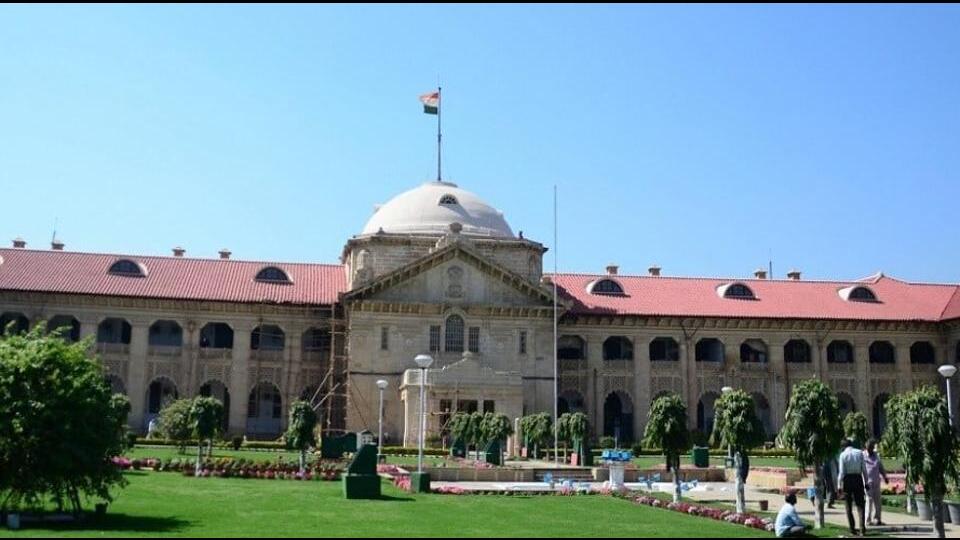
A division bench comprising Justice Atul Sreedharan and Justice Siddharth Nandan also sought assistance from the additional advocate general (AAG), who represents the Uttar Pradesh government, and the petitioner’s counsels regarding the parameters within which a constitutional court can grant compensation in such cases.
The court passed this order on February 2 while hearing a plea filed by Saurabh Singh, the son of the deceased woman.
Swaroop Rani Nehru hospital is an associated hospital of Moti Lal Nehru Medical College, a state-run medical college of Uttar Pradesh.
During the proceedings, the AAG, representing the state, admitted that while the deceased was ‘O’ Positive, ‘AB’ Positive blood was administered to her, leading to severe post-operative complications and she later died.
The high court also noted that the medical documents placed on record prima facie indicated that the subsequent treatment given to the deceased was merely an attempt to “offset/counter the ill effects of the transfusion of wrong blood group”.
Taking a stern view of the incident, the court observed that the Right to Life is a fundamental right enshrined in Article 21 of the Constitution of India.
The court said that it is the constitutional obligation of the state and its functionaries to ensure that this right is not violated in any manner. The court explicitly noted that the principal of the medical college was under a duty to ensure that the rights of the patients admitted in his medical college are protected, and that the admitted incident clearly reflected a failure of that duty.
Since the state did not dispute that the cause of death was the transfusion of the wrong blood group to the woman, the court observed that it did not need to adjudicate on the issue of negligence.
To prevent a recurrence of such cases, the court directed the newly impleaded director general of medical education (DGME), UP, who is sixth respondent in the case to instruct the hospital administration to constitute a committee. The court stated that this committee will be chaired by the principal of the medical college, include members from different departments and collect data and recommendations necessary for the overall functioning of the medical college.
The court added that the committee must ensure that in future no such untoward incident takes place just because of a lack of facilities.
The court further clarified that the director general is under an obligation to provide all necessary assistance, whether financial or administrative, to implement these safety measures.
The court has also directed the principal of Moti Lal Nehru Medical College to file a personal affidavit bringing on record the committee’s report and the director general’s response. The matter has been listed for further hearing on March 23, 2026.


