E-Paper



Despite ‘Drive for Zero Road Fatalities’, 106 accidents, 53 deaths in January alone in Prayagraj
During the National Road Safety Month observed from January 1 to 31, there were 106 road accidents reported across the district. Apart from the 53 fatalities — nearly two every day — the accidents also left 58 people seriously injured. Traffic authorities issued 10,809 challans for various violations during the same period, pointing to a persistent gap between enforcement measures and behavioural change among commuters.

 Prefer HTon Google


Despite traffic police department’s ‘Drive for Zero Road Fatalities’ campaign launched in July 2025 in Prayagraj to eliminate road accident deaths, 53 road crash deaths were reported in January alone.
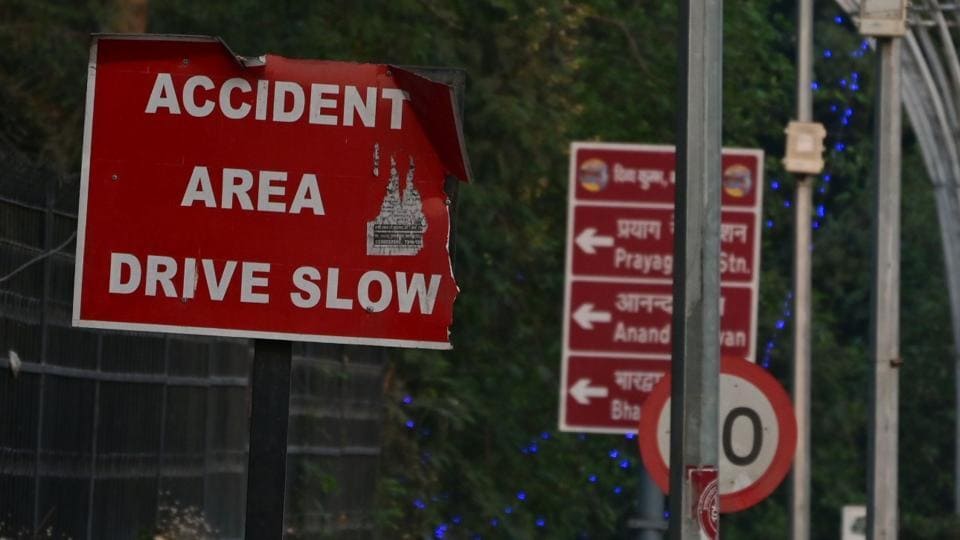
During the National Road Safety Month observed from January 1 to 31, there were 106 road accidents reported across the district. Apart from the 53 fatalities — nearly two every day — the accidents also left 58 people seriously injured.
Traffic authorities issued 10,809 challans for various violations during the same period, pointing to a persistent gap between enforcement measures and behavioural change among commuters.
The ‘Drive for Zero Road Fatalities’ initiative involved a series of corrective and preventive measures. Officials first identified accident-prone locations marked by poor lighting, low road friction, narrow stretches, blind turns and inadequate road width, followed by targeted interventions at these spots. Additional surveillance and deployment of traffic personnel were also introduced at major intersections to regulate heavy vehicular movement.
As part of infrastructure improvements, reflective tapes were installed at 176 points and fluorescent signboards at 283 locations. Authorities also sealed 248 of the 368 hazardous openings in permanent road dividers to prevent risky U-turns and wrong-side driving.
Traffic inspector Amit Kumar said commuters’ adherence to traffic rules remained the most critical factor in reducing fatalities.
“Despite extensive awareness drives throughout January, the department still had to issue 10,809 challans — an average of 349 per day. The highest number of violations (4,117 challans) was for riding without helmets, which contributes to more than half of the fatal cases,” he said.
Other violations included illegal parking (2,604), lack of valid vehicle insurance (1,007), wrong-side driving (857), non-use of seat belts (553), triple riding (423), vehicles without number plates (176), use of mobile phones while driving (27), black film on vehicles (13), and drunken driving (3).
To further mitigate accident risks, the department has begun installing coloured rumble strips at blind turns and narrow crossings. Of the 39 identified locations, work has been completed at 17 sites within the city, while work at the remaining spots is under way.
IN A MONTH
- 106 road accidents recorded in the district.
- 53 commuters died in these accidents, nearly two everyday.
- 58 people suffered critical injuries.
- 10,809 challans issued during National Road Safety Month.
- 349 challans issued per day.
- 4,117 challans issued for no helmet, 132 per day.