
 E-Paper



Frame clear policy for grant of compensation, HC tells UP govt
The court observed that whenever the government provides compensation outside the scope of statutory schemes, there should be defined parameters for determining the amount payable

 Prefer HTon Google


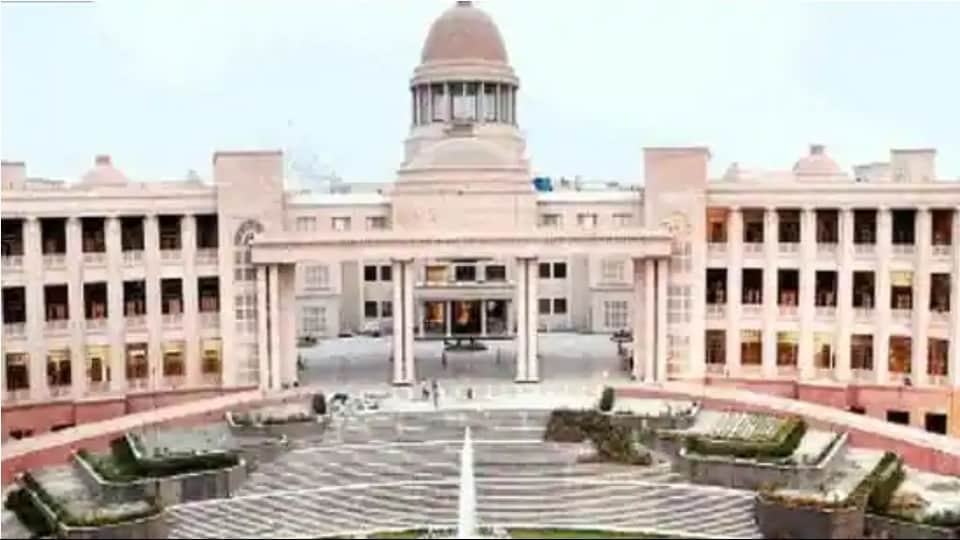
LUCKNOW The Lucknow bench of the Allahabad high court directed the Uttar Pradesh government to consider framing a clear policy and parameters for determining compensation in incidents other than natural calamities, observing that payment of different amounts in different cases could lead to discrimination and arbitrariness.
The matter has been posted for the next hearing on October 15, 2026.
The division bench of justice Rajan Roy and justice Manjive Shukla passed the order on September 9, (uploaded on Monday) on a PIL filed by lawyer Shivendu Pandey. The petition sought directives for the formation of an independent, time-bound and court-monitored committee to investigate the incident.
Additional advocate general (AAG) Vinod Kumar Shahi, representing the state government, informed the court that the government was taking appropriate and effective action to prevent such incidents.
The court asked the state counsel to address on the policy, if any, of the state government in this regard.
The court was informed on strength of the counter affidavit (reply) filed by state authorities that as of now, the policy for payment of compensation is only in respect of natural calamities, but not with regard to the incident such as the one at hand or which may otherwise occur.
The court directed the state to formulate a policy for payment of compensation in cases which are not covered by any statutory provision. It observed that whenever the government provides compensation outside the scope of statutory schemes, there should be defined parameters for determining the amount payable.
“We do not wish to narrate incidents herein because they are umpteen in number. Sometimes some police atrocities are committed and the state government grants compensation, in other situations there are statutory provisions such as under the SC/ ST Act. Therefore, the state government wherever it grants compensation outside the purview of any statutory provisions, it should have a policy laying down certain parameters on which the compensation is to be determined and paid. This is necessary to avoid discrimination and arbitrariness and also that a case which was less deserving may not get more compensation and vice versa. Let the concerned departments of the state government put their heads together and come up with such a policy,” the court directed.
It noted that families of each of the 15 persons who died in the fire on June 22 in Aliganj received financial assistance from different sources, totalling around ₹11 lakh to ₹12 lakh.
This included ₹5 lakh from the Chief Minister’s Discretionary Fund, ₹4 lakh from the State Disaster Response Fund and ₹2 lakh from the Prime Minister’s Relief Fund.
However, the victims’ families, who filed the intervention application through their advocates, submitted that some of the kin had not received ₹2 lakh from the Prime Minister Relief Fund. At this, the court directed the counsel for the Union of India to get the facts verified. As far as the state is concerned, let it come up with a policy in this regard, the court said.
‘Expenses on treatment of injured to be borne by state’
The court also took note of the condition of Jayant Gupta, 25, who suffered serious injuries and disability in the fire and is undergoing treatment at King George’s Medical University (KGMU).
Rohit Tripathi, counsel appearing for the victims’ family, informed the court that his treatment costs around ₹70,000 a month, while he has received only ₹50,000 as compensation so far.
To this, the bench observed prima facie that the incident could not be attributed only to the building owner’s lapse, as the role of authorities also required consideration for allegedly allowing the building to come up and be used for commercial purposes illegally.
“Therefore, we are of the opinion that the least that the state can do is to pay the bills of the said injured person. Let the concerned department of the state government do the needful. The KGMU shall ensure that it will not charge any expenses from the injured person admitted there and shall administer treatment to him adequately and properly. If any expenses are required to be borne, the same shall be demanded from the state government and the state government shall ensure its payment. The patient shall not be made to pay for his treatment,” the court directed. Inputs from PTI


