
 E-Paper



From local to global: Rural weavers of UP feted
Hukum Singh, a Chanderi weaver from Kanpur, recalled 2010, when his life turned around. He said that several schemes and loans made available for artisans by the government had helped to uplift his family’s traditional art.

 Prefer HTon Google


LUCKNOW: The 10th National Handloom Day was celebrated at the UP Institute of Design Research here under the aegis of the micro, small and medium enterprises department on Wednesday, as part of the week-long celebrations which will go on till August 9. State and national awardee weavers, hailing from small villages of UP who are now making a mark internationally were felicitated on this day.
Hukum Singh, a Chanderi weaver from Kanpur, recalled 2010, when his life turned around. He said that several schemes and loans made available for artisans by the government had helped to uplift his family’s traditional art.
A third generation weaver, Singh said, “The traditional art of Chanderi weaving was decreasing in relevance, so I was very worried. “It was sheer luck that my work caught attention when I gifted a handwoven Chanderi saree to actress Kareena Kapoor who visited Kanpur with other members of the cast for the shooting of the film ‘3 Idiots’.”
He said he had collaborated with renowned global designer Rahul Mishra, who created looks for celebrities across the world. It was with his help that Mishra bagged the reputed Woolmark award at the Milan Fashion Week in 2014.
Also present and felicitated at the event were Pyare Lal and Malti Maurya, who are panja dari artisans from Varanasi. Having won a national and state award respectively for their work, both husband and wife have dedicated their lives to further the art form. While Pyare Lal manages the business alongside making panja dari pieces for bulk and special orders, his wife is training 100 women from their village in Varanasi.
“In a village where maybe 2 - 3 women would do panja dari work, now there are 100 women who have been trained and are training others. We never imagined that our work would not only reach other states but other countries as well,” said Pyare Lal. “If the weavers and art forms in India are promoted, we will never have to look outside our own country for innovative and sustainable fashion,” he said.
Pyare Lal said that now that they were identified as artists and several welfare and empowerment schemes for artisans were launched in the state in 2014, “with the added assistance from the state government, we feel that we may actually be able to develop this as a lasting business in our village.”
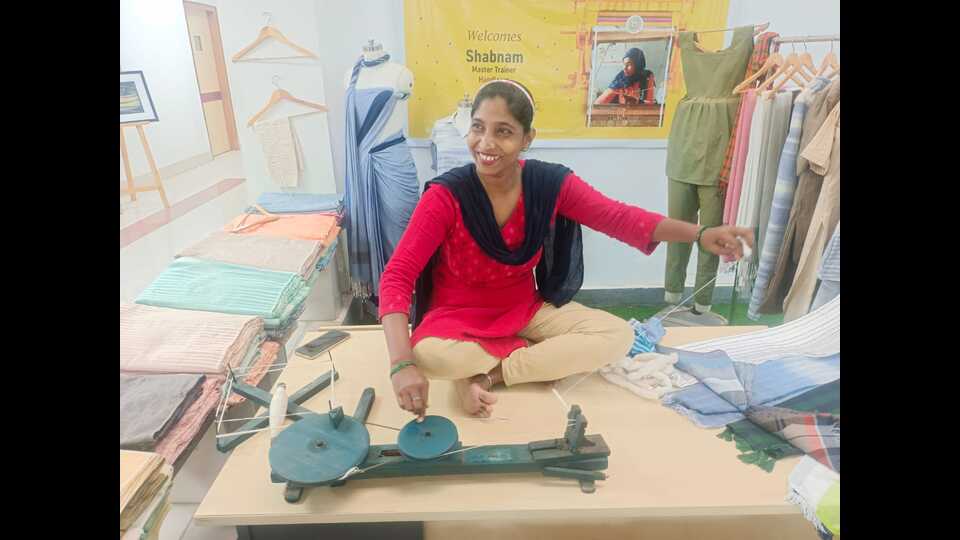
After felicitating these rural artists before the grand Sant Kabir statue on the UPIDR campus, several other events followed on the 10th National Handloom Day, including a panel discussion on the importance and ways to promote Indian handlooms and textiles. There was an exhibition with weavers showing live demonstrations of their local handloom techniques and a fashion show by the students showcasing Indian prints and weaves.


