
 E-Paper



‘Ganga in Prayagraj to be fit for holy dip by December-end’
The main focus is on the development of the sewage system to check river pollution, said Anurag Srivastava, principal secretary, Namami Gange and project director, Rajya Swachh Ganga Mission.

 Prefer HTon Google


The Ganga in Prayagraj will be fit for a holy dip by December-end as there will be no flow of untreated sewage into the river, weeks before the Mahakumbh-2025 that begins on January 13, according to a senior state government official.
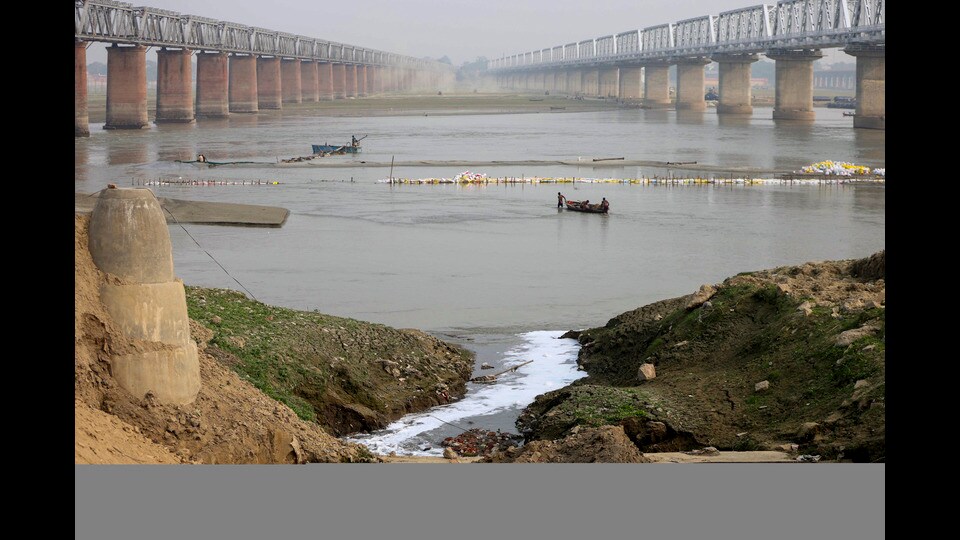
The main focus is on the development of the sewage system to check river pollution, said Anurag Srivastava, principal secretary, Namami Gange and project director, Rajya Swachh Ganga Mission.
He confirmed that work is going on to tap all the drains in Prayagraj by December-end.
Currently, the state government is working to connect the drains with sewer lines and to intercept the flow of effluents from the drains into the river before the mega religious congregation.
Where both the alternatives are not available, effluent will be treated with advance oxidation method.
The maximum households in the cities, including Prayagraj and Kanpur, are not connected with the sewer lines.
But plans are afoot to cover the whole population of the city with the sewer system, he said.
“Efforts are being made to ensure that untreated sewage does not flow into the drains but in the sewer lines. If the sewage is flowing in the drains, it will be intercepted. Before flowing into the river stream, it will be also diverted,” he said.
“We should also ensure that the effluent (is) intercepted and the discharge from the STP does not flow directly in the river, but should be diverted into the irrigation channel or the thermal power plants,” he said.
For the Mahakumbh, separate arrangements are also being made to check pollution in the Ganga.
“We have to lay the sewer network across the city to connect it with all the households to check pollution in the Ganga and the Yamuna,” Srivastava said.
There are 10 sewage treatment plants in Prayagraj and two are under construction. Till the construction of the STPs, arrangements are being made to treat the effluent with advance oxidation to ensure that untreated water is not released in the river, he said.
After December, there will be no flow of untreated sewage in the Ganga, he said.
In Kanpur, except half a dozen drains all have been tapped and the discharge of sewage into the river has also been controlled.
As the effluent released by the tanneries is the main challenge in Kanpur, a combined effluent treatment plant has been constructed and the tanneries will be connected with it to check discharge, he said.
Srivasatava said the Namami Gange department is also working on public awareness and behavioural change to dissuade people from dumping human bodies and animal carcasses in the river.
“We are also constructing ghats in Prayagraj to facilitate pilgrims in performing religious rituals and also plan to make the Mahakumbh polythene-free,” he said.
He also said construction of sewage treatment plants in Agra is nearing completion.
Within a year there will be no effluent discharge directly in Yamuna in Agra and Mathura. The discharge of effluent upstream of the Yamuna in Delhi is increasing the pollution in the river in Uttar Pradesh, he said.


