E-Paper



In a bid to protect heritage, ASI to inspect medieval site in Agra
If the “hammam” is lost, it will be the fourth such structure of historical value to go in the Taj city, heritage enthusiasts say

 Prefer HTon Google


In a bid to protect heritage, the Archaeological Survey of India (ASI) has decided to send a team to inspect the site of a “hammam” (public bathing place), presumed to be of the medieval era, in Agra.
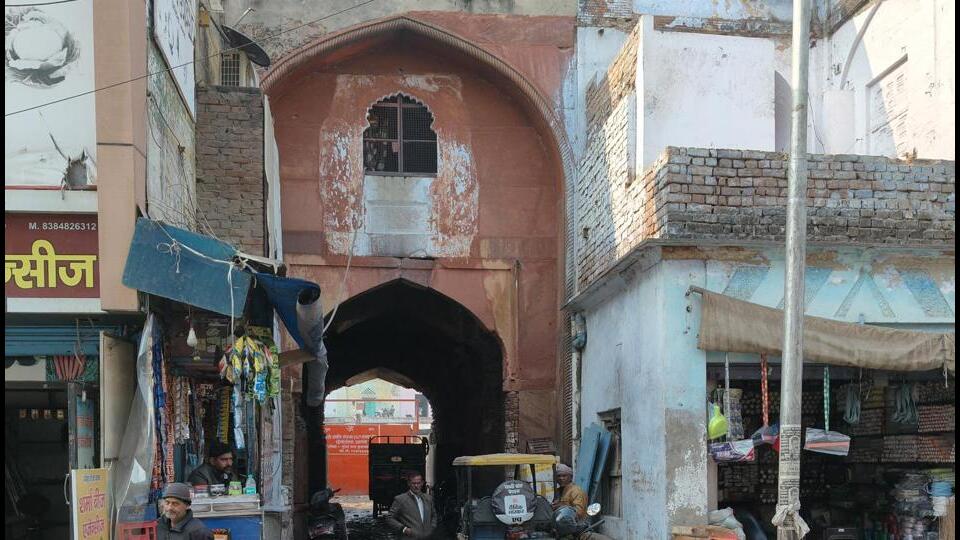
With an arched gateway in front, the site is tucked away in the vicinity of a fruit market amid palpable neglect in the congested old city area of Chipitola here. Even as the enclosure is in a shabby condition with its floor broken, the ASI’s welcome initiative comes after some heritage enthusiasts took to social media and expressed concern over “heritage being lost” in the Taj city.
The heritage enthusiasts claimed this “hammam” was built, may be by the Mughals, and it was part of a massive ‘sarai’ (inn) complex for a long time. If the “hammam” is lost, it will be the fourth such structure of heritage value to go, the enthusiasts alleged.
The others are an 18th century ‘haveli’ in old Agra, the Bhuri Khan Mosque on the Sikandra outskirts and a part of Bagh-e-Jahanara.
In particular, the heritage enthusiasts are concerned that another property of historical value will be at the mercy of the present owner, who could deny its importance and may even bring it down to suit his plans, citing his ownership rights.
Raj Kumar Patel, the superintending archeologist for Agra Circle of ASI, stated that the structure was not on the list of protected sites by ASI.
“We came to know from media about such (a) heritage structure allegedly under threat. Thus, it is deemed fit to have its inspection by a team to be sent by ASI,” Patel said.
When asked about Hammam Gate, the locals pointed towards this site, which is more famous as ‘phal mandi’ (fruit market). While the present owner removed the “encroachments” allegedly made by fruit vendors, a couple of shops still exist within the arched structure, once said to be a “hammam”.
“It is a heritage site and I heard my father saying that ‘begums’ of the Mughal rulers used to come here to take a bath in ‘hammam,’ which had seating arrangements on the first floor for ‘maid servants’ accompanying women of the royal family who used to come from Agra Fort about a kilometre away,” said a shopkeeper who feared dislocation because of possible plans of the new owner.
The locals also said that there is a basement and a well dating, possibly back to the Mughal rule, inside the enclosure.
The owner of the land justified his claim to the property, citing the sale deed in his favour, repeated surveys and a court order.
At present, there is red signage on the spot, declaring it as the private property of Suresh Chand Kushwaha, no. 26/7 Hammam Gate, Chipitola, Agra.
Suresh Chand Kushwaha, the present owner of the premises, said he purchased the said property in 2016 from the previous owner who bought the property through a sale deed executed by a court.
“The matter related to the site that I own now had reached the district administration in Agra and also the courts, but nothing came in the way of the property being transferred to me by way of a sale deed. Thus, I have each and every right to use it according to my wish,” Kushwaha said.
To a question about the site not finding place on the protected list, people aware of the issue said heritage conservation efforts originated during the British rule when The Ancient Monuments Preservation Act 1904 was brought. However, the British may have missed some structures, including the “hammam” in question, the people with an interest in heritage issues said.
Agra-based veteran Rajeev Saxena said this “hammam” finds mention in historical literature. He said it was more popular as the “hammam” built by Ali Vardi Khan, a local artisan who had expertise in building such places, which were used to bathe and dress up before visiting the court of the Mughal ruler at the Agra Fort nearby.
“This ‘hammam’ deserves a look by ASI even if it does not find mention in heritage list, which basically has its origin during British period. This ‘hammam’ is based on Persian architecture and was believed to have had arrangements for hot water supply. It was in public use on a payment basis,” Saxena said.