
 E-Paper



India’s democratic institutions a global inspiration, says Yogi
Through elected representatives, voice of the last person on social ladder finds expression in Parliament and state legislatures, says CM Yogi


Chief minister Yogi Adityanath on Wednesday said that justice, equality and fraternity were the core values that formed the soul of India’s democracy.
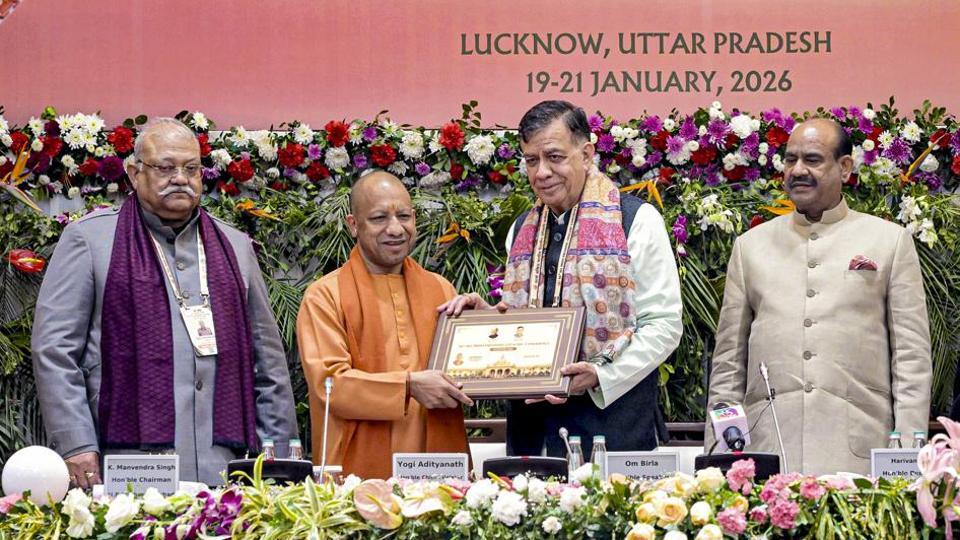
Addressing the closing ceremony of the three-day 86th All India Presiding Officers’ Conference here, he described the legislature as the foundational pillar of democracy and a key platform for framing laws as well as development policies.
“Legislature not only makes laws to ensure justice but also plays a central role in building an egalitarian society through public welfare policies,” he said.
He noted that the legislature exemplified fraternity by enabling dialogue and coordination even amid differences of opinion.
The chief minister said India’s democratic institutions were among the strongest in the world and served as a global inspiration. Through elected representatives, he said, the voice of the last person on the social ladder finds expression in Parliament and state legislatures.
Mentioning his experience as a five-time Lok Sabha MP, he said adopting parliamentary best practices had helped improve the functioning of the Uttar Pradesh assembly and Council, particularly during Question Hour, leading to wider participation of members.
Referring to Prime Minister Narendra Modi’s statement that India is the “mother of democracy,” the chief minister said the country might have diverse cultures and traditions, but it spoke and thought with one collective spirit. Parliament, he said, was the most powerful medium to strengthen this shared democratic faith.
Yogi welcomed the six resolutions passed at the conference, including discussions on “Developed India–Developed Uttar Pradesh,” in which over 300 members from both the ruling and Opposition sides participated in a 24-hour-long debate. He said the discussions generated valuable suggestions and reinforced the shared responsibility of all stakeholders in achieving the Vision 2047 goals.
He also lauded the resolution proposing a minimum of 30 sittings of legislatures annually, calling it an inspiration not only for Parliament and state legislatures but also for local bodies such as municipal corporations and panchayats. He highlighted Uttar Pradesh’s move towards paperless governance, noting that the assembly, Legislative Council, Cabinet and Budget processes are now fully digital.
Highlighting sustained debates in the UP legislature, he said extensive discussions were held on Sustainable Development Goals and constitutional duties, with outcomes translating into concrete administrative action. He said these discussions should extend to block and village levels to deepen democratic participation.
On public participation, the CM said nearly 9.8 million suggestions were received through the “Developed India–Developed Uttar Pradesh” portal. These inputs are being analysed with the help of AI tools in collaboration with IIT Kanpur and will form part of a comprehensive vision document to be launched soon.
He described the role of the presiding officers in UP as proactive rather than reactive, maintaining balance between the treasury benches and the opposition. He praised the UP Assembly speaker and Legislative Council chairman for their leadership and termed such conferences as platforms to “learn and teach.”


