
 E-Paper



Keeping up with UP: Why insult women politicians in political slugfests?
The rise of women from being homebound to Parliament or state assemblies has routinely been described as nepotism as many have been from political families.

 Prefer HTon Google


The Samajwadi Party’s (SP) national president Akhilesh Yadav recently visited a mosque near Parliament House in New Delhi with his MP wife Dimple Yadav, who was attired in a saree.
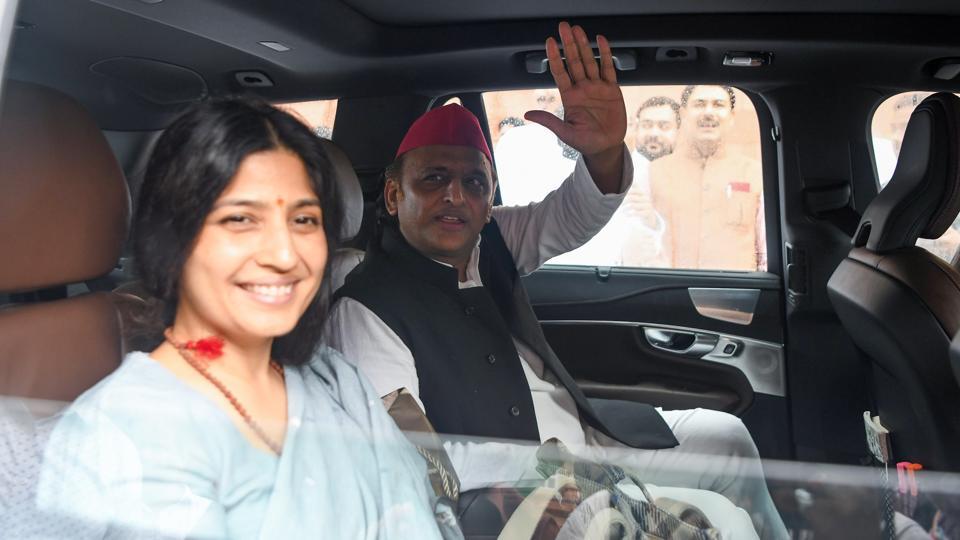
This, unexpectedly, kicked off a controversy with a Bharatiya Janata Party (BJP) Minority Morcha leader taking exception to Dimple’s ‘pehnava’ (the Indian saree). The leader’s comments crossed the line and were against a woman’s dignity.
Samajwadi Party (SP) MP from Rampur Mobiullah Naqvi, who is associated with the mosque, defended the Yadav couple by mentioning the previous visits of leaders to the ‘historic mosque’. The SP quickly released a picture of Prime Minister Narendra Modi’s visit to some other mosque. The visit created a storm in the political circles and the exchange of barbs will continue.
The issue here, however, is the undignified language in which Dimple was described. A few days later, a Maulana also used atrocious language to describe this. This kicked off a storm with some BJP leaders, who till the other day were demanding apology from Dimple and Akhilesh for turning mosque into a political centre, came out in her defence. An FIR was also lodged. On the other hand the Samajwadi Party MP Iqra Hasan demanded social boycott of the Maulana.
The scorn targeted at women in politics is not new. The MP from Kairana, Iqra Hasan, recently suffered humiliation and embarrassment when a Karni Sena leader Yogendra Rana, who identified himself as its vice president, in a social media post, expressed his willingness to marry, or have ‘nikah’ with, her. Significantly, locals, including Hindus, had come out in the defence of Iqra, who describes herself as a “leader of all communities.” The party later filed a police complaint against Rana while Karni Sena dissociated from him and his statement.
The question is if Dimple and Iqra, both hailing from prominent political families, have to face verbal abuse, how safe are other women politicians at the village, district, state levels? Dimple is the daughter-in-law of the one-time powerful leader, the late Mulayam Singh Yadav, and Iqra is a third-generation politician. Similarly, both actors-turned-politicians Smriti Irani and Kangana Ranaut frequently face character assassination on social media.
A look at the past reveals a disturbing trend. Mamata Banerjee, the West Bengal chief minister, Mayawati, the former UP chief minister and J. Jayalalithaa, late Tamil Nadu chief minister, faced physical assaults while they were climbing the political ladder in their respective states. Late JD(U) leader Sharad Yadav had once made disparaging comments against women leaders with short hair – ‘balkati’.
For one, the rise of women from being homebound to Parliament or state assemblies has routinely been described as nepotism as many have been from political families.
Women politicians, from late PM Indira Gandhi to village pradhans, have faced objectionable comments. Some get reported, some not as many of the women politicians lack the voice or are bound by party discipline to publicly take on their perpetrators. Can it be a good sign for democracy when women in high or low positions have to bear the brunt of such mindless utterances? And when high-profile public representatives are not safe and are humiliated verbally or physically, how can the women on the street feel safe?
It is time to bring in a law to check such unwarranted incidents in future. Perhaps, laws such as POSH (Prevention of Sexual Harassment of Women at Workplace) may give some protection to women leaders, whether in the party organisation or in the legislatures. At a time when the government is in the process of implementing 33% quota for women in state assemblies and the Lok Sabha, political parties should initiate steps to check such misogynistic mudslinging.
The BJP has consistently spoken out against dynastic politics but how many independent women professionals would join politics in such a regressive atmosphere? A related question is: how and from where will political parties get candidates for assembly and Lok Sabha elections once the 33% quota is implemented. The Congress, for example, had promised 40% tickets to women in the 2022 assembly elections in Uttar Pradesh. Despite the best of intentions, the idea failed miserably.
Campaigns like ‘Ladki Hoon, Lad Sakti Hoon’ or ‘Beti Padao, Beti Bachao’ will be successful only when women feel safe in their workplace, whether it is in offices of political parties or other organisations.


