
 E-Paper



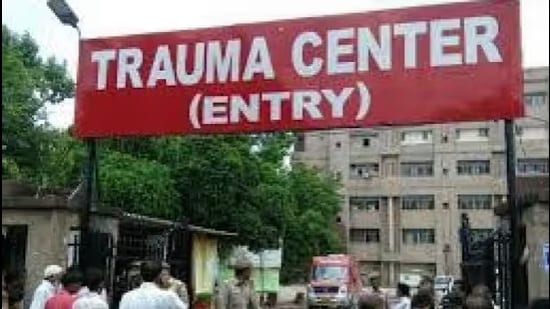
Conveyor system planned at KGMU Trauma Centre - Attendants will no longer run test samples to lab
KGMUTC has about 400-beds and all surgical departments including orthopaedic, general surgery, plastic surgery, neurology, medicine and neurosurgery, and on an average, they get over 300 serious patients every 24 hours.


Less legwork for the attendants of patients at King George’s Medical University Trauma Centre (KGMUTC) is the aim, as the facility plans to install a pneumatic tube conveyor network for transporting pathology tests’ samples from wards to the laboratory.
“The survey is done for the entire building and a map to connect the wards with a pneumatic tube network is ready. The system will be in place within two months from the day the tender process is completed,” said Prof Sandip Tiwari, chief medical superintendent, KGMUTC.
The KGMUTC has about 400-beds and all surgical departments including orthopaedic, general surgery, plastic surgery, neurology, medicine and neurosurgery, and on an average, they get over 300 serious patients every 24 hours. The heavy flow of patients keeps the labs busy round-the-clock and with multiple tests needed for one patient. Attendants keep moving from one counter to another, which is a common scene at any given time.
The introduction of a pneumatic tube system will cut down this movement as the attendant will not need to carry samples to the lab. The nurse will simply keep the sample in a specific box with details of the tests required and details of the patient filled in a form and the box will reach the lab on its own via the tube system. Later, the test reports will reach the ward.
“There are two benefits of this. First, the sample will reach without any delay. Samples usually move from ward to the counter of the lab first and then inside the lab and this not only delays the test but also increases the chances of the sample getting spoiled. Secondly, as attendants will not move out of wards, the chances of attendants falling sick with hospital-based infection will be reduced considerably,” said Dr Abhishek Shukla, secretary-general, Association of International Doctors.
To cut down on the queue for depositing charges for the test, the KGMU is going to introduce an online payment system where an estimated amount will be deposited against the central registration number of the patient, and fee from it will be deducted for each diagnostic test conducted including pathology, radiology tests.
“We first tried to reduce the queue by increasing the counters. When it did not bring desired results, we decided to use technology,” said Prof Sandip Tiwari, also HoD, trauma surgery, KGMU.
The system will later be replicated at Shatabdi Hospital building and Gandhi Ward on the campus.


