E-Paper



King of fruits may fall victim to early heat fury this year
With mango crop already vulnerable to climate change impact, output in northern India may be hit by heat wave, say ICAR-CISH experts

 Prefer HTon Google


LUCKNOW With horticulturists already battling the impacts of climate change, mango yield in northern India including Uttar Pradesh, known for its prized Chausa, Dussehri and Langra varieties globally, may be hit by the earlier-than-usual summer this year, said experts at Lucknow’s ICAR-Central Institute of Subtropical Horticulture (CISH).
The northern belt accounts for 40% of the total mango production in India. Of 21 million metric tons, 4.8 MT comes from UP alone, informed T Damodaran, the institute’s director.
Farmers are in a spot of bother with the Indian Meteorological Department (IMD) predicting a significant rise in temperature in days to come. The mercury is expected to go up to 43 degrees Celsius in days to come, which may not be ideal for mango flowering, said experts at the institute.
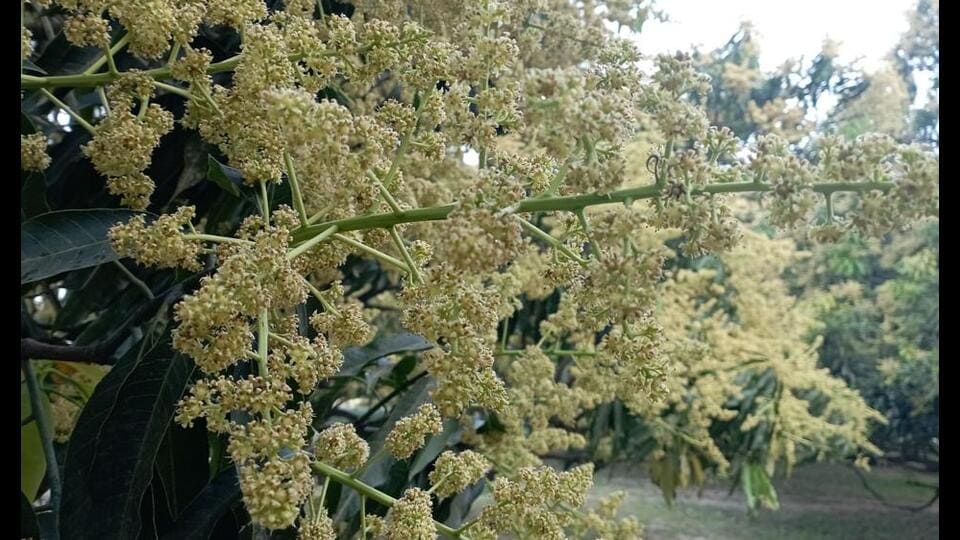
Unlike the previous year when mango produce was affected due to untimely hailstorm, thunderstorm and semi looper insects, mango flowering this year is good due to warm weather. But fruit produce may again suffer due to extreme climatic conditions expected in coming days, they added.
“Looking at the intense heat wave forecast over the next 30 days, where the temperature is expected to go up to 43 degrees Celsius soon, policymakers and mango lovers have started having doubts about the fate of the mango crop for the current season,” said the institute dedicated to mango research for northern and eastern regions in a statement.
Damodaran said high temperature during fruit formation is usually expected to favour the crop, however, sudden temperature rise may result in a higher fruit fall, if it is not managed with light to moderate frequent irrigation to keep the crop moist.
Mango crops are often considered the most vulnerable to climatic changes during flowering-fruiting period. The most crucial period for the crop falls in March-April when night temperatures start rising above 15 degrees Celsius, which decides the flowering and fruiting of mango crop, he explained.
“The current season witnessed delayed flowering as night temperatures in most of the northern region remained low during February and March. However, as the temperature started rising gradually, flowering was initiated and due to the gradual rise in day and night temperatures, the weather of March and early April did not affect the flowering, pollination and fruit set,” said the director. “The flower growth is better this year, and if all goes well, it will give a bumper produce,” he added.
‘EXTREME HEAT BURNS FLOWERS’
The president of All India Mango Growers’ Association, Insram Ali, also a farmer in UP’s Malihabad, which is popular for its mangoes, said extreme temperatures during the flowering season (March-April) damage flowers as they are not able to bear the heat. Even low temperatures are bad for the flowers. “Mango flowers do not increase in such hot weather conditions. Right now, they are pea-sized and some are as small as mustard. They need to be at least 3-4 inches in size,” he said.
The Mal-Malihabad region, which is the leading producer of mangoes in northern India and UP, and is especially known for the popular variety Dussehri, has had low flowering this year (only 30-35%), said Ali.
LOSS IN PREVIOUS YEARS
In previous years also, 25-30% of the mango produced was lost and damaged due to unprecedented weather.
According to ICAR-CISH, Lucknow, the mango production in Mal-Malihabad bordering the Sitapur area was affected by 35% and 20-25% in other districts of UP due to unseasonal rainfall and hailstorm in March and April.
“For the last few years climate change has affected mango production. Extreme heat conditions were seen a few years back, and at that time also, farmers reported major loss,” said Ali suggesting that there should be some insurance for mangoes as well as other crops so that farmers can bear the loss due to natural reasons.
WHAT CAN BE DONE?
The growers are advised to go for bagging of fruits to protect them against excess transpiration loss during the heat wave, along with mulching that could create a favourable microclimate for fruit set.