
 E-Paper



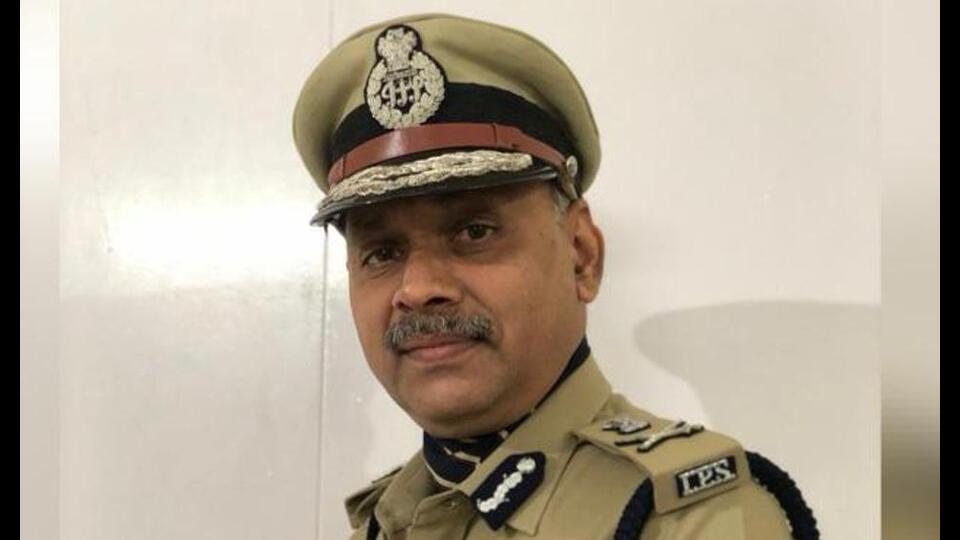
Laws on crimes against children, women have become stricter: ADG (HQ) Sunil Kumar Gupta
Replacing colonial-era laws with new Bharatiya Nyaya Sanhita, 2023, in Uttar Pradesh poses a major challenge, requiring training from lower-rung constables to IPS officers.

 Prefer HTon Google


Replacing the colonial-era Indian Penal Code (IPC), Criminal Procedure Code (CrPC), and Indian Evidence Act with the new Bharatiya Nyaya Sanhita (BNS), 2023, Bharatiya Nagarik Suraksha Sanhita (BNSS), 2023, and Bharatiya Sakshya Adhiniyam (BSA), 2023, would be a major challenge as it requires training of police officers at all levels, from lower-rung police constables, sub-inspectors, inspectors, to Provincial Police Service (PPS) officers, as well as Indian Police Service (IPS) officers. Rohit Kumar Singh had a conversation with additional director general (ADG) headquarters, Sunil Kumar Gupta, who has been overseeing police training across the state, about the three new laws. He spoke in detail about the training process and implementation of the new laws.
How challenging is the job to train cops right from lower-rung police constables to IPS officers of UP Police, given its size?
We have been preparing for this transition since December 2023, when the new laws came into existence. Firstly, 289 master trainers, ranging from sub-inspector to PPS officer rank, received thorough training on the new laws by the Bureau of Police Research and Development before March 2023. Besides, independent law professors and experts, as well as those from universities were roped in for the training process at eleven different police training centres and schools in Uttar Pradesh.
So far, 424 IPS officers, 1,144 PPS officers, 5,011 inspector-rank officers, 36,271 sub-inspectors, around 7,532 head constables, and 70,000 constables involved in work related to registering FIRs have already been trained through various training programmes carried out since March 2024.
What was the training module and the time frame to accomplish this task?
Both offline and online facilities have been made available. For example, IPS officers were allowed to take the training in a hybrid model, both offline and online, on March 6. Similarly, PPS officers were trained on March 13. The focus then shifted to police officers of lower ranks, from inspectors and sub-inspectors to head constables and constables. Those posted in different wings who don’t deal with routine policing were trained offline in 11 different police training colleges and centres, while inspectors and sub-inspectors in charge of police stations were allowed to take the course online.
Moreover, sub-inspectors, head constables, and constables deployed in office work at police stations were trained offline at their respective police lines. So far, 100% of IPS and PPS officers have completed the training, while 97.5% of inspectors, 92% of sub-inspectors, and 93% of head constables and constables have also completed it. Training for the remaining police personnel, mostly beat head constables and constables, is underway and will be completed soon. A handbook has also been provided to them for reference while registering FIRs and conducting investigations.
How will the assessment determine if the knowledge gained by lower-rung cops is sufficient to handle routine cases?
We are making our best effort to train the cops. While senior police officers have undergone short assessment tests, lower-rung cops will gradually unlearn the old laws and learn the new ones. That’s why multiple officers at one police station—from inspectors and sub-inspectors to head constables and constables—have been trained, so that mistakes can be rectified through the process.
Don’t you think cops will struggle to handle both laws, given that old pending cases will be dealt with under the old law and new cases under the new law?
It is part of the job and professionalism. One must take a leap forward when changes are made to the system. A comparison chart of old laws and new laws has also been circulated among cops to help them better understand the new laws.
How will the common man learn about the new laws?
UP Police, along with various district police departments, are spreading awareness among the public by regularly posting significant laws through social media.
Any significant highlights of the new laws?
The intent behind these laws is to deliver justice within three years and eliminate cases that have been pending for several years in a transparent and genuine manner. The laws related to crimes against children and women have been made stricter and more specific. Six sections for minor offences include provisions for community punishment, requiring the accused to perform community work for a limited period. Sedition has been completely abolished, and the new law now focuses on actions that harm the sovereignty and integrity of the country.


