
 E-Paper



Life certificate challenges: Sans aid, facilities, elderly pensioners struggle through verification process
Elderly pensioners face challenges with life certificate verification at treasury offices, struggling with long queues, mobility issues, and limited digital access.


Pensioners endure significant challenges as they visit treasury offices to submit their life certificates, an essential verification to continue receiving pension.
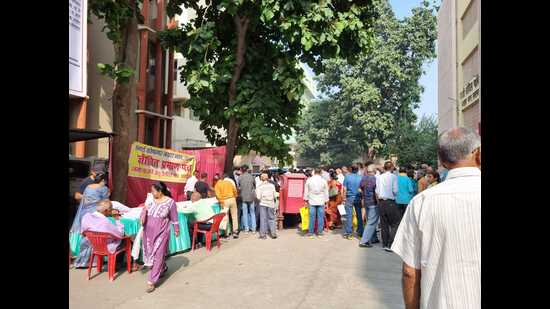
Scenes of elderly citizens, many above the age of 70, navigating long queues, dealing with mobility issues, and facing verification problems due to ageing, are common.
For many, the delay in the verification process is due to the biometric check, which includes fingerprint scanning. This check often takes forever to be read due to natural wear and tear of fingerprints due to age. Some elderly cannot stand for too long and no proper seating arrangements are in place.
Chief treasury officer, Anand Kumar, has addressed these challenges, acknowledging the difficulties pensioners face. “In cases where people cannot come due to health or mobility issues, we try to send someone to their houses to help with verification,” he explained.
Kumar highlighted that there are three methods for submitting the life certificate, including a digital submission option on the official website, where pensioners can verify their status online.
However, only about 20-25% of pensioners utilise this online method due to unfamiliarity with digital tools. This has left the majority of pensioners reliant on physical visits to the office, often involving an hours-long wait in lines without adequate facilities, he added.
The reluctance of some pensioners to use banks for life certificate submission adds to the foot traffic at treasury offices. Pensioners like Vishwanath Prasad, who retired in 2016, prefer visiting the office personally.
“We can get life certificate forms at our bank, but I don’t trust them to send it to the department correctly, so I come here myself to ensure it’s done,” Prasad explained.
Another pensioner, Ashok Kumar Saxena, noted that he makes the trip every November, despite the challenges involved.
Facilities at the treasury department also fall short of accommodating elderly visitors. Several pensioners reported insufficient seating and limited staff at counters, resulting in a strenuous experience for individuals with health and mobility issues.
A pensioner who wished to remain anonymous, expressed problems and various issues with the lack of chairs and assistance for filling out forms, noting that these basic accommodations would make the process less taxing.
Another pensioner said, “I have to run to the office several times to get the verification and other necessary formalities completed as my fingerprints don’t get read due to age”.
Meanwhile, pensioners residing abroad can submit their life certificates at local embassies. However, in India, a lack of digital literacy and concerns over submission errors are keeping most elderly citizens tied to the traditional, in-person verification process at treasury offices.
The treasury department continues to urge pensioners who can access the internet to use digital submission options to streamline the process, but, as of now, only a fraction of pensioners are able to do so. This digital gap underscores a significant need for more user-friendly systems and perhaps more outreach or education to assist pensioners in accessing these online services.
Until then, most will continue to endure the difficult journey to the treasury offices each year, in hopes of keeping their essential pension income uninterrupted.
District magistrate Suryapal Gangwar said, “There is no need to stand in lines any more. People can now directly approach the nearest post office, from where a designated person will visit the residence of the pensioner to handle the verification and resolve related issues.” He added, “The service will cost ₹70, and we are continuously informing the public about this new, more convenient process.”


