
 E-Paper



Miyawaki forest for biodiversity, climate resilience at Kanpur Road
Miyawaki method is one of the most effective tree-planting methods for creating a thick forested area on degraded land previously used for agriculture or construction.

 Prefer HTon Google


The Council of Scientific and Industrial Research–Indian Institute of Toxicology Research (CSIR-IITR), Lucknow, dedicated a natural Miyawaki forest at its CRK Campus on Kanpur Road on Tuesday.
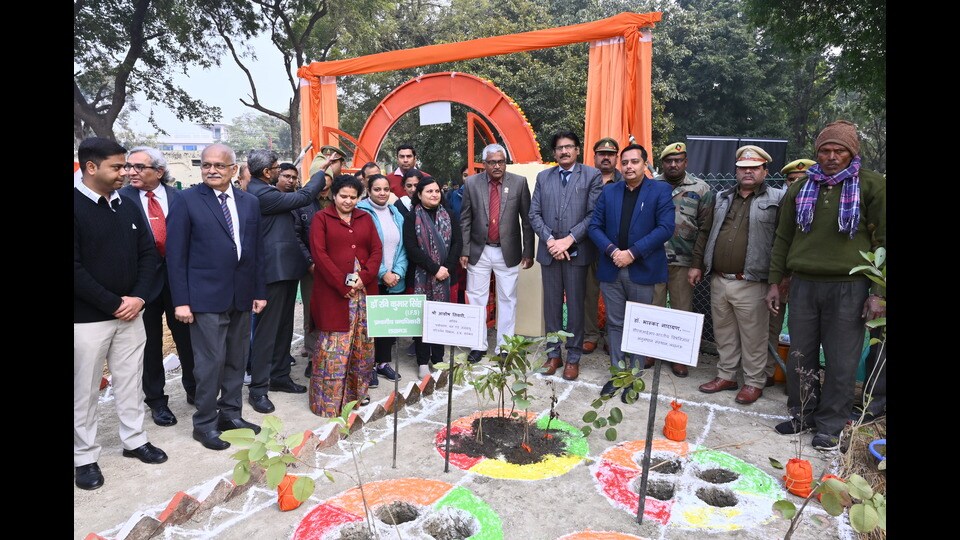
“The 100 square meter forest will feature 1000 plantations, including Sandalwood, Rudraksh (Basil), Amla, Mango, Guava, Jamun, Kathal, and medicinal plants such as Tulsi, Aloe Vera, Lemongrass, Giloy, Methi, and Sweet Neem,” said Ravi Kumar Singh, divisional forest officer, Awadh Forest Division, Lucknow.
According to the Institute, the Miyawaki method is one of the most effective tree-planting methods for creating a thick forested area on degraded land previously used for agriculture or construction. It is based on natural reforestation principles, using native trees and replicating natural forest regeneration processes, making it highly successful worldwide.
“Miyawaki forests have recorded higher biodiversity than the surrounding areas, making it an ideal method for quickly establishing diverse forest ecosystems,” said Ashish Tiwari, IFS, secretary, department of environment, forest & climate change, government of Uttar Pradesh, during the inauguration of the Miyawaki forest.
“In the current context of climate change emergencies and repeated warnings about the global loss of biodiversity, being able to create such a diverse and healthy forest could prove to be a game-changer,” he added.
“The Miyawaki method has significant benefits over traditional forestry methods, especially in smaller afforestation projects, and is particularly effective in urban environments,” mentioned Ravi Kumar Singh, IFS, divisional forest officer, Awadh Division.
Bhaskar Narayan, director of CSIR – Indian Institute of Toxicology Research, reiterated the Institute’s commitment to monitoring soil quality and environmental impact, as it has done in the past.
“The Namo Forest will be open to the general public every working day from 11:00 am to 04:00 pm,” said Singh.


