
 E-Paper



Three-day workshop on road safety engineering begins at MNNIT
The workshop organised by civil engineering department of MNNIT is being attended by policy makers, planners, project managers, construction engineers, safety engineers and other professionals working in the area of highway engineering


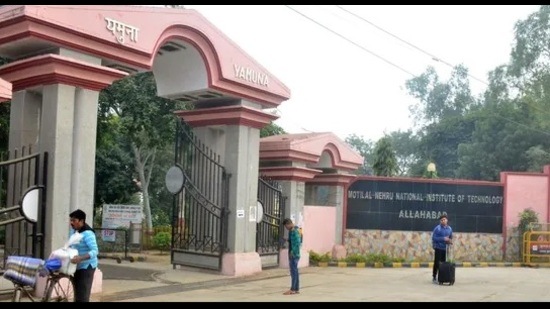
A three-day national workshop on “road safety engineering for urban and rural highways” sponsored by National Highway Authority of India (NHAI) began at Motilal Nehru National Institute of Technology (MNNIT)-Allahabad on Thursday. Minister of state for housing and urban affairs Kaushal Kishore was the chief guest of the workshop organised by Civil Engineering Department of MNNIT.
Kishore urged the participants to take a pledge and say “no to alcohol” as it weakens the power to take decision.
Besides, he also asked people to desist from drunken driving and not to ride a vehicle if it comes to notice that the driver was inebriated.
The participants resolved to take this pledge on Independence Day on August 15.
The workshop is being attended by policy makers, planners, project managers, construction engineers, safety engineers and other professionals working in the area of highway engineering.
During the deliberations, the experts pointed out that road traffic crashes (RTC) are one of the leading causes of the deaths and disability in India and around the world.
India has recorded more than 10% of the 1.3 million global crashes as per a 2019 report. It is the leading cause of the death among 5-29 aged youngsters. WHO 2021 resolution has called for implementation of an integrated “Safe System Approach” (SSA) which includes: safe multimodal transport and land use planning; safe road infrastructure; safe vehicles; safe road use; post–crash response.
India records over 417 deaths per day. Vulnerable road users (VRUs) share 68% of the total fatalities. Experts called for upgrading Indian roads and making it safer for public.


