
 E-Paper



Unlimited inspiration: At 99, former CDRI director is thinking of doing more for India
The determination of Dr Nityanand, a legendary figure on the Indian drug research scene, remains undiminished despite the march of time


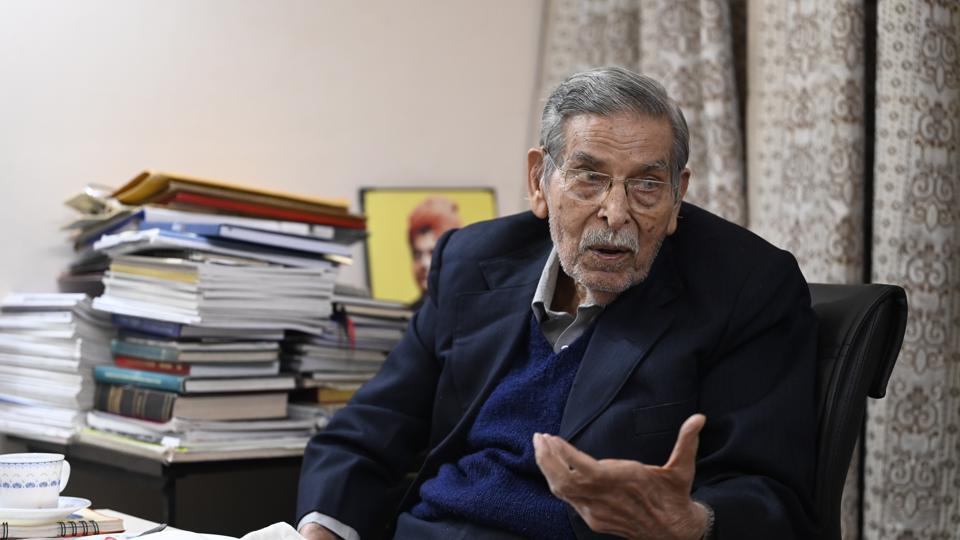
In his 99th year, Dr Nityanand, who gave India its first and still exclusive non-steroidal oral contraceptive, sits upright with a pile of files and scientific papers in his living room.
Part of the country’s family planning programme, the contraceptive he worked on is making history with the brand name ‘Chaya’ that was earlier known as ‘Saheli’.
“I lived for Centchroman and I still am looking for its non-contraceptive usage,” says Dr Nityanand, a legendary figure on the Indian drug research scene who was awarded the Padma Shri in 2012.
Centchroman that World Health Organisation (WHO) named as Ormeloxifene is the compound Dr Nityanand made as a contraceptive for women to take once a week.
He is credited with helping crores of families in India to follow the “hum do hamare do” concept.
His face brightens as he flips the pages of a file and shares more on his work.
“Chaya is still cheapest at ₹4 a tablet at chemist shops and free at government health facilities,” Dr Nityanand says.
Centchroman was developed in 1981 and could become a ‘wonder drug’ in India as it has been found useful for several chronic ailments, including breast and cervical cancer.
“We are conducting two trials with Centchroman in the department of gynaecology – breast pain and cervical cancer – as this drug has been proven useful in dysfunctional uterine bleeding (DBU) and numerous other ailments, including breast cancer,” says Dr Soniya Nityanand, director of Dr Ram Manohar Lohia Institute of Medical Sciences in Lucknow, and daughter of Dr Nityanand.
Born at Lyallpur (now Faislabad) in Pakistan, Dr Nityanand has seen Partition closely. He had to fly to Lyallpur from Mumbai to rush his family to India. His determination is never ending.
“The country was just starting and we had realised what pharmaceutical science can do for the nation,” said Dr Nityanand who thought of using science to bring about change in industry and attitude of the country.
Dr Nityanand, who went to Cambridge for his second PhD to know more about biological science and came back to India, begins his daily studies in the afternoon. Till late evening, he is involved in reading research, interacting with the scientific community and responding to doubts from across the world.
Dr Nityanand did his first work on leprosy after returning to India.
“My compound can help treat several ailments. All I want is it should be taken up for more multi-centre trials and for various ailments. I have done my bit and I am ready to do more for this country,” said the man who has developed one of the cheapest compound for drugs that can treat several ailments.
Though developed as contraceptive, the compound Centchroman worked for patients of over a dozen different ailments, including DUB, advanced cancer of breast (stage III and IV), chronic myeloid leukemia, prostate cancer, ovarian cancer and nodular breast. Centchroman is being used in family planning programmes in several countries, including Spain, South Korea, Austria, Ethiopia, Belgium and China.
A research paper in China mentioned ‘Centchroman’ as one of the finest contraceptive discoveries of the world, done in India.
Asked about his vision for the future of science and drug discovery in the country, he said India is doing fine.
“But the need is to focus more upon virology, immunology, medical mycology (study of fungus infection) as this would pave the way for more preventive medication. Prevention is always better than treatment,” he said.
“Indians have to be committed to India’s social setting. We should focus upon diseases which are of greater importance for the country,” said the scientist whose contribution to the growth and development of the Central Drug Research Institute, where he was director (1974- 1984), is remarkable.


