E-Paper



U.P. highways deadliest in India, says govt report
The state saw 23,652 deaths in 2023, almost 30% higher than TN, which had the highest number of accidents

 Prefer HTon Google


National and state highways in Uttar Pradesh have taken more lives than roads anywhere else in the country.
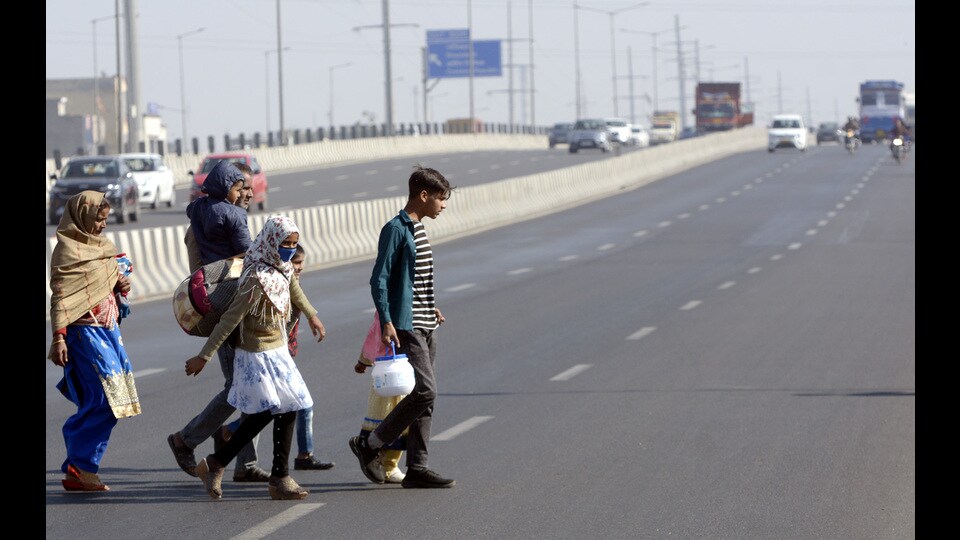
The latest Road Accidents in India 2023 report, which was released by the Union Ministry of Road Transport and Highways, shows that while Tamil Nadu registered the maximum number of road accidents overall, Uttar Pradesh topped in fatalities, particularly on high-speed corridors crisscrossing its rural belts.
Nationally, highways (national and state combined) accounted for 53% of total accidents but nearly 60% of all deaths, underlining the severity of crashes on fast-moving stretches.
Tamil Nadu retained its top position in 2023 for the sixth consecutive year with 20,582 accidents (13.7%), followed by Uttar Pradesh with 15,184 (10.1%) accidents, Madhya Pradesh with 14,561 (9.7%) accidents, Karnataka with 14,270 (9.5%) accidents, and Maharashtra with 10,881 (7.2%) accidents.
Uttar Pradesh retained its top position in road accident fatalities (13.4%), followed by Tamil Nadu (9.9%), Maharashtra (9.2%), Madhya Pradesh (7.1%) and Karnataka (6.9%). The top ten states in the list together accounted for 74% of accident fatalities on national highways in 2023 in the country.
According to the state transport department’s data, the national highways in UP accounted for 34% of the total road accident deaths in 2023, state highways 24%, expressway 1.8% and other roads 40%.
Experts point to a mix of factors: rampant overspeeding, mixed traffic of trucks, tractors, buses and two-wheelers, lack of crash barriers and poor lighting. The problem is compounded in rural stretches where trauma care facilities are sparse and ambulances take longer to reach victims.
“Head-on collisions on highways are rare now. Accidents mostly happen when one vehicle strikes another from the rear. Lane indiscipline by road users, parking vehicles at wrong places and overspeeding are among the main reasons for mishaps on highways; lack of availability of prompt medical care to the victims results in more deaths,” a road safety expert and PWD official Rohit Kumar said.
Low on mishaps, high on deaths
Shockingly, Uttar Pradesh, despite recording 35% fewer road accidents than Tamil Nadu, has turned into India’s deadliest state for road travel. The state reported 23,652 deaths in 2023, almost 30% higher than Tamil Nadu, which had the highest number of accidents.
According to the report, Tamil Nadu recorded 67,213 accidents and 18,347 deaths last year, translating into a severity of 27.3 deaths per 100 accidents. Uttar Pradesh, with around 44,000 accidents, witnessed 23,652 deaths, a severity rate of 53.1 deaths per 100 accidents—almost double Tamil Nadu’s and far above the national average of 36. This makes Uttar Pradesh the sixth most severe state in the country, behind Mizoram, Bihar, and Jharkhand.
On an average day, 65 people die on UP’s roads—more than two every hour. Among last year’s fatalities were 1,800 children and nearly 10,000 pedestrians, while overspeeding alone accounted for 8,726 deaths. A majority of victims were adults in the 18–45 age group, the most productive segment of the population.
Experts point to multiple factors behind UP’s disproportionately high fatality rate. The state’s vast road network suffers from poor quality, inadequate lighting, and missing safety barriers, making crashes deadlier than they might otherwise be.
“Emergency response infrastructure lags behind the needs of a state with UP’s geography and population, meaning that injuries which could be treated often turn fatal,” former additional commissioner (road safety) P Satyarthi said. “The government must think of emergency trauma care centres/stabilisation along the national highways and expressways,” he suggested.
Officials point out that the absence of such campaigns for pedestrians and cyclists, coupled with poor infrastructure like broken footpaths, missing crossings, and the lack of safe cycle lanes, worsens the vulnerability of these road users.