
 E-Paper



UP transits into EV making era: Land of SIL sees bhoomi pujan for Ashok Leyland plant
CM urges auto major to expedite production from the unit, saying that markets of not only UP, but the entire north India, eagerly await electric vehicles


LUCKNOW Uttar Pradesh’s shift from the ‘restrictive licence raj’ days in the early 1990s to the current era of ease of doing business has changed the way industrialists look at the state. The journey of Sarojini Nagar Industrial Area in Lucknow since the Scooters India Limited days came a full circle when chief minister Yogi Adityanath laid the foundation stone of Ashok Leyland’s electric vehicle factory in the state capital at a bhoomi pujan ceremony on Tuesday.
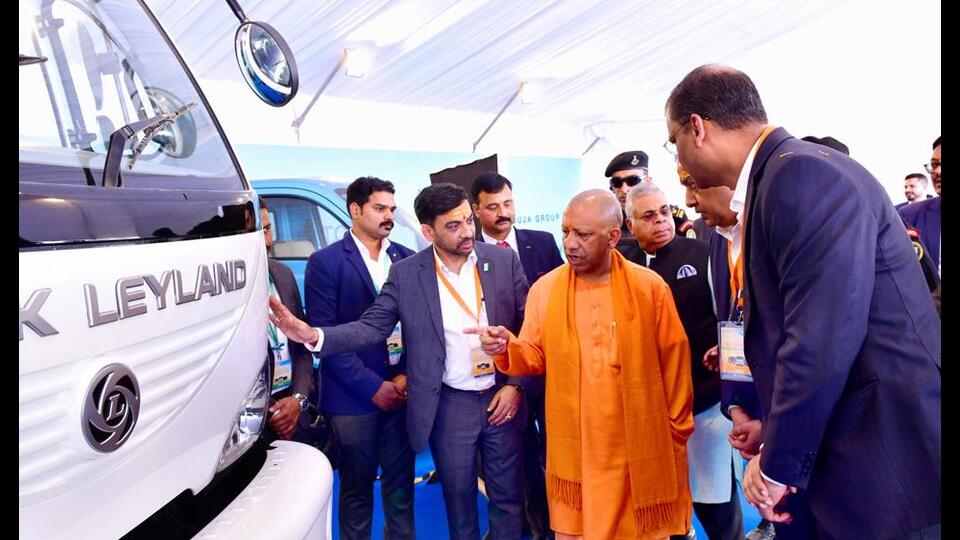
Stating that the first EV plant of UP is going to be established through Ashok Leyland, Adityanath said: “I extend my congratulations to the Hinduja Group and Ashok Leyland for spearheading this initiative. In UP, we have come up with investor-friendly policies. Similarly, investors will also have to make their investments public friendly.”
The CM emphasised on the need for expediting production from the unit, saying that markets of not only UP, but the entire north India, eagerly await those vehicles. He also underlined the need for rural connectivity through electric buses, right from schools to linking over 1,05,000 revenue villages and 2 lakh majras in the state.
“I want completion of the plant and rollout of electric buses at the earliest. The state government will give an incentive of ₹20 lakh per bus to the maker...we have a policy for investors and those who purchase EVs. There is a demand for over 1 lakh electric buses for schools and all old school buses would be replaced as soon as we get these electric buses rolled out by the plant,” said Adityanath on the occasion.
Highlighting the transformative potential, he noted, “We possess a fleet of one lakh school buses, all ripe for replacement with electric counterparts, provided we take proactive steps in this direction.”
The Hinduja Group auto major flagged off work on the construction of a new integrated commercial vehicle plant for manufacturing e-buses in UP.
“The plant, spread over 70 acres area, would be the most modern one anywhere in the world,” claimed Dheeraj Hinduja, executive chairman, Ashok Leyland, while welcoming the chief minister at the plant.
“The Ashok Leyland plant here also indicates the arrival of several ancillaries, which will supply spare parts to the company. Diversification and growth in manufacturing, coupled with advancements in technology and infrastructure, are set to propel this region into a hub of industrial excellence,” he added.
The programme was also attended by ministers in the Yogi cabinet - Suresh Khanna, Nand Gopal Gupta ‘Nandi’ and Rakesh Sachan among others, besides a host of Hinduja family members like Ashok Hinduja, Prakash Hinduja, and Som Hinduja.
“Over the years, the transformation of Sarojini Nagar Industrial Area indicates economic evolution. The shift from the restrictive ‘license raj’ era to the contemporary emphasis on ease of doing business signifies a remarkable journey. From the humble beginnings of Scooters India Limited to the establishment of the Ashok Leyland plant, this industrial zone has become a testament to the state’s industrial prowess,” said officials present on the occasion.
Nitin Sachdeva, a small-scale industrialist present at the venue, said: “Today, the state has a more liberalized economic framework. The Sarojini Nagar Industrial Area stands as a symbol of resilience and adaptability...its journey encapsulates the broader narrative of state’s economic liberation, showcasing how a once-regimented industrial landscape has flourished into a dynamic and competitive arena. This transformation not only signifies progress, but also instills a sense of pride in the local industrial community.”


