
 E-Paper



Lutyens’ Delhi sixth cleanest in country
In another category, the three civic bodies of Delhi were almost at the bottom of 49 Urban Local Bodies


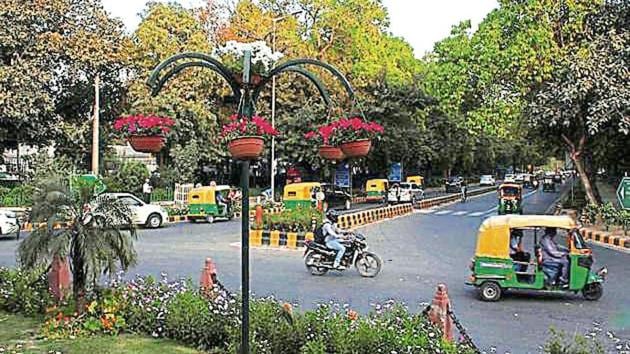
The New Delhi Municipal Council area, which caters to the capital’s 3% geographical area, comprising the VIP zone of Lutyens’ Delhi, has ranked sixth nationwide in the Swachh Survekshan League 2020 (SS League 2020) rankings for cities with a population between 1 and 10 lakh, announced on Tuesday.
In another category, the three municipal corporations of Delhi — north, south and east — were almost at the bottom of 49 Urban Local Bodies (ULBs) across India. These three corporations serve 96% of the Capital city’s geographical area and population.
The list was released by the Minister of State (MoS) for Housing and Urban Affairs, Hardeep Singh Puri, at a press conference, on Tuesday. He also announced the commencement of the Swachh Survekshan 2020, the fifth edition of the annual urban cleanliness survey.
In quarter one (the assessment done by the central ministry from April-June 2019), the East Delhi Municipal Corporation (EDMC) ranked 42, while its counterparts the North Delhi Municipal Corporation and South Delhi Municipal Corporation (SDMC) ranked 44 and 47, respectively.
The list ended at rank number 49. The last two ranks, after SDMC (47), belonged to Howrah Municipal Corporation (48) and Kolkata Municipal Corporation (49), both from West Bengal. The first three slots belonged to Indore (1) and Bhopal (2) from Madhya Pradesh, and Surat (3) from Gujarat.
In quarter two (the assessment done by the central ministry from July-September 2019), the corporations fared slightly better. EDMC bagged rank number 39 and its counterparts, SDMC and the north municipality ranked 40 and 45 respectively.
They were followed by Patna (46), Jammu and Kashmir (47), Howrah (48) and Kolkata (49) to the end of the list. In this quarter, Indore (Madhya Pradesh), Rajkot (Gujarat) and Navi Mumbai (Maharashtra) bagged the first three ranks respectively.
These were the rankings among Urban Local Bodies (ULBs) which have a population of greater than 10 lakh population. The East Delhi Municipal Corporation (EDMC) commissioner, Dilraj Kaur, said, “Even with our big financial constraints, we are improving each year and will better ourselves with time.” The north Delhi municipality mayor Avtar Singh said, “We will talk to our officers why our performance wasn’t up to the mark.” The south Delhi mayor, Sunita Kangra, said, “We will go through the report minutely to see where we fell behind.”
KS Mehra, former MCD commissioner, said, “A huge problem exists in Delhi with 75% of the buildings here being unauthorised or unplanned, so it becomes difficult to clear garbage and ensure sanitation and better rankings in a nation-wide assessment like Swachh Survekshan. The municipalities here are also dealing with financial issues but they can look at creative solutions brought about by cities like Ambikapur, etc.”
Among the ULBs in India which have a population of 1 lakh to 10 lakh population, the Capital city’s New Delhi Municipal Council (NDMC) ranked number 2 after the Jamshedpur (Jharkhand) Municipal Corporation. NDMC serves only 3% of Delhi’s geographical area, which lies in the posh Lutyens’ Delhi where the Parliament, North Block, South Block and the Supreme Court are located.
In quarter two, NDMC came down to rank number 6 after Jamshedpur, Chandrapur (Maharashtra), Khargone (MP), Loni (Uttar Pradesh) and Ambikapur (Chhattisgarh). The total list included 384 ULBs.
In quarter one, the Delhi Cantonment Board ranked number three after the St. Thomas Cant. Board in Tamil Nadu (1) and Jhansi Cant. Board in UP (2). In quarter two, the Delhi Cant. Board ranked number 1. There are total 61 such boards in India.
The Swachh Survekshan League 2020 is an initiative under the Central government’s flagship Swachh Bharat Mission. It is carried out as a year-long on-the-ground assessment of ULBs before the final annual rankings are awarded in March-April each year. Many factors are taken into account such as the number of toilets and dustbins installed by each ULB, their sanitary condition, citizens’ feedback, etc. in ranking the ULBs.


