
 E-Paper



150 years of creating some of city’s movers and shakers
Established long before #girlpower became a hashtag, Queen Mary School was founded on the bold vision of two Englishwomen in colonial times. They were determined to change the lives of Indian girls at a time when education for women was rare


MUMBAI: Shobhaa De says it gave her the foundation to become an author; Shaina NC credits it with helping her grow into a confident young woman; and Sooni Taraporevala recalls learning that competition and close friendship can go hand in hand.
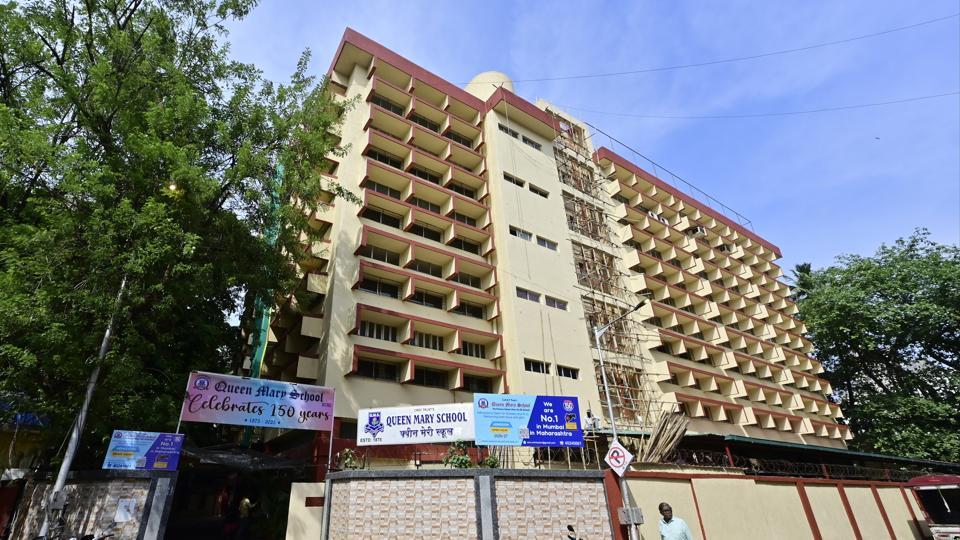
When a school’s alumnae speak of lessons that last a lifetime, its mission is clearly accomplished. And this school, a landmark in Mumbai’s educational tapestry, has shaped generations of young girls who arrived as children and left as self-assured women, carrying values that continue to guide their personal and professional journeys.
“If these walls could speak, they would tell the story of a city and a country shaped by wars, plague, famine, social reform, the independence movement and COVID-19,” says Grace Swarnalatha Mathias, principal of Queen Mary School in Mazgaon.
The school will celebrate its 150th anniversary on December 12, an institution that has nurtured personalities such as actors Shabana Azmi and Nargis Dutt; writer Shobhaa De; photographer and filmmaker Sooni Taraporevala, and other public figures.
Established long before #girlpower became a hashtag, Queen Mary School was founded on the bold vision of two Englishwomen in colonial times. They were determined to change the lives of Indian girls at a time when education for women was rare.
“For a century and a half, this school’s classrooms have nurtured girls into women of strength, empathy and leadership. Its alumni have become doctors, social workers, educators, professionals and change-makers who carry forward the vision of Lady Mary Kinnaird and Harriet Butt,” said Mathias.
A bold visionary
Mary Kinnaird, a philanthropist from London, established the Zenana Bible and Medical Mission in 1852, to provide education, healthcare and social support to Indian women. In 1874, she led a group of like-minded women to India to work with her mission. One of them was Harriet Butt, who would go on to start a small school for girls the very next year.
In 1875, Bombay got two girls’ schools – one was Queen Mary’s, then called the “Bombay Indian Female Normal School”, situated in Byculla; the second was the modest boarding school opened by Butt on Delisle Road in Byculla, to bring quality education to girls who had limited opportunities. “At a time when educating girls outside the home was almost unheard of, her determination was remarkable,” said Mathias.
The first batch of Kinnaird’s school had three students. Of these, Gurubai Karmarkar went on to become a doctor and Sundarbai Pawar a social worker in the Bombay Presidency. Dr Karmarkar even wrote about her time at Queen Mary’s, saying four years of English education helped her build a life of service and leadership.
The school shifted from Byculla to Mazgaon, and then to Girgaon, where it was known as the “Girgaon Girls’ High School”. The institution, which later shifted back to Mazgaon, continued to expand in the early 1900s and was housed in a new structure that reopened in February 1912.
One of the school’s defining moments came in 1911, when Queen Mary, empress of India, visited the campus during her Bombay tour. It was a great honour for the institution, which was renamed “Queen Mary School” with royal permission, three years later.
After independence, in 1947, the school continued to grow under both Indian and British principals. A turning point came in 1972, when Kusumavati Padmakant Rajhuns was appointed its first Indian principal.
Five-day tribute
Queen Mary’s will celebrate its 150th anniversary, with a five-day-long celebration, from December 8 to 12. Events range from a thanksgiving service, to the release of two books documenting the institution’s history, and a musical drama on the journey of Queen Mary School. While actor Boman Irani will be the chief guest, Vu Televisions’ founder Devita Saraf, an alumna, will attend as guest of honour.
The school will also host a principals’ conclave to be attended by education experts, including alumna Fatema Agarkar, founder of the Agarkar Centre of Excellence, along with S Mantha, former chairperson of the All India Council of Technical Education (AICTE).
Sports Day, on December 11, will bring together four generations of Queen Marians to lead a special flag march. The event will demonstrate the strong connection former students still feel with their school. Screenwriter and filmmaker Sooni Taraporevala and fashion designer and politician Shaina NC, both alumnae, will attend as chief guests.
The celebrations will conclude on December 12 with a grand finale featuring performances by students, teachers, parents and alumnae. The programme will also include a student-led theatre production that will highlight the school’s past, present and future. Author Shobhaa De and author and poet Nandita Chaudhari will attend as special guests on the closing day.
For many alumnae, the school’s anniversary is an opportunity to revisit cherished memories. Taraporevala, who graduated from the school in 1973, recalls the excitement of annual competitions. “I remember the intense preparation, then being very nervous the night before, and thinking ‘tomorrow at this time we’ll know the results’. My best friend and I, although very close, had an intense rivalry during competitions,” she recalls.
She also remembers how dramatics judge Pheroza Godrej made Taraporevala and her best friend share the ‘Best Actress’ trophy in their final year, calling it “a fitting end to our years of competition”.
Taraporevala also spoke affectionately of her favourite teacher, Rati Wadia. “I’ve never come across anybody so in love with her subject. To her, Shakespeare, Dickens and George Bernard Shaw were living, breathing people. She taught me about passion and subtext, and how to find personal relevance in old texts. What I learnt from her has been more useful to me as a screenwriter than any formal lesson.”
Shobhaa De shares how her English teacher changed her life. “Mrs Thomas was my saviour-angel. Had she not encouraged me to write, I would not have fallen in love with literature and become an author,” she said.
De, who graduated from Queen Mary’s in 1964, also notes the open and accepting approach of the school. “Our school was progressive and inclusive. We faced zero prejudice. Equality was a given. I am proud to call myself a Queen Marian.”
Shaina NC, who graduated from the school in 1989, said the institution shaped her confidence. “My school gave me the opportunity to participate in debates and elocution competitions, which helps me even today,” she says. A little reserved back then, Shaina says she will always remember hiding from her classmates that her father (Nana Chudasama) was PTA president “because she was too shy to talk about it”.
On embracing the future, Mathias says, “As Queen Mary School celebrates 150 years, we honour a legacy shaped by empowerment, excellence, and character. As we evolve from an all-girls institution to a coeducational community, our mission remains steadfast. And, as we move towards the next century, we do so with a renewed promise: to champion inclusivity, inspire innovation, and uphold integrity as the hallmark of every Queen Marian.”

Stay updated with all the Breaking News and Latest News from Mumbai. Click here for comprehensive coverage of top Cities including Bengaluru, Delhi, Hyderabad, and more across India along with Stay informed on the latest happenings in World News.


