
 E-Paper



Alarming levels of microplastics found in commonly consumed shellfish from Mumbai coast
Mumbai: A new study by the Central Institute for Fisheries Education (CIFE), under the Indian Council for Agricultural Research (ICAR), has found significant evidence of microplastic contamination in yellow clams (Meretrix casta) collected along the Mumbai coastline

 Prefer HTon Google


Mumbai: A new study by the Central Institute for Fisheries Education (CIFE), under the Indian Council for Agricultural Research (ICAR), has found significant evidence of microplastic contamination in yellow clams (Meretrix casta) collected along the Mumbai coastline.
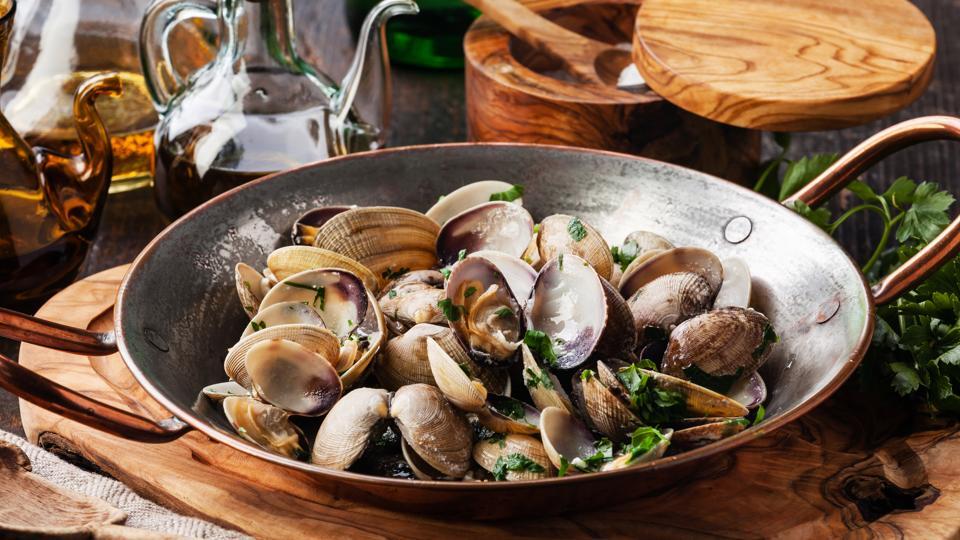
Experts said this is worrying as these clams provide an important source of cheap protein among poorer coastal communities. They are locally known as ‘tisrya’, a broad term used for many species of edible bivalves, a class of animals including clams, oysters and mussels. Commonly found in the intertidal zone, these creatures are collected by hand, and are freely available to fisherfolk even during monsoon months when deep sea fishing is barred.
This new study found, alarmingly, that the clams collected from Maharashtra are among the most contaminated globally. “The mean incidence of microplastics across all the stations... is found to be one of the highest ever reported worldwide, which is 35.93 microplastic particle (MP) items/g in soft-tissue parts and 91.42 MPs items/individual,” notes the study, published this month in the Elsevier Journal of Hazardous Materials Letters. By comparison, clams and oysters from supermarkets in Japan have been previously found to contain 2.1 to 10.5 items/g in soft-tissue, while bivalves from lagoons in Portugal, among the most contaminated per existing literature, contained around 18.4 MP items/g.
Analysis of 150 yellow clam specimens collected from these three regions revealed that they contained a whopping 19,826 microplastic particles (MP) in all, of which “8,200 were fragments, 9,945 were fibres, 1,034 were pellets/beads, and 647 items were films,” the paper notes. “About 50% of the total 20 analysed polymers from the clams of Mumbai urban coast in the present
study were found to be polypropylene and (fibres), whose prominent application lies in making shopping bags, dispensing bottles, tubings, carpets, and clothing, respectively and others being PVC, which is predominantly used for the building and construction sector, PMMA beads are usually found in household products like sunscreen, facial cleansers, body washes, and cosmetics and polystyrene fragments which found its major application in electronic household appliances,” the study notes.
“What is worrying from a health point of view is that we found microplastics lodged in the soft, edible tissue of the animal, meaning they can be easily ingested. In Mumbai, we found that a single individual clam contains an average of 77.39 microplastic particles in its soft tissue. So, if you are eating a full meal of them, that is a lot of plastic going into the body,” said a researcher who worked on the study, seeking anonymity. By comparison, clams in Ratnagiri and Sindhudurg were markedly less contaminated, at 20.86 and 13.06 MPs per gram of soft tissue, respectively.
Harshal Karve, a marine biologist working with the Mangrove Foundation under the state forest department, expressed concern over these findings. “Bivalves are an easily accessible source of nutrition for poorer coastal communities that do not have access to expensive fish or other meats. They are filter feeders, taking in water and siphoning it out. So, this means they will ingest all kinds of microplastics and heavy metals present in their surroundings. It is not advisable to eat clams and oysters found in extremely polluted areas.”
A researcher from IIT-Bombay, working at the Centre for Environmental Science and Engineering, who reviewed the CIFE study at HT’s request, said, “The paper is scientifically accurate and important. It merits further toxicity and risk assessments at these levels to ascertain the degree of risk for consumers.”


