
 E-Paper



Aqua Line tunnel completion spurs underground infra projects
At the heart of these tunneling projects are tunnel boring machines (TBMs), which can excavate tunnels through soil, hard rock, rugged hills and even under the sea

 Prefer HTon Google


Mumbai: Bolstered by the completion of the 33.5-km-long underground metro rail corridor between Aarey Colony and Cuffe Parade, also called the Aqua Line metro, efforts are on to link various parts of the Mumbai Metropolitan Region (MMR) through underground tunnels. These include the 10.25-km Thane-Borivali twin tunnel passing beneath the Sanjay Gandhi National Park (SGNP), a 21-km tunnel linking the BKC bullet train station to Shilphata in Navi Mumbai, a 6.5-km tunnel between Orange Gate and Marine Drive in south Mumbai, and a 16-km tunnel connecting the end of the Coastal Road at Worli with terminal two of the Chhatrapati Shivaji Maharaj International Airport (CSMIA) via the BKC bullet train station.
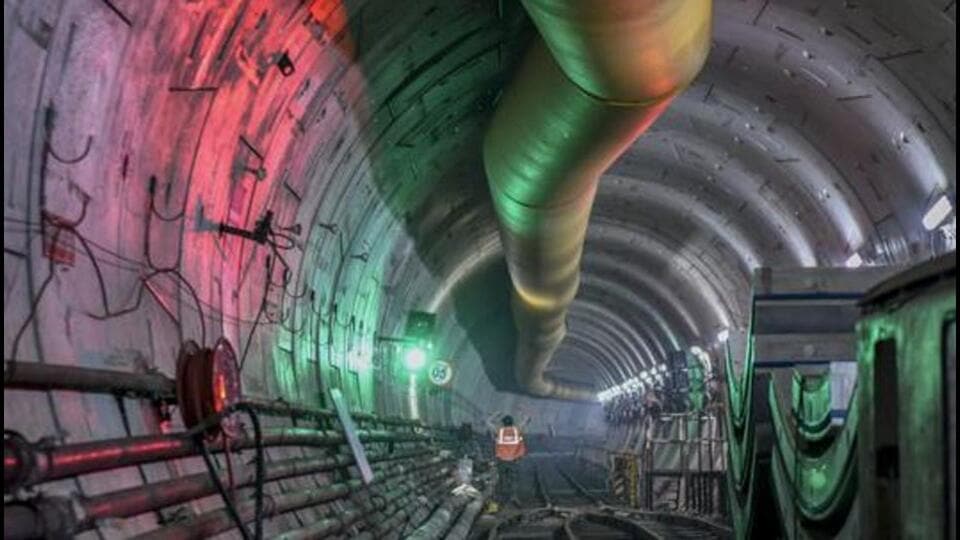
At the heart of these tunneling projects are tunnel boring machines (TBMs), which can excavate tunnels through soil, hard rock, rugged hills and even under the sea. Priced at ₹200-500 crore depending on the diameter of tunnels and the terrain, TBMs are usually assembled on site and buried in the vicinity after completion of projects, engineers and officials familiar with operating the machines told Hindustan Times. The average cost of tunneling for metros in the country via TBMs is ₹850-900 crore per kilometre, while tunneling costs for roads are not known, they said.
Even though TBMs have been around for years, completion of the underground metro rail corridor for the Aqua Line gave authorities the confidence to use the machines for other tunneling projects in the MMR, officials said.
“We used 17 TBMs to excavate the Aqua Line tunnel through 35 shafts along the route,” said an official from MMRCL, which operates the metro corridor. “This project has given confidence to other agencies to take up tunneling projects using TBMs.”
Thane-Borivali twin tunnel
Four TBMs will be used to excavate the 10.25-km Thane-Borivali twin tunnel beneath the SGNP, said officials from the Mumbai Metropolitan Region Development Authority (MMRDA), the project proponent. These TBMs will be able to excavate tunnels measuring 13.5 metres in diameter, among the largest for road tunnels, MMRDA officials said.
The first TBM has already arrived at the Thane-end of the proposed tunnel, and the contractor, Megha Engineering & Infrastructures Limited (MEIL), is piecing together its components. The TBM, expected to dig through 10 metres per day, will be ready for operation in another 2-3 months, MEIL officials said.
Another TBM for the Thane-end of the project is under transportation while the two remaining TBMs for the Borivali-end are at the Chennai plant of the manufacturer, Herrenknecht India Pvt Ltd, a subsidiary of German based company Herrenknecht AG.
Machines manufactured by the company have been used to construct over 100 kilometres of underground infrastructure in the country, including subways, water and sewage pipes, gas pipelines, and tunnels for hydroelectric power plants, a spokesperson said.
“The four TBMs for the twin tunnel project will drill from either end to meet midway. They will be buried on site once the work is over,” said an MEIL official.
The biggest challenge in the twin tunnel project would be to go under the forest area and the hills of SGNP, the official said.
“The excavation is expected to happen 23 meters below the ground. But at the center of the hill, the deepest point from the hilltop could be over 100-150 metres,” he said.
Bullet train tunnel
The 21-km long tunnel between BKC and Shilphata, part of the 508-km Mumbai-Ahmedabad bullet train corridor, will include a 7-km long section under the Thane Creek. Five kilometres of the tunnel – between Shilphata and Ghansoli – has already been excavated using the New Austrian Tunnelling Method (NATM), while the remaining 16 km will be excavated using TBMs, officials from National High Speed Rail Corporation Limited (NHSRCL) said.
Three TBMs will be utilised in the project, the officials added.
“Some parts of the TBMs have arrived at shaft 2 in Vikhroli and shaft 3 in Savli near Ghansoli. Excavation and slab works at these locations have been completed, while TBM enabling work and assembly is in progress,” said an NHSRCL official.
Coastal Road to T2 tunnel
The MMRDA has proposed to build a 70-kilometre network of tunnels within the MMR to connect key locations and decongest the city’s roads. The project will be divided into three phases, with the first phase spanning approximately 16 km, connecting the end of the Coastal Road at Worli with terminal 2 of the airport via the BKC bullet train station.
“The first phase of the proposed tunnel network project will enable seamless travel for passengers arriving by bullet train or flights to other parts of the city via direct underground link. They will not have to encounter the city’s congested arterial routes,” an MMRDA official said.
Tenders were floated last month seeking a consultant for a techno-economic feasibility study and detailed project report for the first phase. The last date for submitting bids is November 6.


Stay updated with all the Breaking News and Latest News from Mumbai. Click here for comprehensive coverage of top Cities including Bengaluru, Delhi, Hyderabad, and more across India along with Stay informed on the latest happenings in World News.


