
 E-Paper



Mumbai: BMC to undertake mandatory Covid test of occupants in sealed buildings
As of September 15, Mumbai has 37 sealed buildings and 1,528 sealed floors. Of the 4,696 active Covid-19 patients, 42% are asymptomatic, 47% symptomatic and 11% critical, BMC data revealed


Anticipating a possible surge in Covid-19 cases after the festival season, the Brihanmumbai Municipal Corporation (BMC) has decided to run reverse transcription polymerase chain reaction (RT-PCR) tests on occupants, especially, those suffering from comorbidities, residing in sealed buildings across the city.
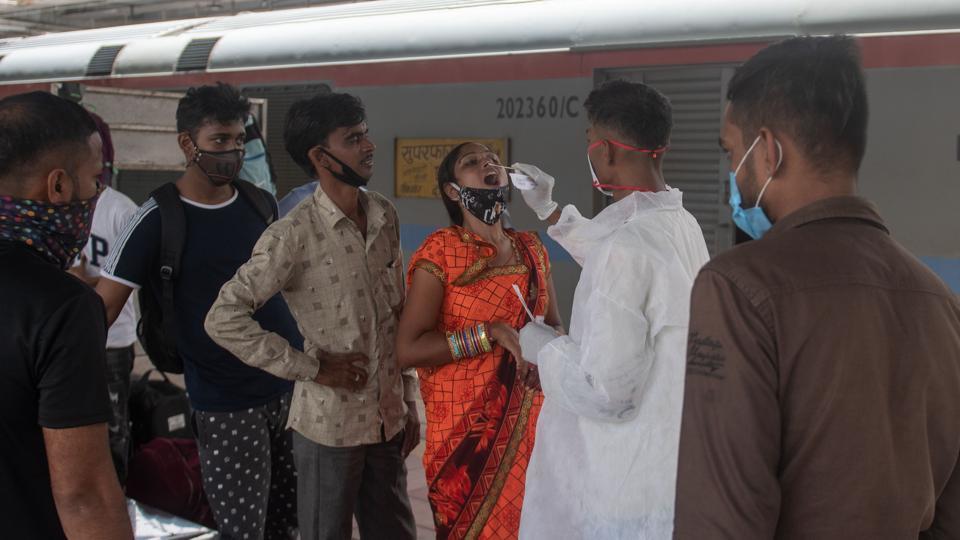
As of September 15, Mumbai has 37 sealed buildings and 1,528 sealed floors. Of the 4,696 active Covid-19 patients, 42% are asymptomatic, 47% symptomatic and 11% critical.
It was observed in the second wave that high-rise buildings recorded a higher number of Covid-19 cases than slums. “Residents in high-rise buildings constituted almost 90% of the cumulative Covid-19 cases in the second wave. We, therefore, want to run RT-PCR tests on occupants in sealed buildings, mostly those who have underlying health issues,” said Suresh Kakani, additional municipal commissioner, BMC.
Members of the state’s Covid-19 task force have welcomed the move as the RT-PCR test is considered gold standard for diagnosing Covid-19. “The reliance should be more on RT-PCR which has a higher efficiency rate than Rapid Antigen Testing (RAT). We still don’t know about the epidemiological pattern of the possible third wave, but the civic body has to keep a close eye on non-slum areas,” said Dr Rahul Pandit, member of the state Covid-19 task force.
HT has previously reported that the civic body plans to increase daily tests to 60,000 after the festival season. But their main focus would be those above 50 years due to their co-morbidities. Ward officers have also been instructed to mandatory test all close contacts of infected patients immediately, to avoid the transmission of the infection amid the relaxation of the Covid-19 restrictions.
“We are making a list of all the elderly with underlying health issues who haven’t taken the jab as yet. We will contact them and encourage them to get fully vaccinated. We have also increased contact tracing per infected person to 25 individuals which were 15 earlier,” said Dr Mangala Gomare, executive health officer, BMC.
As per data provided by BMC, individuals above 60 years are most vulnerable to breakthrough infection after vaccination. The breakthrough infection rate among beneficiaries above 60 years with one vaccine jab is 1.52%, while it is 0.52% among fully vaccinated individuals.
Stay updated with all the Breaking News and Latest News from Mumbai. Click here for comprehensive coverage of top Cities including Bengaluru, Delhi, Hyderabad, and more across India along with Stay informed on the latest happenings in World News.


