
 E-Paper



Citizens go all out to protect SGNP
The meeting is a hearing for members of the public to register objections to the draft masterplan, a mandatory process that has scheduled meetings from November 19 to 28 at the BMC headquarters. More hearings will be held at the civic headquarters of other municipal corporations that cover the park’s buffer zone

 Prefer HTon Google


MUMBAI: In a conference room on the fifth floor of the BMC headquarters, the stage is being set for an epic battle. At stake is Mumbai’s only green lung – a whopping 60sq km (5,945.6 hectares) along its protected boundary could be opened to developers.
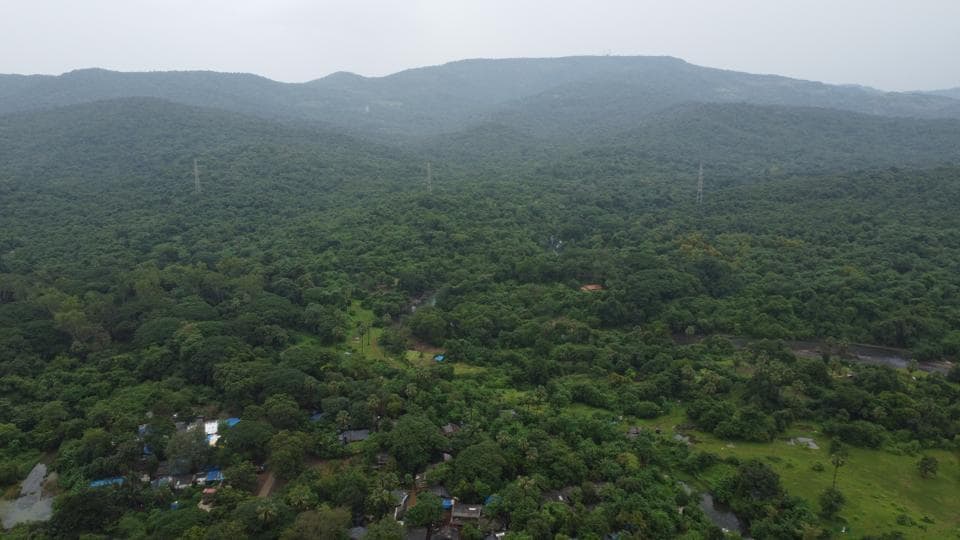
On September 10, the BMC had released a draft masterplan that allows construction within the buffer zone of the Sanjay Gandhi National Park (SGNP), an eco-sensitive zone around the park’s boundary. Frontline soldiers in this battle to stave off development are taking their seats to argue against the plan, which environmentalists say is certain to cause the eventual disappearance of the park itself.
The meeting is a hearing for members of the public to register objections to the draft masterplan, a mandatory process that has scheduled meetings from November 19 to 28 at the BMC headquarters. More hearings will be held at the civic headquarters of other municipal corporations that cover the park’s buffer zone.
Leading the charge to “Save SGNP” is an informal collective that includes Amrita Bhattacharjee, member of the Aarey Conservation Group; Hema Ramani, environmental legal consultant; Yash Marwah, co-founder of the environmental collective Let India Breathe, and Nishant Bangera, founder of Muse Foundation, each adding to the whole organically in their own individual capacity. Parallelly, veteran environmental warriors such as Debi Goenka, executive trustee of the Conservation Action Trust; and Dayanand Stalin, director of the NGO, Vanashakti, are doing their part independently.
What’s at stake
The buffer zone, called an eco-sensitive zone (ESZ), includes land around the boundary of the park, varying in width from 100m to 4km. Most of this land is in Mumbai, making it that much more attractive to developers.
This demarcation of the buffer zone harks back to a notification by the central government in 2016, granting the area ecological recognition. This was based on a Supreme Court order of 2006, which ordered all states and Union territories to declare a protective ESZ around protected green areas.
After news of the draft masterplan spread, the collective of environmental activists sprang into action. Reviving old connections of the Save Aarey movement against the metro car shed, they began to mobilise themselves and then members of the public.
“The task in front of us was to go through the massive 350-odd page draft masterplan and understand what was planned for this ESZ boundary going all around the national park,” said Nishant Bangera, founder of the NGO Muse Foundation at the centre of the Aarey protests.
“They have left no buffer for the national park,” said Ramani, one of the first to go through the masterplan and sound a warning bell. “It was shocking; the entire reason the area was declared an ESZ was missing.”
The draft masterplan divides the entire 60 sq km of ESZ into three sections: 1, 2, and 3, in order of increasing ecological importance. Only a sliver is ESZ-3, the only section protected from development. Notably, there is no ESZ-3 under the BMC’s jurisdiction.
Carving up the boundary
According to the masterplan, ESZ-1, or the “settlement zone”, where development and encroachment already exist, includes no restrictions except for some pertaining to industries. This leaves ESZ-2, the largest chunk, where all kinds of residential and most commercial developments will be permitted, provided they comply with the BMC’s land use Development Plan.
Stalin Dayanand, said, “The logic used in the draft effectively means the Development Plan would override every environmental safeguard, with permissions justified simply because the DP allowed them, not because the ecology can withstand them.”
But even places that meet the criteria for high ecological sensitivity – adivasi hamlets and river origin points such as the Oshiwara and Chena rivers – are non-existent in ESZ-3.
“The draft masterplan has been prepared to open up protected land to builders,” said Goenka. Even the forest department and SGNP authority has sent in their objections to the masterplan.
Critical river systems, floodplains and riparian forests are missing or mis-mapped, while quarry scars, polluting industries and over 61,000 encroachments are acknowledged but left unaddressed. The biodiversity survey conducted for the draft is also incomplete, omitting species that have been widely documented in Aarey and Dindoshi, environmentalists said.
Former principal chief conservator of forests, Sunil Limaye, said that without a buffer area, the forest will suffocate. “Also, if you do not create buffer zones, human-wildlife conflict will increase.”
As missing stream networks, zoning inconsistencies and other anomalies emerged in late September, the crew of environmental activists began to decode the maps in the masterplan.
“There was not enough time, no clarity, so citizens went into overdrive,” said Amrita Bhattacharjee. “Adivasi groups filed objections in Marathi and demanded a stay; the initial few objections quickly multiplied as networks expanded. Young people have become a huge asset, everyone is pitching in, online and offline.”
Meanwhile, the draft masterplan, published only in English, with no Marathi versions available and not even an email address, forced adivasi residents living in SGNP to physically track down officials as the 30-day window was closing. Activists say the draft states there are only 43 tribal hamlets, while Aarey alone has 27 padas.
Dinesh Habale, president of the Adivasi Hakk Samvardhan Samiti, said the draft cleverly placed their farms and homes in ESZ-2 exposing them to unchecked development. “We have lived here for generations and protected this land, but they didn’t survey Aarey,” he said. “If this plan goes through, our homes, farms, identity and every existence will be at risk.”
Ramping it up
The collective also called in professor Abhijit Ekbote from the School of Environment and Architecture, Borivali, to help them decode the ESZ demarcation. A series of meetings was held to discuss what they would say in the objection letter, and public meetings to raise awareness.
By late September, the crew had finalised their objection letter and began circulating it, urging members of the public to send in their objections to the BMC. “If Mumbai’s SGNP is important to you, please continue to watch this video,” goes Nishant Bangera in his Instagram reel on October 7. It greatly boosted the number of people who read the letter.
With 300 signatures, a first batch of objections from the saveSGNP.org website, was submitted to the BMC on October 9, only for them to be told they had till October 17. Then Instagram content creator Freishia B jumped in. When her post was shared in the influencer space, it upped awareness considerably.
Yash Marwah and his team stepped out on six different occasions in popular areas, like outside Borivali station, Borivali metro station, SGNP, etc, with information to raise awareness. This helped reach another 350 people.
By the last date for submissions, the saveSGNP.org website had racked up over 26,010 signatures. These were printed, names and addresses included, and compiled into a 300-page file, which was submitted to the BMC.
Of these signatories, 60 individuals have promised to be present at the hearing on November 26; another 300-odd said they can attend online. That the date for submission of objections has passed has not stopped people from adding their support to the campaign – now over 34,000.
Even on Saturday, citizens turned up at the BMC’s headquarters early in the morning, while civic officials jotted down their objections.
However, through it all, there is a tacit acknowledgement that this is a perfunctory exercise, and that those who walk the corridors of power will likely prevail. If that happens, the core group says, Plan B is to take to the streets in protest or move the courts.
“Our past experience with the BMC’s suggestions and objections process has taught us that the civic body often goes ahead with proposals without making significant changes,” said Shweta Wagh, Urban Conservationist, Associate Professor at KRVIA.
“The BMC will hear objections regarding the jurisdiction of the ESZ that falls in Mumbai, of which we have received 1,900 unique ones,” said an official with the BMC’s development plan department. “They will then be sent to the forest department and the ESZ committee, which will then communicate it to the state government.”

Stay updated with all the Breaking News and Latest News from Mumbai. Click here for comprehensive coverage of top Cities including Bengaluru, Delhi, Hyderabad, and more across India along with Stay informed on the latest happenings in World News.


