
 E-Paper



Covid-19 impact: Jobs of 66% affected, 28% got pay cut, finds survey
According to NGO Praja Foundation, a total of 2,087 households were interviewed for the survey, which includes 791 households which were interviewed for livelihood, housing and transport related issued, 527 samples for education, and 769 for health-related issues.

 Prefer HTon Google


A recent survey found that the jobs of around 66% of the respondents were severely impacted due to lockdown owing to Covid-19. Around 17% said they lost jobs, 28% said they their salary was reduced and 25% said they worked during lockdown without any pay. The survey was conducted jointly by NGO Praja Foundation and Hansa Research in December 2020.
The results of the survey stated that 47% of the respondents said they had to rely on their savings during the lockdown for daily expenses. It also revealed that despite being under metal distress, 84% respondents did not speak to anyone.
According to NGO Praja Foundation, a total of 2,087 households were interviewed for the survey, which includes 791 households which were interviewed for livelihood, housing and transport related issued, 527 samples for education, and 769 for health-related issues. The aim of the survey was to understand the impact of the pandemic on key sectors in Mumbai.
While some said they had to leave their jobs, or worked with reduced salaries, many also said that they had to work extra hours or were overburdened. It also revealed that 71% of the respondents were not able to save money during lockdown. In addition, 44% unskilled workers said they lost their jobs in the lockdown.
Milind Mhaske, director of Praja Foundation, said, “Livelihood and employment across sectors have been the worst hit. Two of every three respondents said their livelihood was adversely impacted, of which 36% had leave-without-pay, 28% worked with reduced salary, 25% worked without salary and 13% had extra working hours or were otherwise overburdened.”
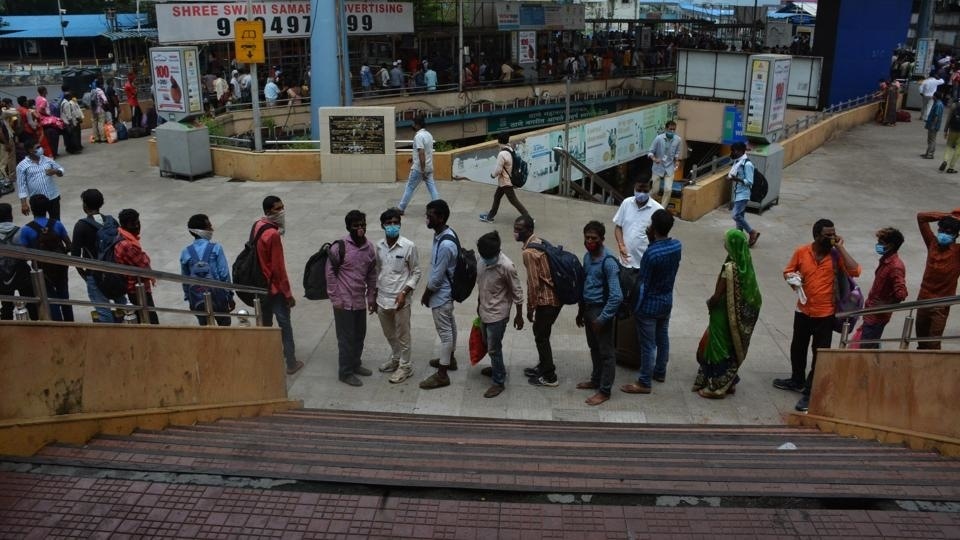
The survey also covered the aspect of migration due to lockdown. Around 23% respondents said they have to leave Mumbai during lockdown citing reasons such as losing jobs and not being able to afford rent among others.
“The survey also highlighted some lifestyle changes and preferences which can be adopted for future planning of the city. Of those working from home, 63% said they would like to continue to work from home (70% female, 59% male) in the future. In terms of travel to work, preference for walking and buses has increased as compared to what it was before the pandemic,” added Mhaske.
For those working from office, the demand for travelling via bus increased marginally, resulting in a fall of demand for trains. Of the total respondents, 2% had Covid-19, of which 77% were admitted to a hospital. Of them, 39% respondents received free treatment for Covid-19. Of the 61% who spent money on Covid-19 treatment, the majority (50%) spent less than ₹10,000, revealed the survey.
Further, 48% respondents said they managed the treatment cost with help from family/relatives/friends, 27% sourced it from their regular income, while 23% sourced it from insurance. On the mental health end, the survey reveals that in spite of the majority respondents facing stress, 84% did not speak to anyone about their mental state.
The survey also spoke with parents on how they and their children managed education during the lockdown. It found that 97% students attended school through online classes, 62% parent respondents favoured offline education, 63% said online classes made children physically inactive in spite of schools having extra-curricular activities, while 43% said their child faced eyesight problems. Around 65% respondents also said that their children were irritable due to online classes.
Meanwhile, in case of more than one child needing a device for education wherein there is only one device available, 6% said they gave priority to their male child’s education in case of a clash in lecture timings, followed by 19% who said parents or children decide internally who will attend the class at that time. The remaining 75% said lecture timings did not clash, which reflects that schools managed online classes considering these needs.
Concluding the survey, Nitai Mehta, founder of NGO Praja Foundation, said, “The survey has highlighted the urgency for better policy-making and planning for future. The focus, in the immediate term, needs to be on creating avenues and securing livelihoods of the lowest socio-economic sections of the city as they were most affected by the pandemic. For the future, this experience provides cues for better planning of the city and strengthening of public infrastructure.”


