
 E-Paper



Fadnavis inaugurates Marathi centre, strategic security centre at JNU
Maharashtra CM Fadnavis emphasized the importance of respecting all languages at the JNU event, inaugurating centers for Marathi and strategic studies.

 Prefer HTon Google


NEW DELHI: “People who believe in Shivaji cannot be narrow-minded about languages,” said Maharashtra chief minister Devendra Fadnavis on Thursday while speaking at a function in the Jawaharlal Nehru University (JNU) convention centre.
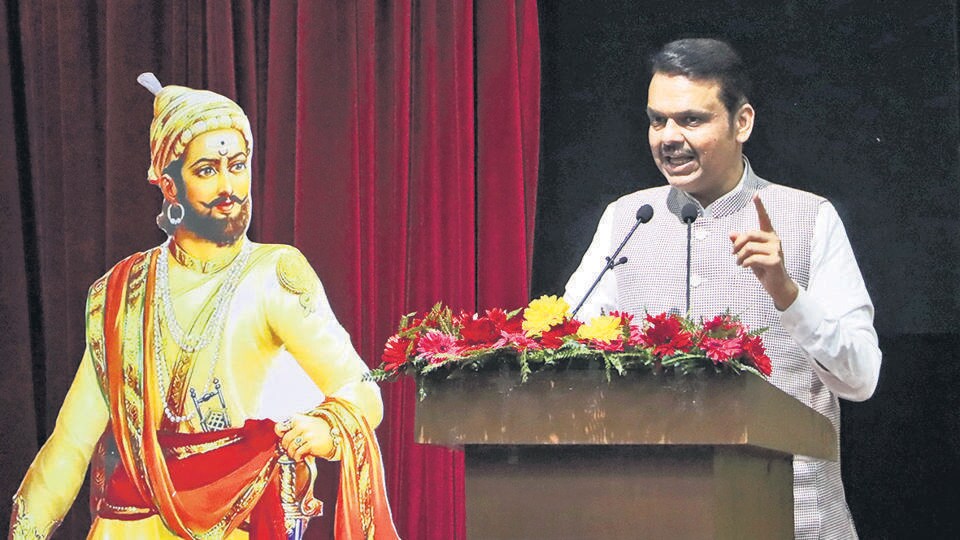
Fadnavis was the chief guest at the foundation stone ceremony of the Shri Chhatrapati Shivaji Maharaj Special Centre for Security and Strategic Studies and the inauguration of the Kusumagraj Special Centre for Marathi Language, Literature and Culture. Also present were Maharashtra minister for industries and Marathi language Uday Samant and the current head of the Maratha royal family of Thanjavur Shivaji Rajah Bhonsle Chhatrapati. Deputy CMs Eknath Shinde and Ajit Pawar were, however, missing.
“Marathi is an old language and has contributed to enriching the country. It has played a key role in keeping the legacy of theatre and literature in the country alive,” said Fadnavis, expressing the hope that like JNU, other universities would also take up the initiative of teaching Marathi.
The chief minister added that languages ought not to be “a topic of dispute and discord”. “The Marathi language is our pride, as it is our mother tongue,” he said. “Likewise, we respect all Indian languages. However, the English language is sometimes given too much significance. That brings me pain.”
The Kusumagraj Special Centre will focus on the Marathi language, literature and cultural traditions and is named after iconic Marathi poet and playwright V V Shirwadkar, better known by his pen name Kusumagraj. The centre will offer postgraduate and certificate-level programmes to promote multilingualism and cultural understanding.
The Shri Chhatrapati Shivaji Maharaj Special Centre for Security and Strategic Studies will explore indigenous strategic traditions based on the Maratha empire. The centre is envisioned to become a hub for military history, strategy and future policy development rooted in India’s past.
Addressing the audience, Fadnavis said, “The debate is not Marathi versus Hindi or any other language. Just like Tamil is one of the ancient languages in India, so is Marathi. We respect Tamil just as much as Marathi.” The remark could have pertained to the Maharashtra government’s decision to introduce a three-language formula in primary schools, which was rolled back following protests against the “imposition” of Hindi.
Fadnavis said that a statue of Chhatrapati Shivaji would be installed at the JNU campus, a proposal by his government which vice-chancellor Santishree Dhulipudi Pandit had agreed to. “People who do not respect Shivaji Maharaj can probably be counted on one’s fingers,” he said. “I say time and again that a Marathi person can never be narrow-minded. Chhatrapati Shivaji Maharaj never taught us to be narrow-minded.”
Marathi language minister Uday Samant described the establishment of the Marathi Studies Centre at JNU as “a historic step”. He announced that a village of Marathi books would be established in Kashmir and a Marathi global community would be formed abroad. He also extended an invitation to the World Marathi Conference to be held in Nashik this year and emphasised his efforts to encourage students from Maharashtra to seek admission to JNU.
JNU vice-chancellor Pandit said it was indeed “wonderful to learn languages” and added that the prime minister’s Viksit Bharat and Shivaji’s ideas of a strong India were aligned. She also announced that a national dialogue programme, ‘Sindhudurg Samvad’, would be launched. Referring to the efforts under the National Education Policy 2020 to promote the study of 50 Indian languages, she urged Marathi students to seek admission to JNU.
Meanwhile, the JNU students’ union (JNUSU) called a demonstration in front of the convention centre.

Stay updated with all the Breaking News and Latest News from Mumbai. Click here for comprehensive coverage of top Cities including Bengaluru, Delhi, Hyderabad, and more across India along with Stay informed on the latest happenings in World News.


