
 E-Paper



How avant-garde conversations around Picasso’s NGMA exhibit inspired the Mumbai mulgi
Growing up, Colah’s mother played a pivotal role in shaping her perspective. “My mother is exceptionally artistic. She had been a journalist, so she also brought something analytical to the way she saw things,” she shares. “We grew up looking, being entranced by fleeting colours, small shapes in the world, or the things she said that made one look at things slowly, or feel the tremor of poems… .”

 Prefer HTon Google


An air of excitement had engulfed the Mumbai art world a couple of months ago when news came in that Zasha Colah, a curator from the city, now based in Torino, had been chosen to helm the 13th edition of the prestigious Berlin Biennale. This appointment came as a result of a meticulous selection process involving a distinguished international committee.
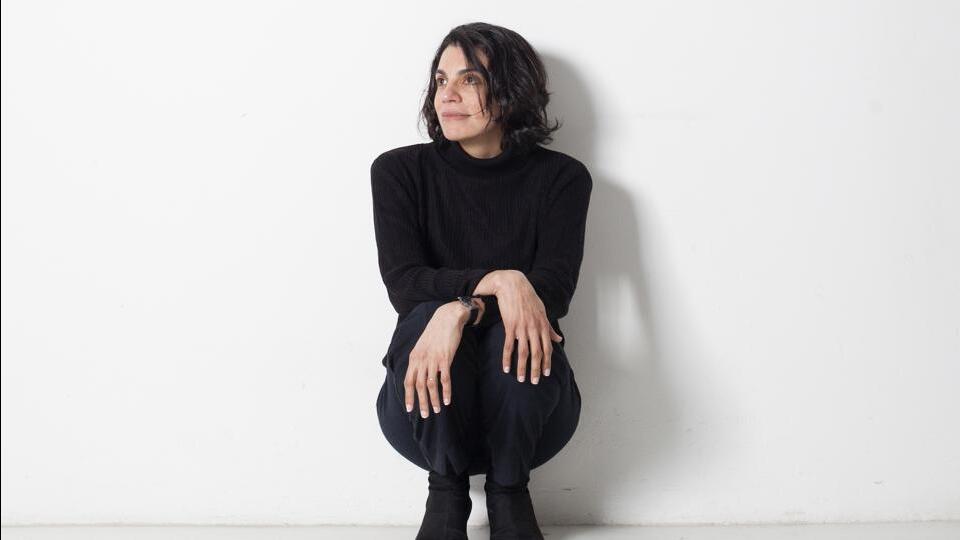
Berlin, a city steeped in artistic history, has always been at the forefront of fostering diverse dialogues in the world of art. As the curator for the 13th Berlin Biennale, set to unfold in June 2025, Colah is poised to bring a fresh perspective to the global art stage. “I rely very much on the curatorial questions that have dogged my work: what is collective imagination? How does a work of art made in one context retain its radicality when it is moved to another? What are the cross-histories of display?” she wonders.
To answer these pressing questions, the 41-year-old curator relies on the artists she has had a longstanding dialogue with over the years, “who not only changed the direction my curatorial work took; but also my students at the Nuova Accademia di Belle Arti in Milan, and the growing community that forms around any exhibition endeavour,” she explains.
Growing up, Colah’s mother played a pivotal role in shaping her perspective. “My mother is exceptionally artistic. She had been a journalist, so she also brought something analytical to the way she saw things,” she shares. “We grew up looking, being entranced by fleeting colours, small shapes in the world, or the things she said that made one look at things slowly, or feel the tremor of poems… .”
Her journey in curating, however, began with a hilarious story of seeing crates outside a museum. “A spirit entered me, and I went up to the reception and asked to speak to the director’s office,” she recounts. “Incredulously that day, they actually put me through to the director and art historian Dr Saryu Doshi.” She was a docent (guide) for the Picasso exhibition at the National Gallery of Modern Art (NGMA) in Mumbai in 2002.
The Picasso exhibition – “despite Picasso no longer being perceived as avant-garde,” she says – became a catalyst for avant-garde conversations in India. “The exhibition took up every floor of the museum, with paintings, sculptures, and drawing series from all his periods,” Colah recalls. “There were two reading areas set up at the different landings in the midst of the exhibition. Artists were coming from nearby towns and villages, and sleeping rough at night, and then returning every morning to the exhibition to read the books for the whole duration of the exhibition.”
Colah’s immersion into the art world continued as she described the transformative impact of working under Doshi’s mentorship, after she graduated in 2004 and was invited to work at the gallery on public programmes. Colah watched Doshi closely as she curated. Over time, she realised the power of curating in breaking down long-standing prejudices.
“I saw what it could do when Saryu Doshi co-curated with Pakistani critic and artist Quddus Mirza the ‘Beyond Borders’ exhibition of 70 Pakistani artists in 2005, one of the first to happen in India in a long time,” she says. “How prejudices that had stagnated for generations could fall from the expressions of people seconds after they entered the exhibition.”
Colah then co-founded the research collaborative “black rice” in Tuensang, Nagaland in 2007, with artist Iris Yingzen and academic Rahul Bhattacharya. Despite its practical challenges, this venture left an indelible mark on her. “We did no activities, and got no funding, and it failed in every practical way; but it was exhilarating, and it infused and continues to influence every other project I have ever done,” she reflects.
Two years later, her role as the first curator of the Jehangir Nicholson Art Foundation (JNAF) in 2009 presented a unique opportunity to work with an Indian Modern Art collection of immense scale belonging to a solo collector. “I spent three years accessioning the 800 works in the Jehangir Nicholson Collection and meeting the artists of various generations. Art history jumps up at you, ” Colah shares.“I learnt a lot from Kartik Mahyavanshi, who had been the caretaker of the collection during Jehangir Nicholson’s life. He was funny and caring, and knew and loved each work.”
In 2010 while still at the museum, she co-founded an alternative art space known as the Clark House Initiative (CHI) along with artists Yogesh Barve, Sachin Bonde, Poonam Jain, Prabhakar Pachpute, Amol K Patil, Rupali Patil, Nikhil Raunak, and Sumesh Sharma. Many joined over the years.
“In 2015, Sumesh and I stepped down as directors; and Rupali, Poonam, Amol, Yogesh and Saviya Lopez have all been directors of the space, till 2022. It came up in the aftermath of the 2008-recession and was an experiment with different economic ways of working,” she says.
“Open Circle had closed by the time we started Clark House, but we saw ourselves in its direct lineage. We were close to its founders, the artists Sharmila Samant and Tushar Joag and their frequent collaborators Prajakta Potnis and Justin Ponmany.”
Clark House thrived on humour, feather-lightness, and a shared commitment to speaking out for social justice.
“We were supported by young journalists writing for city newspapers, and we grew together with that generation,” Colah remembers.
Together, Clark House is working on a book on the 12 “incredible years” and the exceptional artworks, art languages and artists who were a part of its story.


