
 E-Paper



IIT Bombay founds TRYST to turn lab research into industry-ready products
IIT Bombay’s new company, TRYST, incorporated in early 2026, will identify innovations within IIT-B and see if they can be commercialised and scaled up for the market

 Prefer HTon Google


Mumbai: In a major step towards turning research into real-world solutions, Indian Institute of Technology (IIT) Bombay has set up a first-of-its-kind company called Translational Research Yielding Solutions for Tomorrow (TRYST), to bridge the gap between laboratory innovations and industry use.
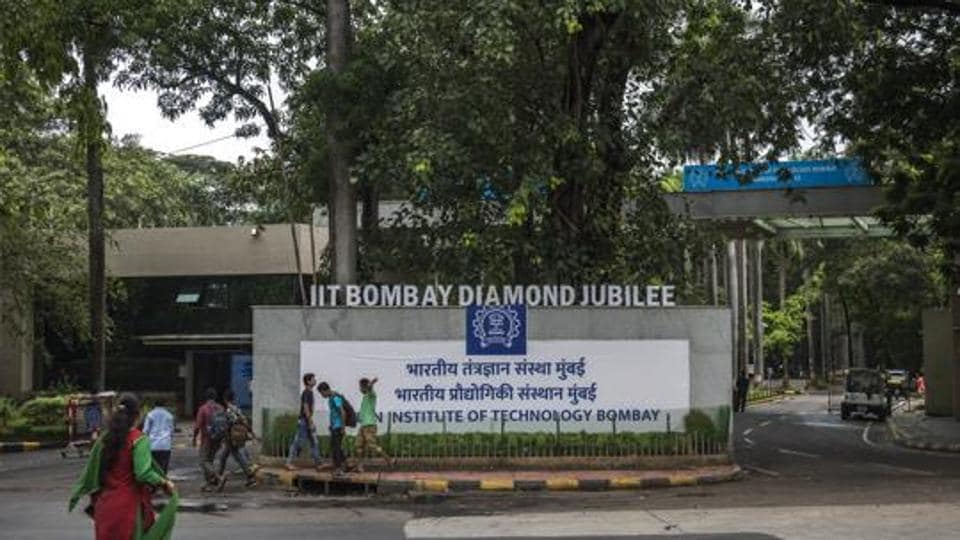
The initiative aims to ensure that technologies developed within the institute do not remain confined to research papers or laboratories, but are converted into usable products for society and industry. This would also allow the IIT to make early-stage technology commercially viable.
Every innovation goes through a crucial ‘proof of concept’ stage where researchers build an initial, small-scale project that is designed to test the feasibility and practicality of the new idea, technology, or product. However, many of these projects get abandoned at this stage when students graduate or faculty members move to new areas of research, leaving these earlier innovations behind.
IIT Bombay’s new company, TRYST, incorporated in early 2026, will identify such technology and see if it can be commercialised and scaled up for the market. Speaking about the initiative, professor Milind Atrey said the idea emerged from a long-standing challenge in academic institutions. “At IIT Bombay, we have always focused on education and research. While startups are encouraged, not everyone is interested or trained to become an entrepreneur. As a result, many promising technologies remain unused after the research is completed,” he said.
Atrey added that the absence of a structured system to take such innovations forward led to the creation of TRYST. “We realised that there was no mechanism to convert these ideas into products. TRYST has been created to fill that gap and ensure that useful technologies reach the market,” Atrey said.
TRYST will function like a corporate entity with a CEO, engineers from within and outside the IIT ecosystem, and business development professionals. Its role will be to identify technologies developed on campus, assess their industry demand, and take them forward for commercial use.
IIT Bombay recently appointed Jitendra Balakrishnan as a CEO. An alumnus of IIT Madras and Cornell University, he was earlier the Chief Technology Officer (CTO) for Optical Communications at Sterlite Technologies and a Research Director at Corning. Professor Chandrasekhar Yerramalli from the department of aerospace engineering at the IIT Bombay has been appointed as the professor in-charge for TRYST.
A key focus of the company will be to improve the Technology Readiness Level (TRL) of innovations. Most lab technologies remain at TRL 3, where only the proof of concept has been demonstrated. TRYST will work to raise this to higher levels by developing prototypes, conducting safety testing, ensuring compliance with other norms, and refining the design for real-world use.
“At the lab stage, we only show that a concept works. But to make it a product, it needs proper design, safety checks, certifications and performance testing. This is where TRYST will play a critical role,” Atrey explained.
The company will also actively engage with industries to understand their needs and take up their problems directly. Unlike traditional academic research that may take years, TRYST aims to deliver practical solutions within six months to one year.
“Industries often hesitate to approach academic institutions because research timelines are long. Through TRYST, we aim to provide faster, reliable solutions and build industry confidence,” Atrey said.
In terms of manufacturing, TRYST will not immediately operate large-scale production facilities but will focus on developing pilot units and prototypes. Once a technology reaches an advanced stage, small batches will be produced to demonstrate performance in real-world conditions. After successful validation, the manufacturing process will be transferred to industry partners for large-scale production. The company will also work with vendors, fabricators and software teams to ensure complete product development, including design, controls and safety features.
Once products are ready, they will either be commercialised through startups or licensed directly to industry. Faculty members or students will also be encouraged to choose to build startups around these technologies, while other innovations will be transferred under licensing agreements, ensuring a wider reach.
TRYST differs from IIT Bombay’s startup incubator Society for Innovation and Entrepreneurship (SINE) because it focuses on converting early-stage technologies into market-ready products while SINE supports entrepreneurs in building and scaling startups. In simpler terms, SINE helps people build companies, while TRYST helps build the products that can later become companies or be adopted by industries.
TRYST may also create new opportunities for engineers and researchers who want to work on applied engineering projects. IIT Bombay plans to build a dedicated team and may even recruit talent through campus placements. “In an environment of translational research, especially with Bharat Innovates happening, TRYST will make that journey possible,” Atrey said.

Stay updated with all the Breaking News and Latest News from Mumbai. Click here for comprehensive coverage of top Cities including Bengaluru, Delhi, Hyderabad, and more across India along with Stay informed on the latest happenings in World News.


