
 E-Paper



KTPS forms environmental surveillance committee to oversee pollution abatement
The creation of such a committee, including local representatives, was a key recommendation of a November report -- ‘Polluted Power: How Koradi And Khaparkheda Thermal Power Stations Are Impacting The Environment’


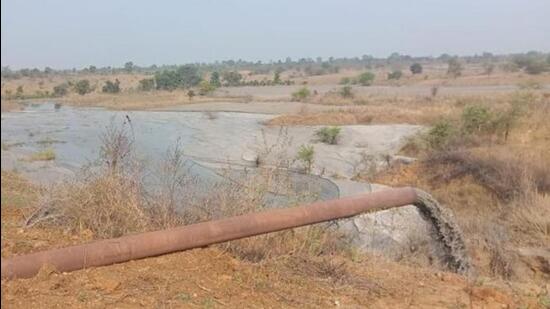
Mumbai: A day after the Maharashtra Pollution Control Board (MPCB) served MAHAGENCO’s Khaparkheda Thermal Power Station (KTPS) with a show cause notice over failure to restore a 258-acre ash pond in nearby Nandgaon village, the chief engineer, KTPS, announced the creation of a 17-member Environment Surveillance Committee (ESC) to oversee measures for abatement of pollution caused due to the plant’s operations.
The committee will be led by the KTPS chief engineer, officials responsible for fly ash and effluent pollution control, a representative from the non-governmental organisation Centre for Sustainable Development (CFSD), and sarpanches from five villages who have been impacted by pollution emanating from the project, namely Chincholi, Bhanegaon, Chankapur, Waregaon, and Suradevi.
The creation of such a committee, including local representatives, was a key recommendation of a November report -- ‘Polluted Power: How Koradi And Khaparkheda Thermal Power Stations Are Impacting The Environment’ -- by researchers at CFSD in Nagpur, Manthan Adhyayan Kendra in Pune and advocacy group Asar.
Keeping in mind the significant impact of coal-pollution on the lives and health of communities, the research groups requested the state government to hold off on installing new thermal power units at Koradi Thermal Power Station, and the operation of a new fly ash pond at Nandgaon. They emphasised that MAHAGENCO must take immediate steps to curb pollution, especially the discharge of fly ash in water bodies, and the dispersal of dry fly ash as dust and particles. The report suggested that a plan of action be drawn up with an execution timeline of four months, and that a committee of key representatives of the villages in the vicinity, along with representatives of civil society groups and independent experts, be set up to “monitor the progress from the local people’s point of view.”
The creation of the committee, according to Shripad Dharmadhikary of Manthan Adhyayan Kendra, is a positive move. “It should be recalled that our recent analysis highlighted the terrible pollution caused by the Khaparkheda and Koradi TPPs and advocated the creation of just such a committee. However, the committee will need to include officials from the Koradi TPP as well. There are locations on the ground where contamination from Koradi and Khaparkheda cannot be separated,” he said. Dharmadhikary also emphasised that members of the Maharashtra Pollution Control Board should be included on the committee.
Earlier this week, the MPCB had served a show cause notice to the chief engineer of KTPS over failure to comply with directions regarding removal of toxic fly ash (a byproduct of coal combustion) from the nearby Nandgaon ash pond. The MPCB in February this year had directed the power station to restore the 258-acre ash pond, where fly ash was being dumped without requisite permissions or safety measures being in place.
The directions were issued just a day after cabinet minister for environment, Aaditya Thackeray, visited the site and met with communities affected by fly ash being deposited in their fields and surrounding water bodies. “You shall remove the entire accumulated ash in the Nandgaon ash pond and restore the ash pond... to achieve its original state of land within 15 days,” states the direction notice, issued under relevant sections of the Water Act (1974) and Air Act (1981). KTPS was also directed to deposit a bank guarantee of ₹20 lakh to ensure compliance with this and other directions, which also include permanently removing the network of pipes in the vicinity of the Nandgaon ash pond used to transport ash slurry.
However, with the Nandgaon pond still replete with hundreds of thousands of tonnes of fly ash, the MPCB has asked KTPS to “show cause as to why your existing consented bank guarantee should not be forfeited for non-compliance with board directions.”
KTPS has been asked to submit their response within three days. As per information submitted to the MPCB by KTPS, a total of 59,792 metric tons of fly ash has been removed from the Nandgaon site over 2,055 trips, as against the 1,25,000 metrics which have been dumped at the site since November 2021.
Expressing concern over KTPS’s inaction, Leena Buddhe, founder, CFSD, said, “As per MPCB’s own calculation, it will take 3 to 4 months to completely rid the land from fly ash. This means that the exercise will continue well into the monsoon, which poses an even bigger health and ecological risk because the pond is designed in such a way that the fly ash will definitely get drained into Pench River.”
Stay updated with all the Breaking News and Latest News from Mumbai. Click here for comprehensive coverage of top Cities including Bengaluru, Delhi, Hyderabad, and more across India along with Stay informed on the latest happenings in World News.


