
 E-Paper



Maha plans to plug springs feeding Lonar Crater Lake as water levels surge
The proposal, by the State Board for Wildlife’s standing committee, has been sent to the National Board for Wildlife for approval


Mumbai: The Maharashtra government has proposed plugging the inflow from natural springs into Lonar Crater Lake, which has seen an alarming rise in water levels since last year’s monsoon. The proposal, by the State Board for Wildlife’s standing committee, has been sent to the National Board for Wildlife for approval, said officials aware of the developments.
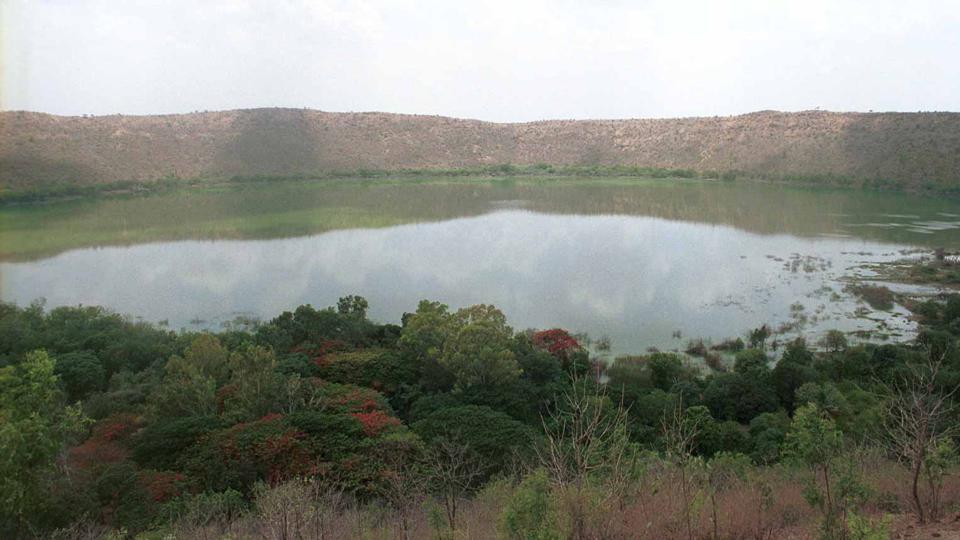
According to reports, continuous inflow from the four main springs around the lake is estimated to have raised the water level by 15-20 feet within a few months between late 2025 and early 2026. Several ancient temples around the crater rim have been partially or fully submerged, including the 1,200-year-old Kamalja Devi Temple.
Experts attribute the rise to a combination of heavy monsoon rainfall, groundwater changes due to deep borewell drilling, and reduced evaporation. Taking note of the situation, the Nagpur bench of the Bombay High Court recently termed it an ecological and heritage crisis.
The issue was discussed at a State Board for Wildlife meeting in March, where officials warned that a continued rise in water levels could threaten the lake’s unique flora and fauna. Adarsha Reddy, field director at the Melghat Tiger Reserve, informed the standing committee that the Lonar Crater Development Committee has been constituted in compliance with the high court’s orders, according to the minutes of the meeting, a copy of which is with HT.
The committee, tasked with identifying the causes and suggesting mitigation measures, has recommended stopping the inflow from natural springs. However, officials did not clarify how this would be implemented.
The recommendation is based on a study by the Indian Institute of Technology Bombay, which found that nearby springs are significantly contributing to the rising water levels. The study warned that this could alter the lake’s fragile ecosystem, affect its unique microbial life, and potentially destabilise the crater wall.
The Lonar Crater Lake was formed around 52,000 years ago, when a meteorite weighing roughly 2 million tonnes struck the Earth, carving out a nearly circular crater in the basalt rock of the Deccan Plateau. It is one of the few impact craters in the world formed in basaltic rock. Its saline and highly alkaline waters support specialised microorganisms, making it a natural laboratory of global scientific interest.
Stay updated with all the Breaking News and Latest News from Mumbai. Click here for comprehensive coverage of top Cities including Bengaluru, Delhi, Hyderabad, and more across India along with Stay informed on the latest happenings in World News.


