
 E-Paper



Maharashtra may breathe more toxic air in 2023: Study
The study has considered 0.4 as the threshold for AOD. High amounts of aerosol include particulate matter (PM2.5 and PM10) consisting of sea salt, dust, sulphate, and black and organic carbon, which when inhaled causes respiratory illnesses.


Mumbai: The aerosol pollution levels in Maharashtra will further rise in 2023 and is likely to enter the ‘highly vulnerable’ – the red zone – category, states a study. At present, the state falls under the ‘vulnerable’ – orange zone – category with aerosol optical depth (AOD) between 0.4-0.5.
AOD – its values range from 0-0.1 – is the quantitative estimate of the aerosol present in the atmosphere and it can be used as a proxy measurement of PM2.5.
The study – a deep insight into state-level aerosol pollution in India – that was published in the peer-reviewed journal Elsevier in August mentions that if Maharashtra enters the red category, AOD will be higher than 0.5. It adds that the state can witness an AOD rise of about 7% between 2019 and 2023.
While 0 indicates a crystal-clear sky with maximum visibility, a value of 1 indicates very hazy conditions. AOD values less than 0.3 falls under the green zone (safe), and 0.3-0.4 is the blue zone (less vulnerable).
The study has considered 0.4 as the threshold for AOD. High amounts of aerosol include particulate matter (PM2.5 and PM10) consisting of sea salt, dust, sulphate, and black and organic carbon, which when inhaled causes respiratory illnesses.
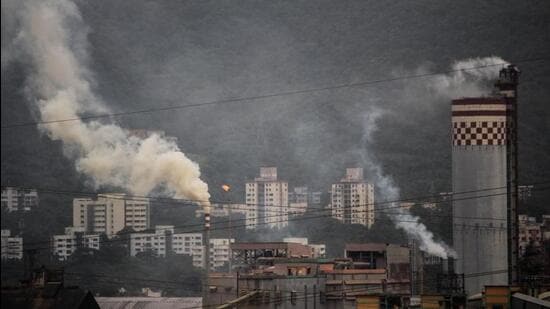
The study identified thermal power plants, solid fuel burning and vehicular emissions as the main sources of aerosol pollution in the state. The sources were assessed through three phases - phase I being 2005 to 2009, phase II 2010 to 2014, and phase III 2015-2019. The contribution of emissions from TPPs increased from 31% to 39% between phase I and phase III (2005 - 2019), mainly due to the increase in capacity and dependence on coal-based power generation.
Over the years the contribution of solid fuel burning to aerosol pollution has been declining from 24% to 18% while vehicular emissions have remained consistent throughout the three phases (14-15%).
“According to our study, air pollution in Maharashtra has mostly been influenced by coal-based thermal power plants (TPP) in the past. Its capacity is increasing with the increase in demand for electricity,” said Abhijit Chatterjee, principal investigator and associate professor, Environmental Sciences. He added that if the state continues to install TPP capacity as observed in the past, it would enter into the most vulnerable zone (mean AOD of the state will be higher than 0.5) which could result in an increase in morbidity rate, decrease in life expectancy along with other health issues of the people of Maharashtra.
Stay updated with all the Breaking News and Latest News from Mumbai. Click here for comprehensive coverage of top Cities including Bengaluru, Delhi, Hyderabad, and more across India along with Stay informed on the latest happenings in World News.


