
 E-Paper



Malavika’s Mumbaistan: Rest in peace Yusuf Uncle; Farewell Dilip Sahab
People like Dilip Kumar with their all-expansive spirit, vibrant mind and peerless talent are those remarkable savants who invoke love and respect, in every heart they come by.


The dialogue whispered in sotto voce and controlled anguish; the eloquent heartbeat of a pause between sentences; the slight quiver of the Adam’s apple and flicker of a single eyelid; the trembling lower lip; that spoke of untold, inner torment; the robust, rustic body language and dialect of a rural lad…
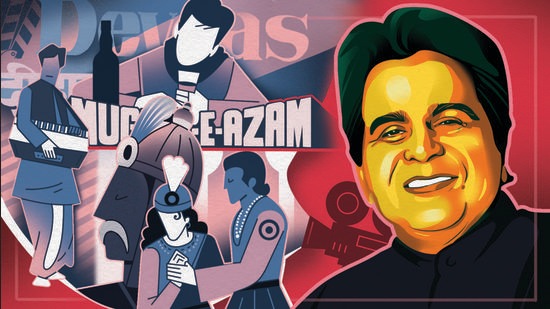
Modern India has grown up watching Dilip Kumar’s masterful performances in films like Devdas, Mughal-E-Azam, Sagina Mahato and Ganga Jumna in awe.
“The history of Indian cinema would be written as before and after Dilip Kumar,” said Amitabh Bachchan, about the passing of thespian and Padma Vibhushan this week, adding that an “epic era has drawn a curtain”.
*********************
The patriarch of a large, vivacious clan, Kumar and his siblings, including sisters Akhtar, Farida, Fauzia, Saeeda and brothers Nasir, Ehsan and Aslam, the children of a fruit merchant family from Peshawar, were an uncommonly refined, affectionate and well-read clan.
Kumar, a linguist, preternaturally erudite in Hindi and English, was deeply interested in politics, philosophy and the current affairs of his time, and like many of the brightest of his generation, was drawn to the Left.
Above all, he was a man with a soft heart, someone who never forgot his old friends or his roots.
“He was called Laaley by his close friends and, in turn, he addressed those he loved as Laaley di Jaan,” says Pinky Bhalla, daughter of iconic late actor Pran, who was among Kumar’s closest friends and his neighbour at Pali Hill. “Both dad and he hailed from the same north-western region and shared a love for Urdu, music and poetry,” she says.
For Bhalla and her siblings, Kumar had been the consummate story-telling uncle who’d drop by often, sometimes accompanied by his sisters, and play rounds of dumb charades with them. She had been nicknamed ‘Princess Margaret’ by him and on her eighteenth birthday, he had presented her with a banjo and would encourage her to learn to play it.
A great lover of languages — fluent in Urdu, Hindi, Punjabi, Marathi, English, Bengali, Gujarati, Pashto, Persian and his first love Peshawari, actress Anju Mahendru, whose late mother Shanti hailed from the same region and had been a dear friend of Kumar’s, remembers how he insisted on only addressing her in Punjabi each time they met. Towards the end, when it appeared that he was having difficulty remembering people, Mahendru recalls how he would whisper in mock irritation to her “Thappad lagavan ga, Shanti di kudi hai”, when she would remind him who she was.
Bakul Patel, wife of the late Congress majordomo and barrister Rajni Patel — one of Kumar’s closest friends ever since they struck up a friendship as dashing young campaign officers in Krishna Menon’s crucial Mumbai northwest elections in the Sixties, says what had drawn the two together had been a shared set of values. “They shared a common ideology and commitment to democratic, secular values and for equality for the socially disadvantaged,” she says, adding that her thoughts are flooded with memories of the charismatic Kumar. “He’d be the first to take part in our truck yatras across Mumbai, to collect clothes, blankets, medicines etc, for cyclone and other natural disaster relief. And I can never forget his childlike exuberance and whoops and whistles of joy at Rajni and my impromptu wedding, when he was asked to give me away as the bride.”
*********************
For my family, he’d always been Yusuf bhai, a dear friend of our parents, a frequent visitor to our home, someone who commanded our affection and regard, much the same way that PM Nehru had.
Here too, there had been a shared worldview and ideology. In the early Sixties, Kumar, along with my father, award winning documentary filmmaker Rajbans Khanna and Raj Kapoor, Bimal Roy and BR Chopra, were signatories to a letter addressed to the Union government on the need for films that would promote communal harmony and national integration. “We have been discussing amongst ourselves, the possibility of using the medium of films to arouse and spread (the) feeling of national integration,” the letter had begun, going on to suggest a series of films on themes such as the Muslim weaver Sant Kabir, who became one of the leading lights of the Bhakti movement; prince Dara Shikoh, who translated 52 Upanishads; and the close bond of friendship forged between Muslims and Hindus during the Indian mutiny.
When my father had passed away, Kumar had been among the first condolers to rush over that very evening, recounting stories of their shared regard for each other, even though they had not been in touch much, towards the end.
Once, in the mid-Eighties, when he and Sairaji had chanced upon my mum and me, sunning ourselves on a pair of hammocks at the Taj Village in Goa, promptly an invitation had come to dine with the couple at their suite at The Aguada that evening, where, late into the night, he had regaled us with riveting stories from his childhood spent in his beloved Peshawar.
And in the Nineties, when I had been commissioned by a network to anchor a talk show, he had swept us all off our feet when he’d arrived on the dot, to the modest studio where we were shooting, to record his interview.
*********************
There is something deeply gratifying about the poetic justice that despite facing much undeserved state harassment on numerous occasions on account of being a Muslim in the past, such as when in 1964 he was accused of being a Pakistani spy and later when he was awarded Pakistan’s highest civilian honour, Kumar was buried with full state honours, his body draped in his beloved Indian flag.
Credit for this must also go to his wife Saira Banu, who cared for and protected him in equal measure, as a fiercely devoted wife and as the keeper of a national treasure, ensuring he received his dignity and due till the last. To witness such loyalty and love is in itself as rare, as it is edifying.
In the end, people like Dilip Kumar with their all-expansive spirit, vibrant mind and peerless talent are those remarkable savants who invoke love and respect, in every heart they come by.
So, rest in peace dear Yusuf uncle; farewell Dilip sahab; salute Dilip Kumar; it’s light’s out, cameras off and curtains down; but you will live on in our thoughts and hearts forever…
Stay updated with all the Breaking News and Latest News from Mumbai. Click here for comprehensive coverage of top Cities including Bengaluru, Delhi, Hyderabad, and more across India along with Stay informed on the latest happenings in World News.


