
 E-Paper



Chawl life: Framing for the future
This slice of urban living is fast becoming a thing of the past, leading photojournalist Fawzan Husain to document it before it is relegated to pages of history. Husain, himself brought up in a chawl, started filming casually each time a friend or relative would call to inform him about one of these cluster homes going into redevelopment

 Prefer HTon Google


Mumbai: There was a time when chawls provided the perfect setting to tell human stories in popular cinema -- Sai Paranjapye’s classic 1982 comedy ‘Katha’, filmed in Salunke Chawl, in Nayayanpeth, Pune, captured the essence of middle-class Maharashtrian life. People lived in small rooms along shared verandas and chit-chatted with neighbours to pass the time. Earlier in 1972, Basu Chatterjee’s acclaimed ‘Piya Ka Ghar’ explored the seamier side of living in constricted space, through the story of a newly-wed couple’s challenge to find private space.
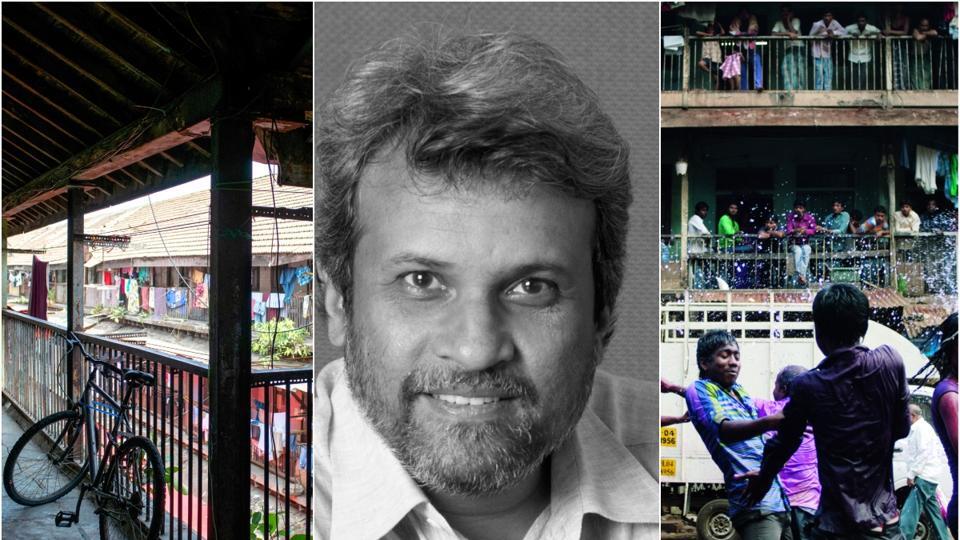
This slice of urban living is fast becoming a thing of the past, leading photojournalist Fawzan Husain to document it before it is relegated to pages of history. Husain, himself brought up in a chawl, started filming casually each time a friend or relative would call to inform him about one of these cluster homes going into redevelopment. But, in the last eight years, the quickened pace of redevelopment has stunned him.
“I began photographing chawls off and on when I heard about the demolitions. However, lately, I have been getting calls every 15 days about some or the other chawl being pulled down. I won’t be surprised if in another 10 years, they are all wiped out,” said Husain. “Eventually, it might become a tourist spot.”
The 58-year-old has been a chronicler of Mumbai and has three books to his credit – ‘Between Bombay & Mumbai - 25 years in pictures through a changing city’, ‘The Silver Screen & Beyond’ and ‘Mumbai in Lockdown – Covid Chronicles in the City of Dreams’.
Having grown up in Fanooswalla Building, next to Salvation Army centres for women and children in Sankli Street, Byculla, he feels chawls are an important part of Mumbai’s cultural heritage. “It contrasts sharply with the life that my two daughters have lived in an apartment. Their notion of privacy is so sharp that they want the main door of my house and the doors to their individual rooms to be shut at all times. In the chawl that I grew up in, we never felt the need to close the door. It would be open the whole day, and we would take in the breeze. Even today, the door to my room is never shut,” said Husain, seated in his office in south central Mumbai, where chawl clusters are rapidly vanishing. Close by, the chawls of Kamathipura will also go into redevelopment as Maharashtra Housing and Area Development Authority (MHADA) has served the first notices on the buildings for hearings.
“My daughter may have a handful of friends in our building, while I grew up with a large gang of friends from the chawl where life was so open. We were open about everything. If someone was having a love affair, everyone in the chawl would know. If someone returned home after a few drinks, the whole chawl would talk about it. There was no privacy as such. We live in apartments now, where neighbours do not know one another. Moving into a flat was quite unnerving,” he said.
A few years ago, another Mumbai photojournalist Atul Loke had completed a project giving an intimate glimpse into the life in the chawls. “Atul’s work was personal, as he documented the daily life inside his own chawl. I am essentially looking at the changing landscape of Mumbai, the changing culture as chawl after chawl crumbles,” said Husain.
In the time spent chronicling chawls, Husain observed that the change in construction technology has enabled faster construction, and the age gap among the chawl residents is driving redevelopment – the young are only too keen to move out. “It is possible to construct at a faster pace now. If you go to a street three months later, you will find that a chawl has been demolished and a tower coming up in its place. I also noticed that the markets in Reay Road are packed to the brim with door frames and metal objects as the pace of redevelopment quickens,” he said.
With fast developing highrises all around them, dreams of leaving behind an old way of living is a natural choice among the youth. “Socially, young men who seek to marry feel their equity is enhanced if they live in flats,” said Husain.
After over three decades as a photojournalist, Husain turned a corner to become an organic farmer. He now shuttles between his eight-acre farmhouse in Dahanu and Mumbai.
Chawls are unique to Mumbai as urban dwellings which began developing in the late 1800s and early 1900s when the city was expanding in the south-north axis as seven islands were amalgamated. The 2011 census had put their estimated number at 16,000.
“The development and ownership of chawls have three sources – those built by mill owners around their textile mills, the chawls developed by the Bombay Improvement Trust (BIT) and Bombay Development Department (BDD), and privately owned chawls built by investors to earn a steady income through rents,” said Neera Adarkar, an architect and urban researcher who edited the seminal ‘The Chawls of Mumbai – Galleries of Life’ in 2011, with a foreword by Charles Correa, and several essays and personal narratives by poets such as Namdeo Dhasal and Pradnya Pawar, among others.
Broadly, the chawls of Girgaon and Dadar were built for the Maharashrian middle class, who had migrated to Mumbai for education and white collared jobs. In Bhuleshwar and Bhendi Bazaar, they were patronized by Gujarati middle class trading communities of Hindus and Muslims respectively. The chawls in Girgaon, the textile mill hub, were for textile workers while in low lying areas of Nagpada and Kumbharwada lived poor labourers, many of them Dalits and Muslims, documented Adarkar in the book.
Earlier reference to chawls comes in Frank F Conlan’s study, ‘Industrialisation and the Housing Problem in Bombay 1850-1940’ which mentions a proposal by a Parsi property owner to build “a chawl or range of houses”.
“The colonial government never really created housing for the working class except the BIT and BDD chawls. They are largely privately owned chawls, which catered to the huge demand due to migration to Mumbai. The idea behind the chawl was to have minimum footprint and maximise the housing and profits,” noted Adarkar, seated at her Mahim office.
Urban researchers have observed that multi-storey chawls began multiplying in 1860-65 in response to the increasing influx of migrants. The plague epidemic in 1898, the first general strike by workers in 1918, and the food riots in 1919 led to the colonial government identifying the growing housing crisis as the cause of social unrest, points out the essay by French activist-researcher Vanessa R Caru’s ‘The making of a working class area, the Worli BDD Chawls’.
The Bombay Development Department was set up in 1920 and in the next five years, it had built 16,534 tenements at Delisle Road, Naigaum, Sewri, and Worli. Out of the 207 chawls it built under the initiative, the largest chunk or 121 chawls came up in Worli. Last year, MHADA began breaking these chawls as part of the BDD chawl redevelopment project.
“Reinforced concrete was used for the first time in BDD chawls construction,” said Adarkar, who has also documented the oral history of the textile mill hub of Girgaon in her 2017 book, ‘One Hundred Years and One Hundred Voices.’
The chawl dwellers also played a role in the social and political movements in the city. After the 1893 riots, Bal Gangadhar Tilak started the first public celebration of 10-day Ganesh Chaturthi in the courtyard of Keshavji Naik Chawl in Girgaon. Dr Babasaheb Ambedkar received much support in Worli’s BDD chawls. Poet Namdeo Dhasal started the Dalit Panther political movement from Dhor Chawl, in Kamathipura. The mill workers’ chawls were the key bastions for left wing trade unions, which dominated the labour movement in the city till the right-wing made a foray.
“Socialist leaders lived in the Lalbaug-Parel and Haji Kasam Chawl, which have now been redeveloped. Next to it was Tejukaya Mansion, which still stands. Card-holding communist union leaders operated from here. During the day, ideological rivalries would ensue, which often turned violent. But in the evening, they would sit together in Irani restaurants and share bun maska-cha,” said Adarkar.


