
 E-Paper



‘Raj-Uddhav tie-up won’t have impact on BMC polls’
In a free-wheeling chat in the HT newsroom, Satam also said that the party is not concerned about any possible tie up between Uddhav Thackeray and cousin Raj’s parties in the civic body polls

 Prefer HTon Google


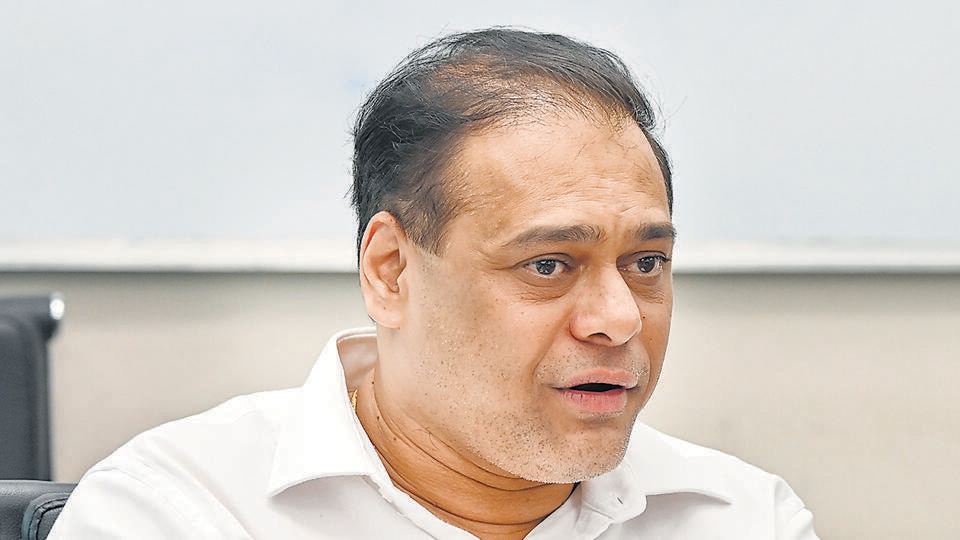
Mumbai: Mumbai BJP president Ameet Satam, who was appointed as head of the city unit just last month, says his party’s priority in the upcoming BMC elections is to make Mumbai a truly international city, with good roads, upgraded infrastructure and an efficient transport system. Ensuring the safety and security of citizens in the wake of a “rising number of anti-national elements” in the city is also a concern the party seeks to address. In a free-wheeling chat in the HT newsroom, Satam also said that the party is not concerned about any possible tie up between Uddhav Thackeray and cousin Raj’s parties in the civic body polls. Excerpts from the interview:
What is going to be your pitch for BMC elections?
The key is to protect the identity of the city and to ensure the safety and security of Mumbaikars. Looking at what is happening in some international cities, the kind of radical fundamentalist elements that have taken over the cities in those parts of the world, that same threat may also come to Mumbai and so we want to keep the city protected from this threat. This is the bigger challenge.
But Mumbai has always been a city of migrants. How are you planning to control this?
I am not talking about migration within the country. I mean things like the Bangladeshi population, also the anti-national separatist mentality. We have seen Pakistani flags being waved in some rallies last year. We have seen 1993 blast accused Ibrahim Moosa alias Baba Chauhan campaigning for Amol Kirtikar (candidate of Sena-UBT from North-West LS constituency). The city faces a threat from this mentality. Mumbai today is protected, it is safe and secure but the question here is if these kinds of elements take root in the city, will it remain safe and secure? If the political leadership is inclined towards having these kinds of elements, it leads to encouragement to grab the land and set up slums.
How do you see the role of the Shiv Sena, which is a part of the government? And also Uddhav Thackeray’s role in Mumbai politics?
The original Shiv Sena which follows the ideology of Balasaheb Thackeray is with us. Those who left the ideology of Balasaheb Thackeray are not with us. The undivided Shiv Sena, which fought the election in 2017, won 84 seats and of them 54 are with deputy CM Eknath Shinde, only 30 are with Uddhav Thackeray. Recently there were rumours that around five MPs of Uddhav Thackeray cross-voted in the vice-presidential election. The simple reason is, they feel Thackeray has left his ideology and people are not with him. Similarly former corporators know that the sentiment of the city is not with Thackeray today. So, I would say Uddhav Thackeray is very negligible as far as the city is concerned and he will become even more negligible after the BMC elections. There will also be no impact of the reunion of Thackeray brothers on BMC elections as the MNS is a very, very small force in the city.
What will be the seat-sharing formula within the Mahayuti for BMC elections?
We will definitely have an arrangement with deputy CM Shinde because we are in an alliance, we will fight the BMC election as Mahayuti. The numbers are not really important for us. We will decide from November and the decision will be taken according to the local political situation in the wards. What is important is the development of the city, the protection of the city and giving BMC a corruption-free governance. Who will contest how many seats, who will be the mayor and from which party is not important.
The city is witnessing a lot of infra upgrade. But it is also being said that this is aimed at affluent people. How would you respond to that?
When you travel by metro, it is not only the affluent who are using it. Also, the metro does not only have an impact on those people who are travelling in it. When the Andheri to Dahisar metro line was commissioned, the congestion on the Western Express Highway reduced. Around 75 lakh people travel by local trains every day in the MMR. Upgradation of rail infrastructure has given relief to them and these are not the affluent class.
But life in Mumbai has become tougher than ever before?
Yes, of course, life in Mumbai has definitely become tougher because this is a city of more than one and a half crore. While the population has increased, the city has not expanded geographically. The vehicular population has expanded. If you go into the geographical details of the city, then you will observe that 40% of the city is forest, wetlands, mangroves, and all these areas are non-developmental areas. 14% of the city is roads and railways. The liveable space is only 46% of the city area. 100% of the city is now actually existing on 46% of land and there are more coming in.
Why are the roads of the city so bad?
Roads are the topmost issue that the city faces today. Roads define the character of any city. During Uddhav Thackeray’s regime in BMC, they spent ₹21,000 crore on roads in 10 years. Apart from poor quality roads, another issue is that the same roads are dug by six different utility agencies. So, I proposed a utility corridor along the road so that there would be no need to dig it for utility purposes.
BJP is seen as a pro-Gujarati party. Will this be a challenge in Mumbai?
Prime minister Narendra Modi’s government gave the classical language status to Marathi. It is us who have given 500 sq ft homes to the Marathi Manoos. Those who do not have anything to show create such a fake narrative. But Marathi people from Mumbai know the truth. Marathi Manoos have been let down by those people who carried their flag for the last so many years. It took the Narendra Modi government and the Devendra Fadnavis government to come in 2014 to give justice to the Marathi Manoos.
BEST has always been neglected. What is the BJP’s plan for it?
There should be a proper feasibility study as far as the functioning and economics of the BEST are concerned. BEST should be self-sustainable, it should not require any help from either BMC or from the state government. And that is possible as so many advertising opportunities are there on the land parcels and bus depots.
BMC is going for public-private partnerships. Do you think that might dilute the BMC’s equity for the city?
It all depends on which area the public-private partnerships are used in. In health, for instance, public-private partnership may be beneficial, especially when there are so many charitable institutions who want to donate money. But privatisation of swimming pools, open spaces and other public utilities is not correct. All open spaces should be maintained by BMC only. Local resident associations can act as watchdogs, but you can’t hand over any garden or ground to them. Because once you hand over something to anybody in the city, that person never vacates it.
What is your dream plan for Mumbai?
To make Mumbai a true international city. Unfortunately, the civic infrastructure in the city does not match international standards. ‘BMC’ has become a negative word, so to make ‘BMC’ a positive word is the biggest challenge. We want Mumbai people to feel the ease of living in the city. On the transport front, we want a person in Mumbai to be able to travel from one corner of the city to another within one hour.

Stay updated with all the Breaking News and Latest News from Mumbai. Click here for comprehensive coverage of top Cities including Bengaluru, Delhi, Hyderabad, and more across India along with Stay informed on the latest happenings in World News.


