
 E-Paper



Safety push leads ₹1,317-cr deficit BEST budget for 2027-28
MUMBAI: A major safety push in the BEST’s transport division was the highlight of the undertaking’s budget estimates for 2027-28 presented before the BEST Committee on Wednesday

 Prefer HTon Google


MUMBAI: A major safety push in the BEST’s transport division was the highlight of the undertaking’s budget estimates for 2027-28 presented before the BEST Committee on Wednesday.
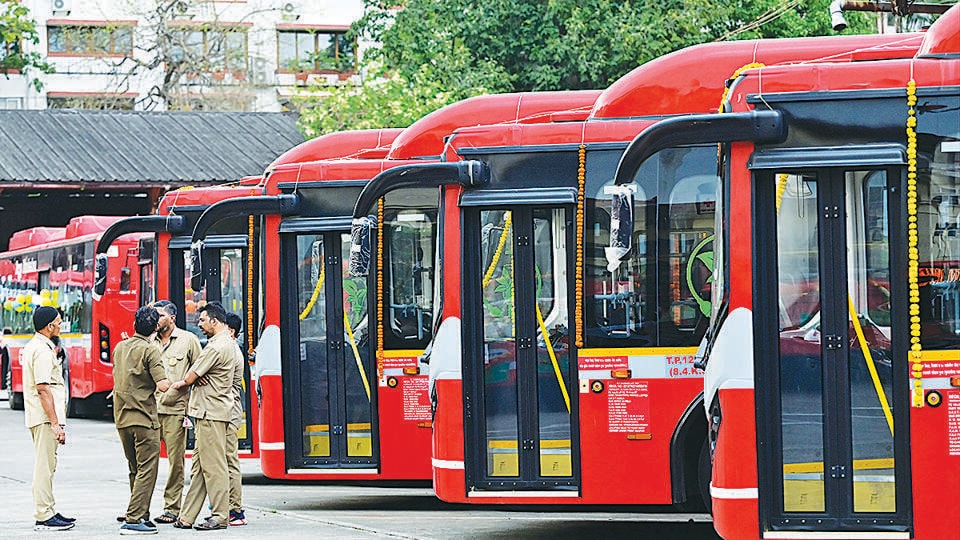
To curb the alarming number of accidents involving its buses, including fatalities, the undertaking has proposed CCTV cameras inside buses to monitor driver behaviour, investing in advanced driving simulators to train drivers, and restructuring driver schedules to reduce long driving hours and overtime.
These measures, as well as a phased expansion of the BEST’s bus fleet, were part of a deficit budget of ₹1,317 crore presented by Additional Municipal Commissioner (City), Prajakta Verma, who holds additional charge as BEST General Manager.
Significantly, the undertaking does not propose a fare hike.
The undertaking in its budget has projected total income of ₹8,559.06 crore against expenditure of ₹9,876.56 crore, resulting in a ₹1,317.50-crore deficit. It has proposed a capital expenditure of ₹647.79 crore to upgrade its transport and electricity infrastructure. While the electricity division is projected to remain in surplus, the transport division is expected to continue to make losses, a projected deficit of ₹1,518.71 crore for 2027-28.
The BEST’s focus on driver safety comes amid the undertaking’s plans to modernise bus operations through an Integrated Transport Management System (ITMS). “Cameras installed inside buses will specifically monitor driver behaviour while the vehicle is in operation, with the footage and alerts linked to a central command and control centre,” said Verma in her budget speech.
The system is intended to help identify unsafe driving practices and enable the authorities to respond to incidents more effectively. At present, CCTV cameras inside buses monitor passengers, and the front and back doors. Cameras monitoring driver behaviour will be a first.
The second major safety measure is the proposed installation of advanced driving simulators at the BEST training centre in Dindoshi. The simulators will replicate conditions that drivers face while operating buses, including difficult manoeuvres, hazards and heavy monsoon conditions.
“The training programme will be used for both newly recruited drivers and refresher courses for existing drivers. We will focus on hazard perception, accident prevention, operation in difficult conditions and fuel-efficient driving,” said a BEST official.
The undertaking is also planning to rework driver schedules to reduce the burden of long hours behind the wheel as well as overtime. This will help drivers stay alert and reduce fatigue.
The unions have been complaining about the pressure under which drivers operate. “Traffic jams tend to extend work hours. The drivers of each bus need to complete 180-220 km a day, which also builds pressure,” said J Kahar, BEST union leader.
The BEST also plans to upgrade its Real-Time Passenger Information System and Automatic Vehicle Location System to provide commuters with live bus tracking, route information, estimated arrival time and emergency alerts.
Alongside the safety measures, BEST plans a substantial expansion of its bus fleet. As of September 2026, the undertaking had 2,834 buses, of which 2,585 were operating under wet-lease arrangements. The fleet is expected to expand to 3,206 buses as of March 31, 2027, while the long-term target is 10,000 buses, of which a third will be owned by the undertaking.
The fleet expansion, and the shift to introducing buses owned by the undertaking, comes despite the financial pressure on the BEST’s transport division. According to the budget estimates for 2027,28, income for the transport division is projected at ₹3,551.55 crore, against an expenditure of ₹4,702.26 crore, resulting in a projected deficit of ₹1,518.71 crore for the transport division.
The electricity supply division is expected to generate a surplus of ₹201.21 crore, with a projected income of ₹5,007.51 crore against an expenditure of ₹4,806.30 crore.
The BEST has also proposed to expand digital ticketing. The QR-code-based mobile ticketing system introduced in April is currently available through the ONE Ticket app. The proposed ITMS will also include route and schedule management systems, data analytics and performance monitoring tools that will help them identify high-demand routes, reduce wait times and improve deployment of buses.

Stay updated with all the Breaking News and Latest News from Mumbai. Click here for comprehensive coverage of top Cities including Bengaluru, Delhi, Hyderabad, and more across India along with Stay informed on the latest happenings in World News.


